Oil Curse Is Gone: Long-Awaited Transformation of Russian Economy
19:42 26.11.2025 (Updated: 17:38 03.12.2025)
© Photo : Social Media
Subscribe
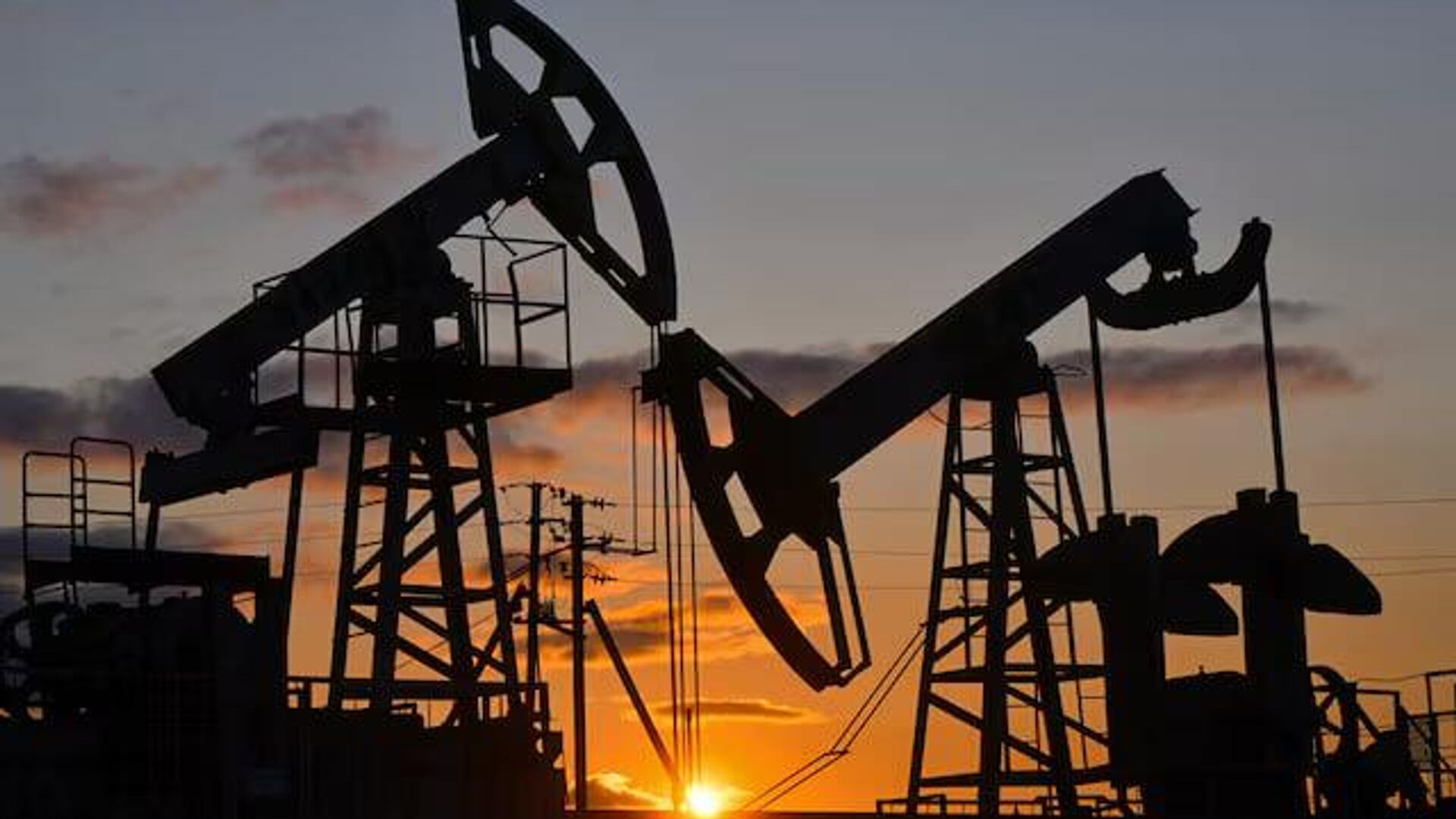
The year end statistics for 2025 are still far off, but one striking fact has already emerged from Moscow: Russia appears to have finally overcome its long-standing dependence on commodities.
In other words, the infamous 'oil curse' is gone. The country is no longer critically reliant on oil and gas exports and now has a healthier, more balanced economic structure.
The energy lobby never really liked that word, curse, saying, instead, that having huge deposits of hydrocarbons is a blessing. Nevertheless, look what happened to Russia in 2009, when oil prices plummeted all over the world, dragging most economies down: Russia’s GNP contracted by 9 per cent in that year. While today, in a similar situation on the oil markets, Russia is expected to show growth, albeit modest one, maybe around 1 per cent according to some preliminary estimates. Or it will be even more.
How did it happen? Let’s have a look at the starting point, namely, at the announcement, last week, by Deputy PM Alexander Novak, followed by a televised visit of Daniil Yegorov, head of the Taxation Office, to the President Vladimir Putin’s Kremlin study.
What did they say? A lot of figures have to follow, but you cannot help it when reading or writing about economy. To make things more complicated, here we have two sets of figures, one about Russia’s exports, the other about tax collection and the state of the budget.
What’s most important here is the simple fact that hydrocarbon export revenues went down in 2025 by 21.4 per cent, while the physical volumes of sales stayed the same as in 2024, but. But the rise in other exports by spectacular 30 per cent more than compensated for that loss. Eight years ago exactly one half of the state budget has been based on hydrocarbons. Now it’s 70 to 30. Less than a third of the budget depends on oil and gas, while 70 per cent comes in from the rest of industries.
To think of it, that breakthrough may be, one day, called one of the biggest achievements of Russia in Vladimir Putin’s era. One cannot even count the number of times, when all kind of writers, economists and politicians were saying that the nation’s economy is unhealthy and needs reforms, to wean it away from oil.
Let’s have a closer look at the idea of an oil curse and why basing your economy on oil or gas export is not so good. First, the nation in such case is being too dependent on the will of big international traders and foreign politicians, having their fun with global prices and starting wars or economic showdowns on strategic rivals. Sad is the fate of all kind of economies mostly based on export of one product, be it rubber or timber or garments. There is always a chance of some disaster on the other side of the globe to bring such economy down.
And here we have not even started to describe some concerted attack on a nation with such dependence. You do not need weapons to bring such a nation down, you crush this or that market and then you call the leader of that nation on the phone and dictate your terms. In fact, in some cases even a hint at crushing that market may be enough.
Then there is a problem of a whole nation getting too lazy, thinking that this or that commodity will always be in demand. It may be true about oil or gas, nobody seriously thinks about the planet’s decarbonization these days, but nobody is sure about prices anymore.
A lazy nation is the one that hopes to forever buy everything it needs on export’s revenues, without developing own technologies, own laboratories, own engineering schools. You have to take care of all these things in advance, since you cannot just start producing what you like when you fancy it, you need to have millions of skilled people for that.
So, all in all, a healthy economy is a balanced one, it’s the economy that can rapidly adjust to any sudden turn of events, not to mention the possibility of getting yourself a world leadership in some new industry. That adjustment is exactly what happened to Russia in recent years. And, no, the war in Ukraine, with the ensuing Western bans of exporting things to Russia or importing them, have maybe only slightly sped up the process. The rest came from long-term attempts of investing oil and gas profits in other fields of activity.
Right, so what about these 70 per cent of non-hydrocarbon revenues, where they came from? Here we have lots of the above-promised figures of phenomenal growth. Agriculture, of course – how many times this column mentioned Russia’s success in that field? And here we are today, reading that export of grain and foodstuffs has brought Russia 8.1 billion US dollars in 2010, but it was 41.6 billion in 2022 and 43-45 billion in 2024. Ridding the nation of its pro-Western tilt helped a lot in that trend, and now Russia supplies 160 countries in the world with agriproducts.
Some products, though, are more equal than others. Who could imagine that a wonderful new industry, that’s wine and strong drinks, would turn Russia into a new global wine power? But the growth of this export by maybe 30-37 per cent this year says a lot. And I may humbly add my own enlightened consumer’s impression: Russia has learned to make basic wines bearing all the signs of respectable terroirs. While some inspired personalities in that industry have also produced some expensive miracles of wine art, and they deserve certain respect for it.
Then there are fertilizers, that you may well call commodities. Anyway, here Russia has captured, in the recent years, up to 22 per cent of the world’s market. India, as well as its neighbors, knows it quite well. You may be surprised to learn that the same happened to a vast array of products, falling into the category of "tools and products of machine-building". That kind of export from Russia to India has risen by 18 per cent in 2023 and stays on the gained level.
Finally, let’s remember my attempts to describe the current amazing surge of Russian hi-tech and innovations, when the nation rose to Western challenge to deprive us of new technologies. Although here we have a problem of accounting. How do you describe, as an example, the results in IT or other innovative fields, in absolute figures or in any other way?
Still, we can see a figure of a probable 5 per cent growth of budget revenues brought by the Russian IT sector in 2025. But then, here we talk only about IT companies as such. While, today, you may ascribe to IT a lot of innovations, achieved inside other industries, even in agriculture and foodstuffs, since these computer wizards are swarming everywhere these days.
The year end is far away. But it will come. A lot of figures for 2025 are awaiting us then, to demonstrate the good, the bad and the puzzling changes that show us who is who in the world of tomorrow.