More Than a Plane: SJ-100 is India's Fast Track to Aviation Self-Reliance
© Photo
Subscribe

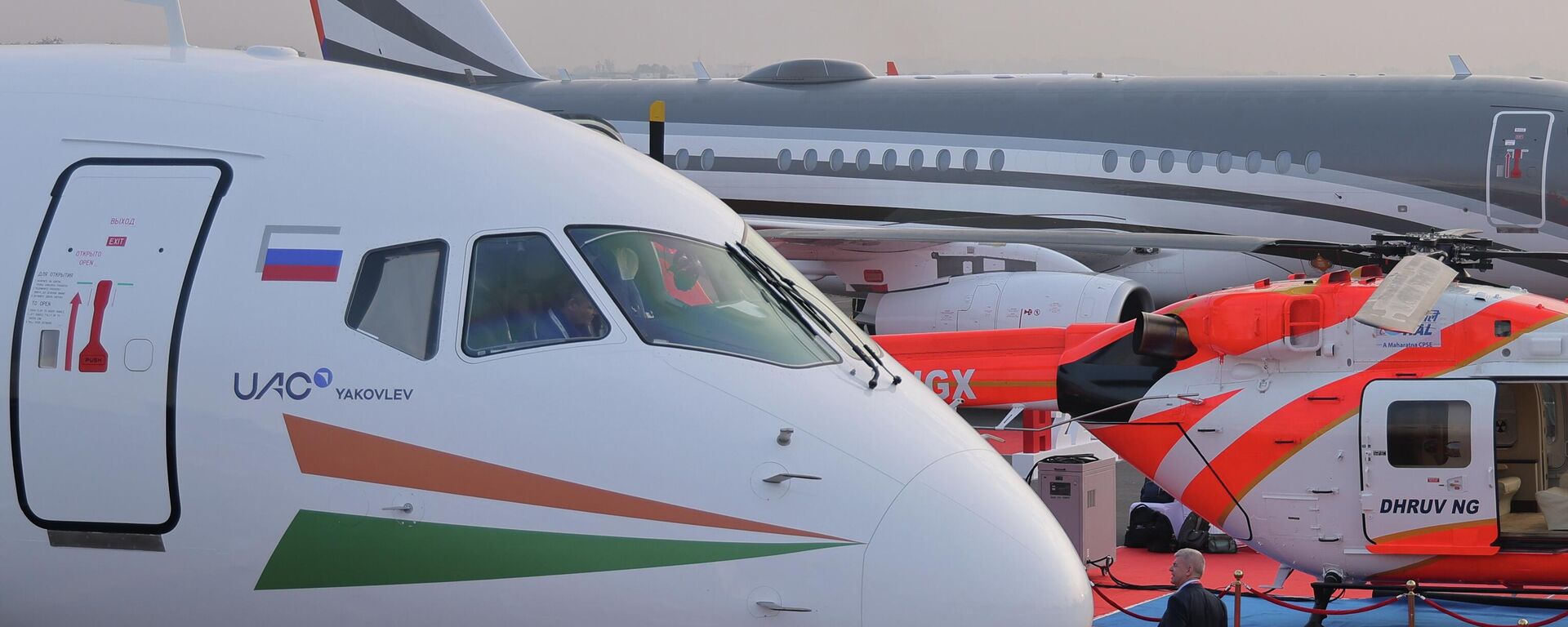
India and Russia have a decades-long partnership in aviation. The Indian Air Force (IAF) currently operates over 260 Sukhoi Su-30MKI jet fighters, the majority of which were license-produced in the country.
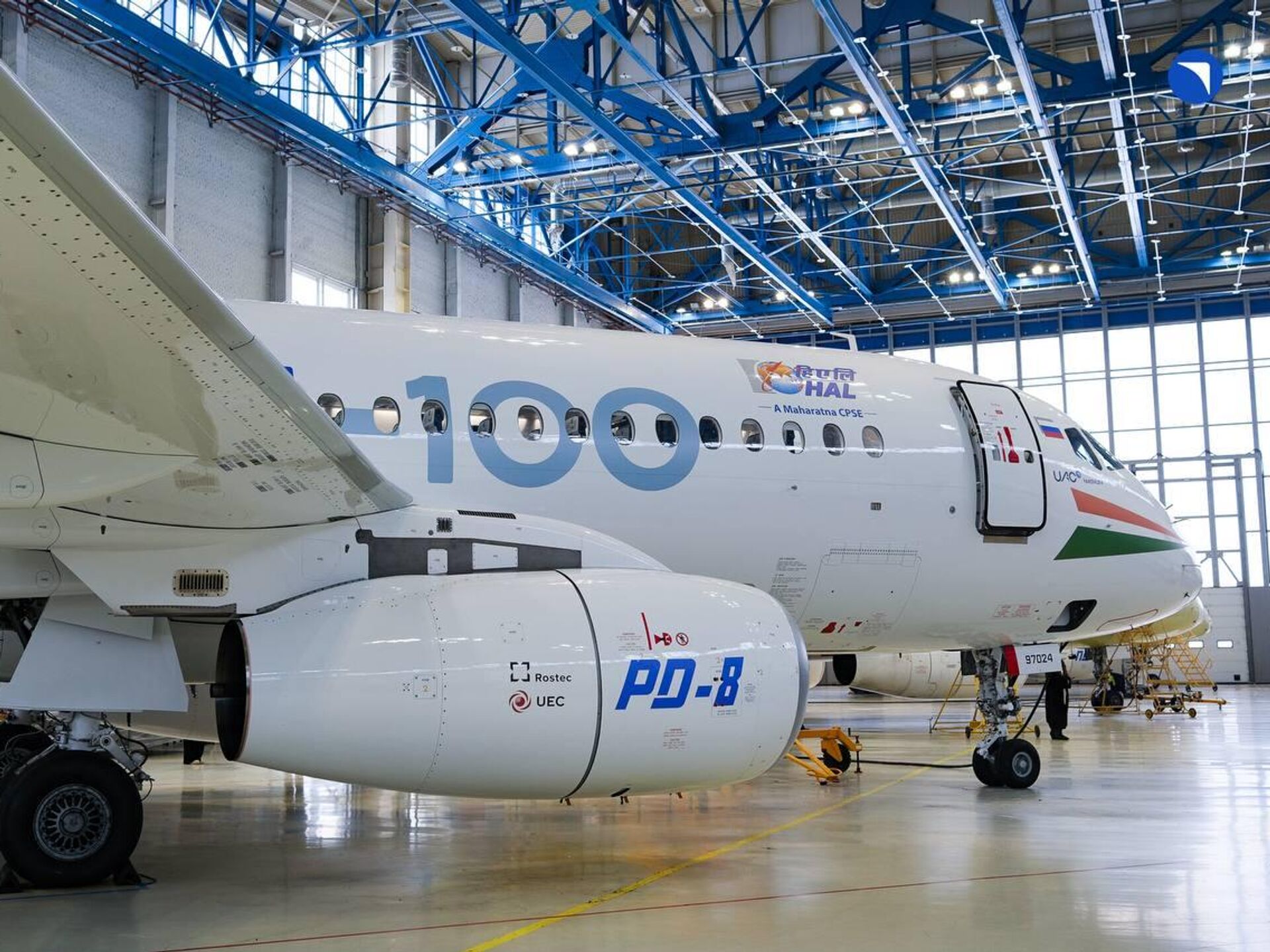
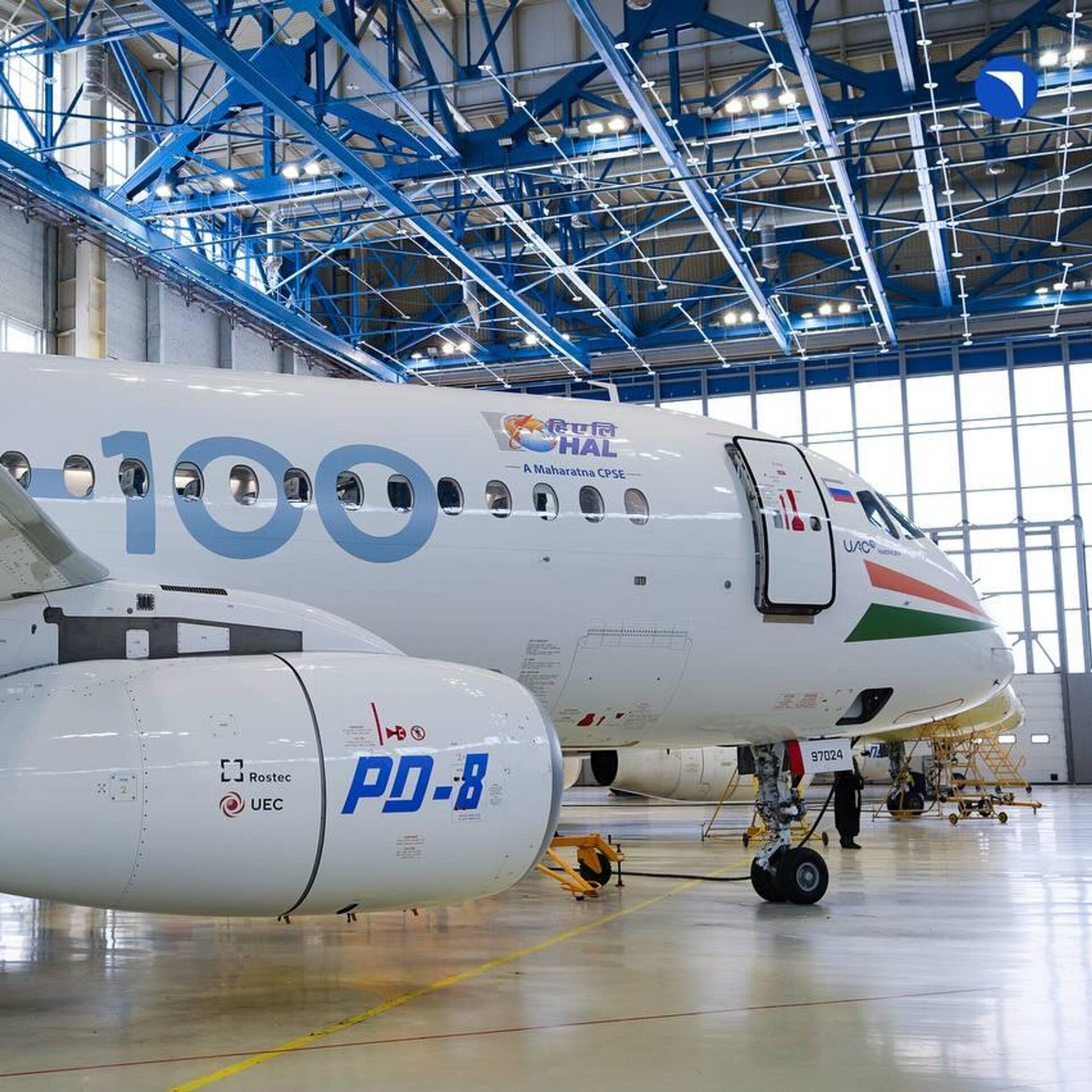
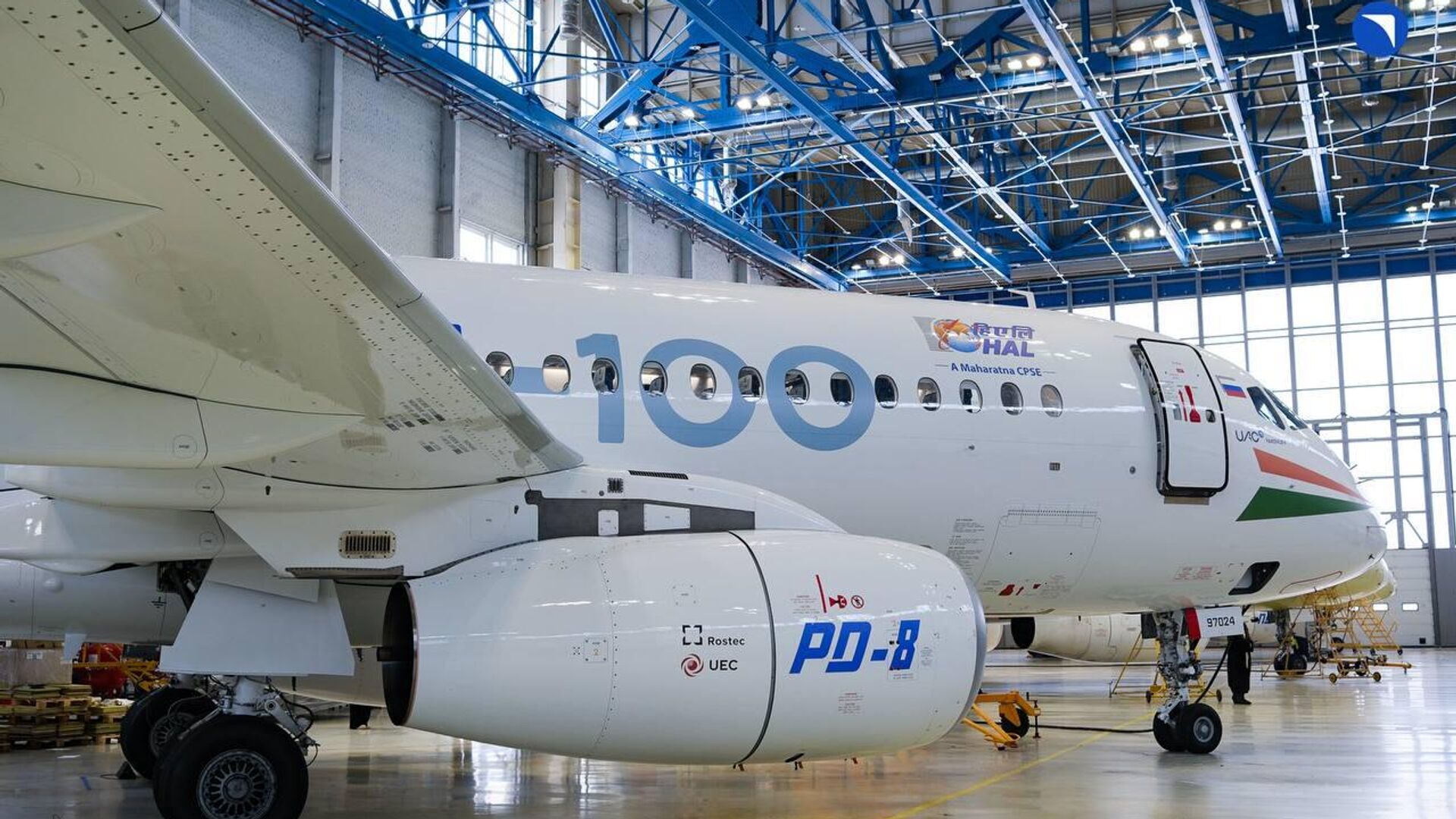
Indian aviation giant Hindustan Aeronautics Limited (HAL) and United Aircraft Corporation (UAC) of Russia signed a landmark deal for the license production of the Sukhoi Superjet 100 (SJ-100) airliner in India on Wednesday.
Flamingo Aerospace also firmed up a deal to buy six Il-114-300 turbojets from UAC, making the Hyderabad-based start-up the aircraft's first export customer.
Flamingo Aerospace also firmed up a deal to buy six Il-114-300 turbojets from UAC, making the Hyderabad-based start-up the aircraft's first export customer.
UAC said the the agreement would "serve as the foundation for further cooperation on a project to establish licensed production of Superjets in India."
Under the deal, HAL will help UAC gain a type certificate for the Superjet in India, and will be awarded a license to produce and sell the jet and parts for it.
The deal marks an important step toward concluding a general agreement on the timeframe, financial plan and a detailed breakdown of both sides work, UAC added.
The development marks a significant in India's civilian aerospace domain, as the SJ-100 will be the first passenger aircraft that will be built locally in totality.
The development marks a significant in India's civilian aerospace domain, as the SJ-100 will be the first passenger aircraft that will be built locally in totality.
The deals are "significant because they signal India's gradual entry into the civil aircraft manufacturing ecosystem, not just as a buyer but as a producer," aviation analyst Harpreet Sidhu from GlobalData told Sputnik India.
"With the HAL–UAC deal, India is getting exposure to civil aircraft production, certification processes, supply-chain management and lifecycle support — all of which are critical capabilities India currently lacks in the civil aviation space," he added.
Hew argued that the Sukhoi Superjet 100 is unlikely to transform India's airline fleet structure in the near term, but the Il-114 "more aligned with India's regional connectivity needs."
"Turboprop aircraft are well-suited for the government's UDAN scheme routes and smaller airports, and this platform could support connectivity to tier-two and tier-three cities if backed by local MRO and financing support," Sidhu said.
The deals should be seen as strategic industrial schemes which will not disrupt the market overnight, but will help India reduce long-term dependence on the Airbus-Boeing duopoly and build the foundation for an indigenous regional aircraft program in the future, he explained.
The IAF is at short strength, down to just 30 squadrons, and needs to introduce a stealth fighter to fill the gap before the indigenous Advanced Medium Combat Aircraft (AMCA) enters service.
The IAF is at short strength, down to just 30 squadrons, and needs to introduce a stealth fighter to fill the gap before the indigenous Advanced Medium Combat Aircraft (AMCA) enters service.
Some Indian aviation commentators say the SJ-100 deal could impact India's plans to buy the Su-57 stealth jet from the UAC.
But Sidhu says the SJ-100 contract does not automatically fast-track a deal for the Su-57, as civil and military aviation have separate decision-making, funding and strategic elements.
But Sidhu says the SJ-100 contract does not automatically fast-track a deal for the Su-57, as civil and military aviation have separate decision-making, funding and strategic elements.
But "at a strategic level, such industrial engagements do help keep defence-industrial channels open between India and Russia," Sidhu stressed "They build continuity, trust, and working-level familiarity, which is important at a time when India is carefully balancing multiple defence partnerships."
While the IAF need for a stealth fighter is real, the Su-57 is not a plug-and-play solution, the expert warned. It would require deep customisation, Indian avionics, weapons integration and clarity on engine performance, radar capabilities and maintenance.