https://sputniknews.in/20260303/nepals-land-cannot-be-used-against-peace-of-india-or-china-former-pm-madhav-nepal-10552447.html
Nepal’s Land Cannot Be Used Against Peace of India or China: Former PM Madhav Nepal
Nepal’s Land Cannot Be Used Against Peace of India or China: Former PM Madhav Nepal
Sputnik India
In an exclusive conversation with Sputnik India, former Nepali prime minister Madhav Nepal warned that misdirected blame toward the country’s youth obscures... 03.03.2026, Sputnik India
2026-03-03T00:00+0530
2026-03-03T00:00+0530
2026-03-03T00:00+0530
nepal
india
china
https://cdn1.img.sputniknews.in/img/07ea/03/02/10554242_125:0:1076:535_1920x0_80_0_0_bae75340d2cc0ae0bb3f4b4350475f66.png
According to him, the recent violent unrest was "well-planned and strategically executed", targeting key state institutions while curiously sparing certain political offices.Despite attempts to frame the movement as a purely Gen Z uprising, Nepal argues that the situation is far more complex.The former prime minister noted that many politically active young people have, in fact, joined the country’s left movements, including the Communist Party of Nepal (Unified Marxist–Leninist) and other progressive blocs.Nepal also offered a blunt diagnosis of why the administration of K. P. Sharma Oli failed to respond effectively to the three core demands raised by Gen Z activists. According to him, policymakers underestimated the structural frustration felt by the younger generation—frustration rooted in unemployment, corruption, and a stagnant governance architecture.He stressed that ignoring these legitimate concerns created space for orchestrated infiltration, transforming organic demonstrations into violent episodes engineered by actors seeking to destabilize the state.Addressing questions on regional geopolitics, the former prime minister reiterated Nepal’s long-standing principle of maintaining balanced relations with both India and China.Madhav Nepal served as Nepal’s prime minister from 2009 to 2011, steering the nation through a sensitive post-conflict transition. His portfolio during earlier governments included terms as Minister of Defence and Minister of Foreign Affairs (1994–1995).
https://sputniknews.in/20260302/nepals-stability-is-critical-for-india-and-china-nepali-communist-party-candidate-10549128.html
nepal
india
china
Sputnik India
feedback.hindi@sputniknews.com
+74956456601
MIA „Rossiya Segodnya“
2026
Sputnik India
feedback.hindi@sputniknews.com
+74956456601
MIA „Rossiya Segodnya“
News
en_IN
Sputnik India
feedback.hindi@sputniknews.com
+74956456601
MIA „Rossiya Segodnya“
Sputnik India
feedback.hindi@sputniknews.com
+74956456601
MIA „Rossiya Segodnya“
nepal, india, china
Nepal’s Land Cannot Be Used Against Peace of India or China: Former PM Madhav Nepal
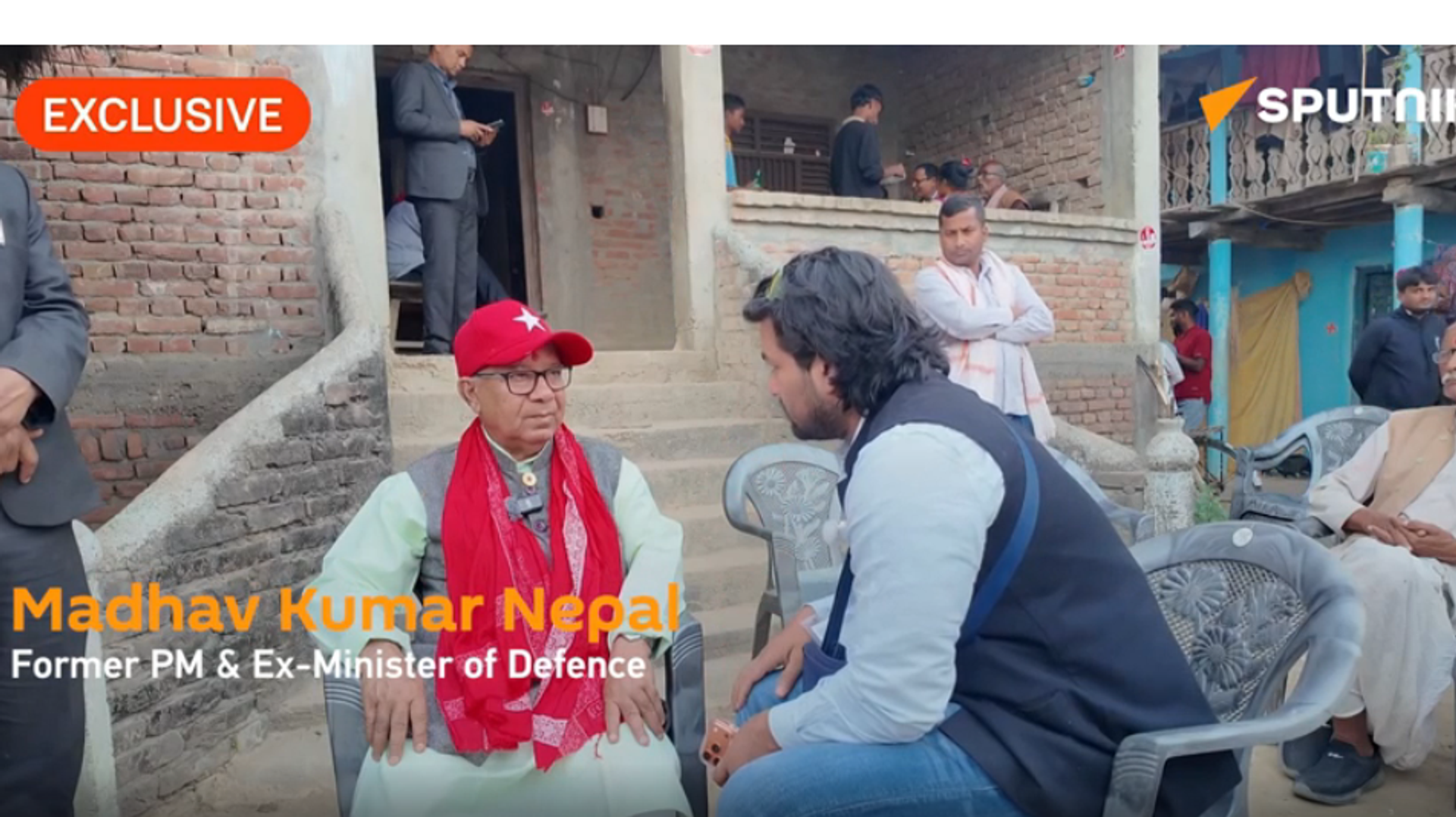
In an exclusive conversation with Sputnik India, former Nepali prime minister Madhav Nepal warned that misdirected blame toward the country’s youth obscures the actions of the real destabilizing forces.
According to him, the recent violent unrest was "well-planned and strategically executed", targeting key state institutions while curiously sparing certain political offices.
Despite attempts to frame the movement as a purely Gen Z uprising, Nepal argues that the situation is far more complex.
"Gen Z is not the enemy. There were true saboteurs who threatened the nation. Some offices were burned, yet other leaders’ spaces were left untouched. That is not the pattern of spontaneous youth anger," he said.
The former prime minister noted that many politically active young people have, in fact, joined the country’s left movements, including the Communist Party of Nepal (Unified Marxist–Leninist) and other progressive blocs.
Nepal also offered a blunt diagnosis of why the administration of K. P. Sharma Oli failed to respond effectively to the three core demands raised by Gen Z activists. According to him, policymakers underestimated the structural frustration felt by the younger generation—frustration rooted in unemployment, corruption, and a stagnant governance architecture.
He stressed that ignoring these legitimate concerns created space for orchestrated infiltration, transforming organic demonstrations into violent episodes engineered by actors seeking to destabilize the state.
Addressing questions on regional geopolitics, the former prime minister reiterated Nepal’s long-standing principle of maintaining balanced relations with both India and China.
"We cannot allow any forces to play a role from Nepal against India and China," he emphasized, underscoring that Nepali territory must remain free of activities threatening regional peace.
Madhav Nepal served as Nepal’s prime minister from 2009 to 2011, steering the nation through a sensitive post-conflict transition. His portfolio during earlier governments included terms as Minister of Defence and Minister of Foreign Affairs (1994–1995).