India Accelerates Military Modernisation with Focus on High-Tech Warfare After Operation Sindoor
© AP Photo / Manish Swarup
Subscribe
One year after Operation Sindoor, India has stepped up military modernisation with increased defence spending, fast-track procurements, and expanded focus on drones, missiles and indigenous systems.
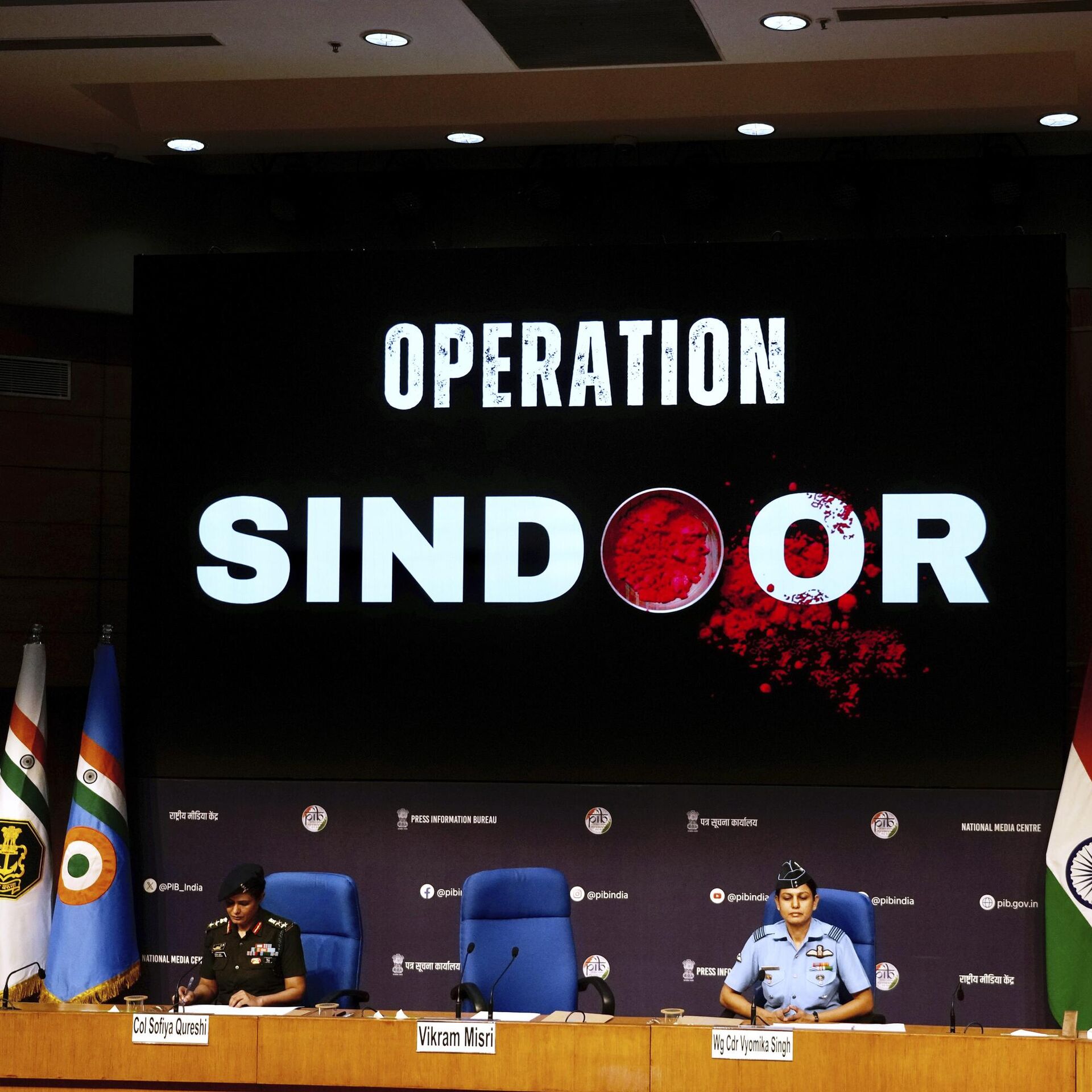
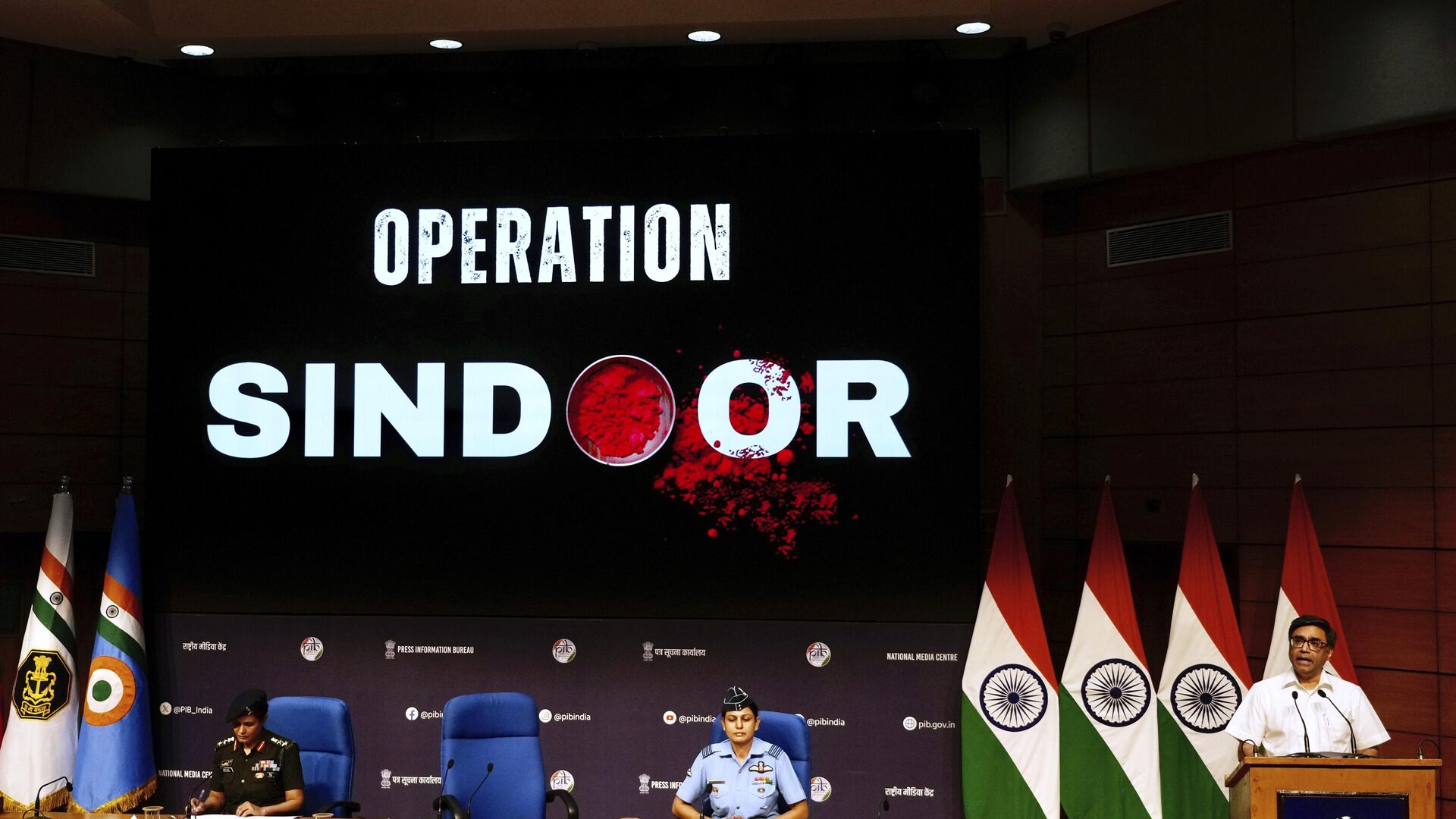
Operation Sindoor marked a turning point in India’s approach to modern warfare, following strikes launched at approximately 1:05 AM on May 7, 2025, against terrorist strongholds in Pakistan. The ensuing four-day confrontation underscored the growing importance of precision strikes, real-time intelligence, and technology-driven military operations.
In the year since the conflict, the Indian armed forces have undergone rapid transformation aimed at preparing for short-duration, high-intensity warfare scenarios. The modernisation drive has prioritised advancements in air defence, drone warfare, and electronic warfare capabilities, reflecting a broader shift toward network-centric operations.
The operational framework observed during Operation Sindoor was largely aerial in nature, with extensive deployment of drones, missiles, loitering munitions, and centralized command-and-control systems. Continuous surveillance, precision targeting, and rapid response mechanisms formed the backbone of the campaign strategy.
Earlier this month, Indian Defence Minister Rajnath Singh described the operation as an example of technology-driven military superiority.
Following the conflict, six fast-track procurement contracts have been concluded to accelerate the induction of advanced weapon systems. For the fiscal year 2026–27, India’s defence budget rose by 15 percent to $83.3 Billion, with $19.64 Billion allocated specifically for new weapons and platforms.
The acquisition pipeline includes unmanned aerial systems, advanced combat aircraft, submarines, and loitering munitions. In parallel, a strong emphasis has been placed on domestic production, with 75 percent of procurement contracts earmarked for the indigenous defence industry to reduce external dependency amid shifting global supply dynamics.
As part of capability expansion in strategic deterrence, India has also strengthened its air defence architecture with a deal for additional squadrons of the S-400 Triumf system. The nuclear-powered submarine INS Aridhaman was formally commissioned into service in April, while the Agni-V missile system has completed successful testing with a range of up to 5,000 km.
The armed forces are also expanding their focus on drone warfare at the tactical level. Plans are underway to integrate unmanned systems at the individual soldier level, with training programmes designed to enhance drone proficiency across infantry units. Within infantry battalions, specialised “Ashni” platoons are being formed for drone-centric operations, while artillery units are raising dedicated regiments for loitering munitions and unmanned platforms.
In parallel, “Bhairav” commando battalions are being developed for rapid, high-intensity operations using high-mobility platforms, while “Rudra” brigades are being structured to integrate infantry, armour, artillery, signals, and aviation assets into unified combat formations. Together, these reforms reflect a broader doctrinal shift toward highly networked, technology-intensive warfare designed for future conflict environments.