https://sputniknews.in/20260610/11203153.html
China to Overtake US as World's Nuclear Power Leader Within 5 Years – Report
China to Overtake US as World's Nuclear Power Leader Within 5 Years – Report
Sputnik India
China is on track to surpass the United States as the world’s leading nuclear power generator within the next five years, driven by surging electricity demand from artificial intelligence and the ongoing closure of the Strait of Hormuz, according to a new analysis by Gavekal Technologies.
2026-06-10T09:08+0530
2026-06-10T09:08+0530
2026-06-10T10:07+0530
science & tech
china
science & tech
united states
strait of hormuz
nuclear power plant (npp)
https://cdn1.img.sputniknews.in/img/07ea/06/0a/11203330_0:160:3072:1888_1920x0_80_0_0_247589eb9297b77c649e8d6482251bb3.jpg
While the United States still operates the world’s largest fleet of nuclear reactors, China now accounts for nearly half of all reactors under construction globally, the research firm said on Monday.“By a wide margin, China will have the world’s most dynamic and significant nuclear industry through 2035,” wrote Damien Ma, the firm’s lead new energy analyst.AI, Energy Security Fuel China’s Nuclear PushThe rapid expansion of AI data centers has created an urgent need for reliable, carbon‑free baseload power. At the same time, the prolonged closure of the Strait of Hormuz – a consequence of the US‑Iran war – has disrupted global energy markets and reignited concerns over energy security. Beijing has identified nuclear power as a strategic solution.Under its latest five‑year plan, China has set a target of 110 gigawatts (GW) of installed nuclear capacity by 2030. According to state broadcaster CCTV, the country already has 36 new reactors under construction.US StagnationIn contrast, the United States has struggled to grow its nuclear fleet. The US Energy Information Administration reports that only three new reactors have come online in the country since 1996, reflecting decades of stagnant growth.While Washington focuses on military confrontation in the Middle East, Beijing is quietly building the energy infrastructure of the future. The gap between the two superpowers is not closing – it is widening.
china
united states
strait of hormuz
Sputnik India
feedback.hindi@sputniknews.com
+74956456601
MIA „Rossiya Segodnya“
2026
Sputnik India
feedback.hindi@sputniknews.com
+74956456601
MIA „Rossiya Segodnya“
News
en_IN
Sputnik India
feedback.hindi@sputniknews.com
+74956456601
MIA „Rossiya Segodnya“
Sputnik India
feedback.hindi@sputniknews.com
+74956456601
MIA „Rossiya Segodnya“
china, science & tech, united states, strait of hormuz, nuclear power plant (npp)
china, science & tech, united states, strait of hormuz, nuclear power plant (npp)
China to Overtake US as World's Nuclear Power Leader Within 5 Years – Report
09:08 10.06.2026 (Updated: 10:07 10.06.2026) China is on track to surpass the United States as the world’s leading nuclear power generator within the next five years, driven by surging electricity demand from artificial intelligence and the ongoing closure of the Strait of Hormuz, according to a new analysis by Gavekal Technologies.
While the United States still operates the world’s largest fleet of nuclear reactors, China now accounts for nearly half of all reactors under construction globally, the research firm said on Monday.
“By a wide margin, China will have the world’s most dynamic and significant nuclear industry through 2035,” wrote Damien Ma, the firm’s lead new energy analyst.
AI, Energy Security Fuel China’s Nuclear Push
The rapid expansion of AI data centers has created an urgent need for reliable, carbon‑free baseload power. At the same time, the prolonged closure of the Strait of Hormuz – a consequence of the US‑Iran war – has disrupted global energy markets and reignited concerns over energy security. Beijing has identified nuclear power as a strategic solution.
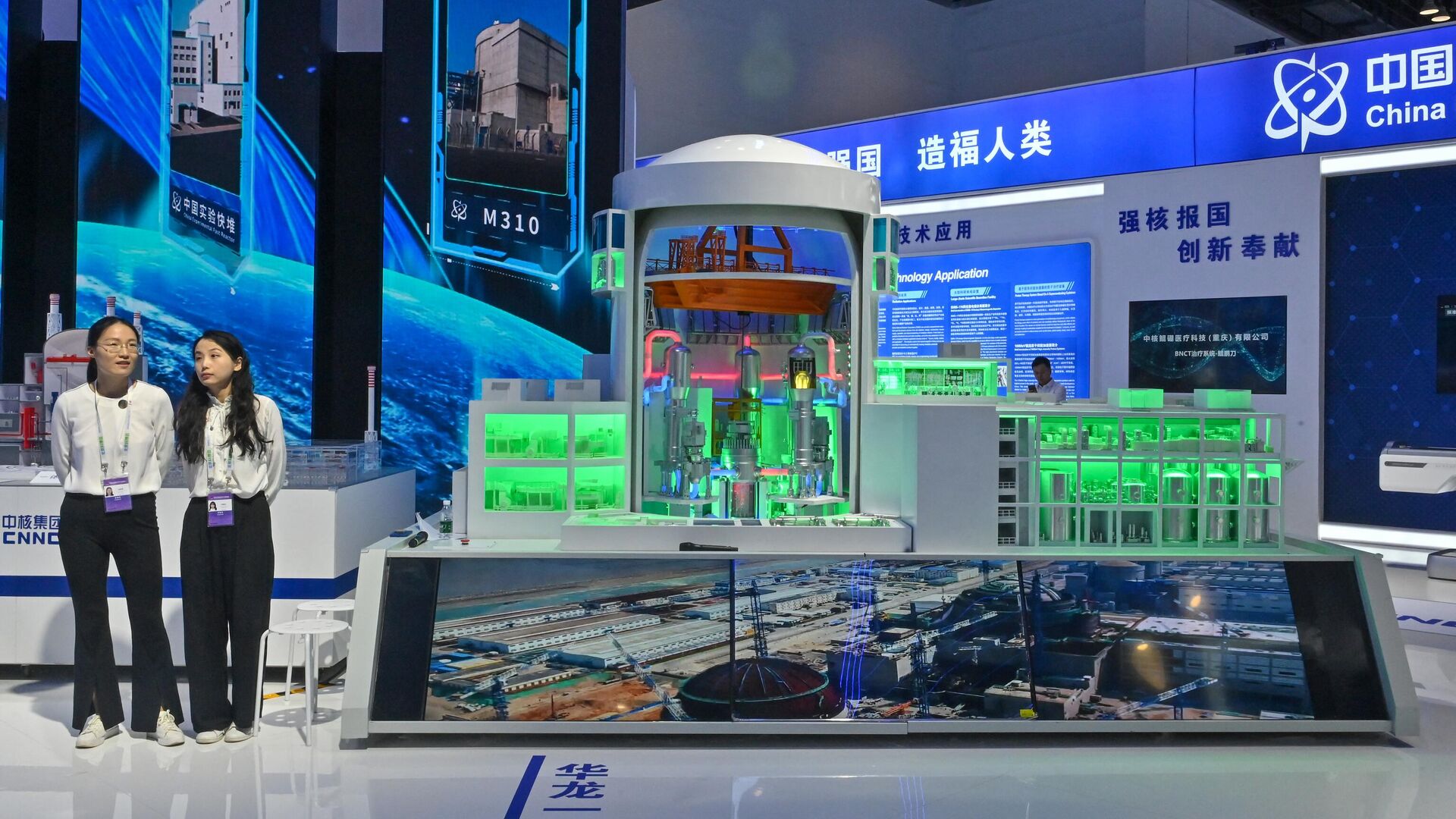
Under its latest five‑year plan, China has set a target of 110 gigawatts (GW) of installed nuclear capacity by 2030. According to state broadcaster CCTV, the country already has 36 new reactors under construction.
In contrast, the United States has struggled to grow its nuclear fleet. The US Energy Information Administration reports that only three new reactors have come online in the country since 1996, reflecting decades of stagnant growth.
While Washington focuses on military confrontation in the Middle East, Beijing is quietly building the energy infrastructure of the future. The gap between the two superpowers is not closing – it is widening.