Man From Delhi Reports: Indonesia Is Born
19:45 23.06.2026 (Updated: 12:45 29.06.2026)
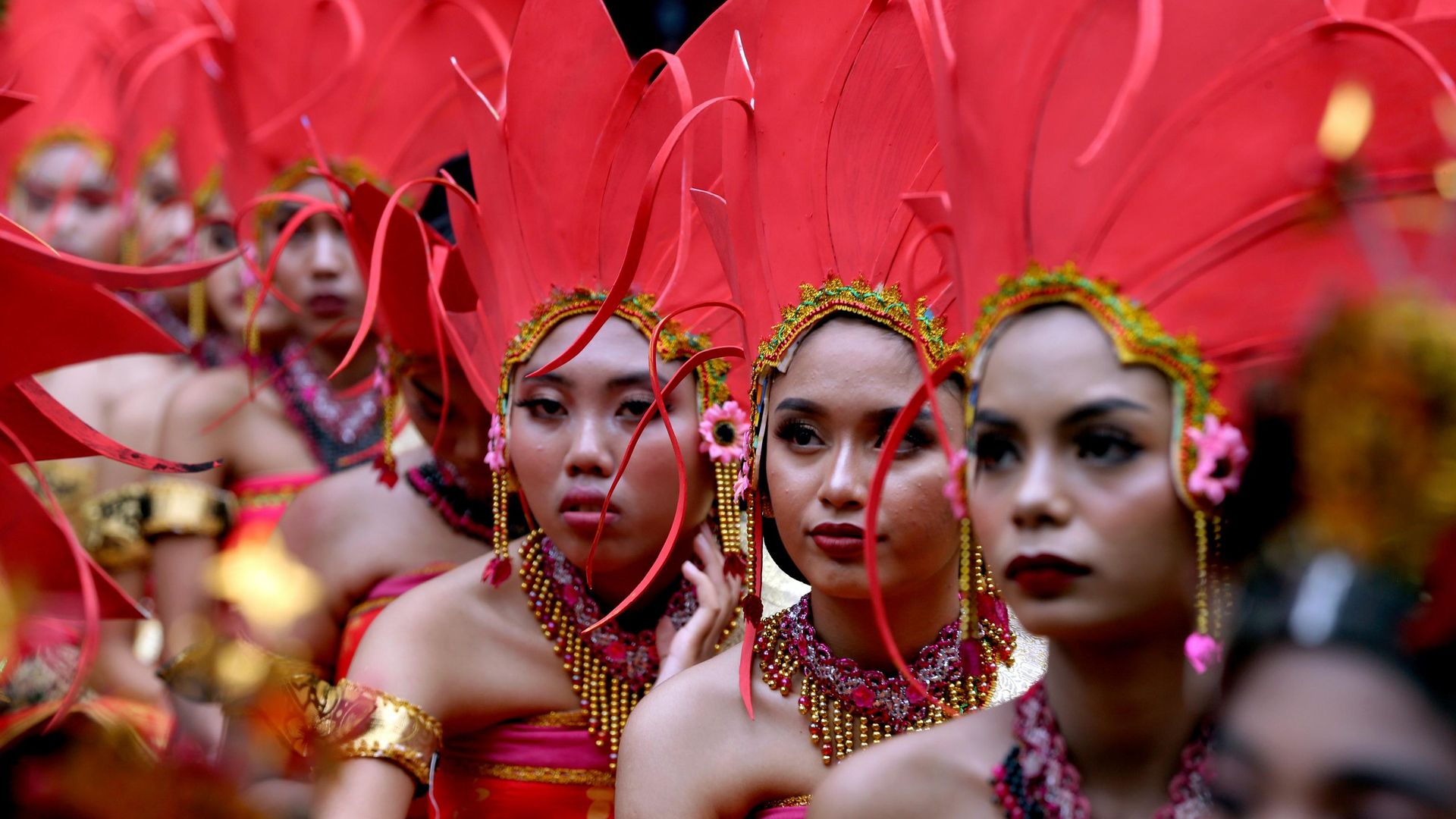
© AP Photo / Firdia Lisnawati
Subscribe
A stunning piece of news from New Delhi has reached the leadership and the public in Moscow and beyond: there was, recently, a territory in distant lands that has declared itself independent. The new name of that territory is Indonesia.
And there is a war raging in that land, with British troops against the newly-formed Indonesian army.
The year was 1945, October 13. The mentioned report has been sent from India, because that was the place of a regional bureau of TASS, the Russian news agency, nearest to Indonesia. Other news from Indonesia came to USSR from places like London. The London correspondent of Izvestia, the major newspaper in the land even now, told the public about a battle between the troops of a newborn state and the British troops, sent there to facilitate the return of that colony to its former masters, the Dutch.
It would not be absolutely correct to say that the world of today and tomorrow is going through changes, similar to what was happening after 1945. History is never repeating itself with a 100% accuracy. Still, some similarities are simply striking.
Here I have to say that I’m quoting from a book, the Russian translation of which I’m now editing for publication in Moscow. The author is an Indonesian historian Dr. Ahmad Fahrurodji. The title is Khruschev – Sukarno: Indonesia and Russia in the vortex of the Cold War. To remind, Sukarno (one name only) was the founding father of free Indonesia, while Khruschev lead Russia between 1953 and 1964, and their interaction was quite a story.
Why I really love that book? And why people love digging out the smallest details of the past battles and friendships? It’s because we need lessons from the past to help us with the present. Getting ourselves deep into the skins of our predecessors helps us not to miss something truly important in today’s events.
First thing you get from reading that book, and many other books of the kind, is: the wise political leaders of the global powers often had no idea about the meaning of what was going on. There was no Indonesia only very recently, just “Nederlanse Indie”, and try to get any contemporary logic in that Dutch name.
How about India itself? It has got its independence from Britain in 1947, as we all know, while in 1945… Some historian may know the reaction of Indians in 1945 to sudden emergence of a big independent nation with a highly unusual name. Maybe these events helped the leaders of the new India to get some ideas.
Ahmad Fahrurodji starts his book from an attempt to imagine the thoughts and feelings of the then Soviet leadership, headed by Joseph Stalin, about that strange disorder in distant lands. Indonesian historian’s verdict is probably correct: Stalin’s thinking was strictly West-oriented, for a simple reason that there was not much of East around the end of the Second World War.
The Cold War has officially started in 1946-1947, when the former allies of the USSR - US and UK, openly proclaimed their intention to confront Moscow. The threat was real and big, and one could understand the mentality of the Soviet leader, Joseph Stalin, whose nation was still reeling from terrible losses and devastation of formerly occupied territory. And the world, at the time, consisted of East and West only, since the process of decolonization was only starting. So Fahrurodji is very right, saying that for the Stalin’s team Indonesia was something like the means to weaken and distract the West from harassing the USSR.
But let us ask ourselves: do we really understand the today’s world, where so many unprecedented things are happening? It’s natural for almost any citizen of this world to rely on the previous experience and worldview, coined in the decades since the same 1945.
While our Indonesian writer accepts, grudgingly, the logic of the Soviet behavior right after 1945, he becomes almost poetic, describing the change in Moscow that came with the next leader. Nikita Khruschev. That man and his Indonesian counterpart, Sukarno, have formed quite a friendship, and at certain moments Indonesia looked like Russia’s best friend in the whole Third World, and vice versa.
A lot of things had to happen to achieve that result. The 1950-s were not like 1940-s at all. The year 1956 was probably a watershed, due to two monumental events. First, that was a coup in Egypt, with subsequent nationalization of the Suez, that showed that decolonization was not Asia’s monopoly. And, second, there was that conference in Bandung, Indonesia, when – with the help of India and others – the idea of Asian-African solidarity had been formed. Moscow and everyone else in the world have seen that the world was no longer a battleground of East and West only, a powerful third force came into being, and that force was worth of separate treatment.
If you ask an average Russian today about Nikita Khruschev, the verdict will be not very complimentary. A nice man and a great leader he was not, and his removal from power in 1964 came after his multiple blunders in domestic and foreign policy. Likewise, Sukarno was a complicated person, too, his blunders were many, and his removal was inevitable. But Sukarno has taught at least one good lesson to the Russian diplomacy.
First, Sukarno asked Khruschev for military help for liberation from the Dutch the last bit of Indonesia’s today territory, that is Western Papua. And military help did come. But later on Sukarno decided to start a confrontation with Malaysia, that owned and still owns territories on mostly-Indonesian Borneo. And again Khrushev was about to render military help. Thanks God he was removed from power before doing that, since the Russia-friendly Malaysia of today would hold the grudge forever. So, the Russian diplomacy got its lesson, namely, that the Third World is as complicated as the first and the second one, and you have to be very careful dealing with its squabbles, territorial or others.
What happens now between old friends, Russia and Indonesia? A long report in the above-mentioned Izvestia is painting a picture of local business in Jakarta actively exploring the new possibilities in Russia after a virtual free trade agreement, with zero tariffs for 90% of exchanged goods, signed last December. In April, after the Indonesian President Prabovo Subianto visit to Moscow. another agreement has been signed, designating energy and finance as two main avenues to be attended to. (Yet another avenue is culture and science, and that’s how I got me that book for editing).
By now the trade is only annual 5 billion US dollars, but the local business is saying that now it can be trebled very fast. Smartphones from Indonesia and medical equipment plus medicines from Russia seem to be the rage. Wheat and fertilizers are being exchanged for rubber (car tires need it) and electronic goods.
Agreement to do something about finance has been very timely. Since the West keeps its talons on the jugular of all dollar and euro transactions, it has to be rupiah against ruble, with no disbalance, needing a separate clearing system between the two nations: sounds familiar, doesn’t it? And if you dig really deep into Fahrurodji book, you’ll find plenty of similar trade stories between Russia and Indonesia even in the 1960-s. History does repeat itself, in a way.
Dmitry Kosyrev is a Russian writer, author of spy novels and short stories. He also did columns for the Pioneer and Firstpost.com