First In the World: Special Kind Of Nuclear Power For Russia’s New Friend
16:53 21.10.2026 (Updated: 19:53 23.10.2026)
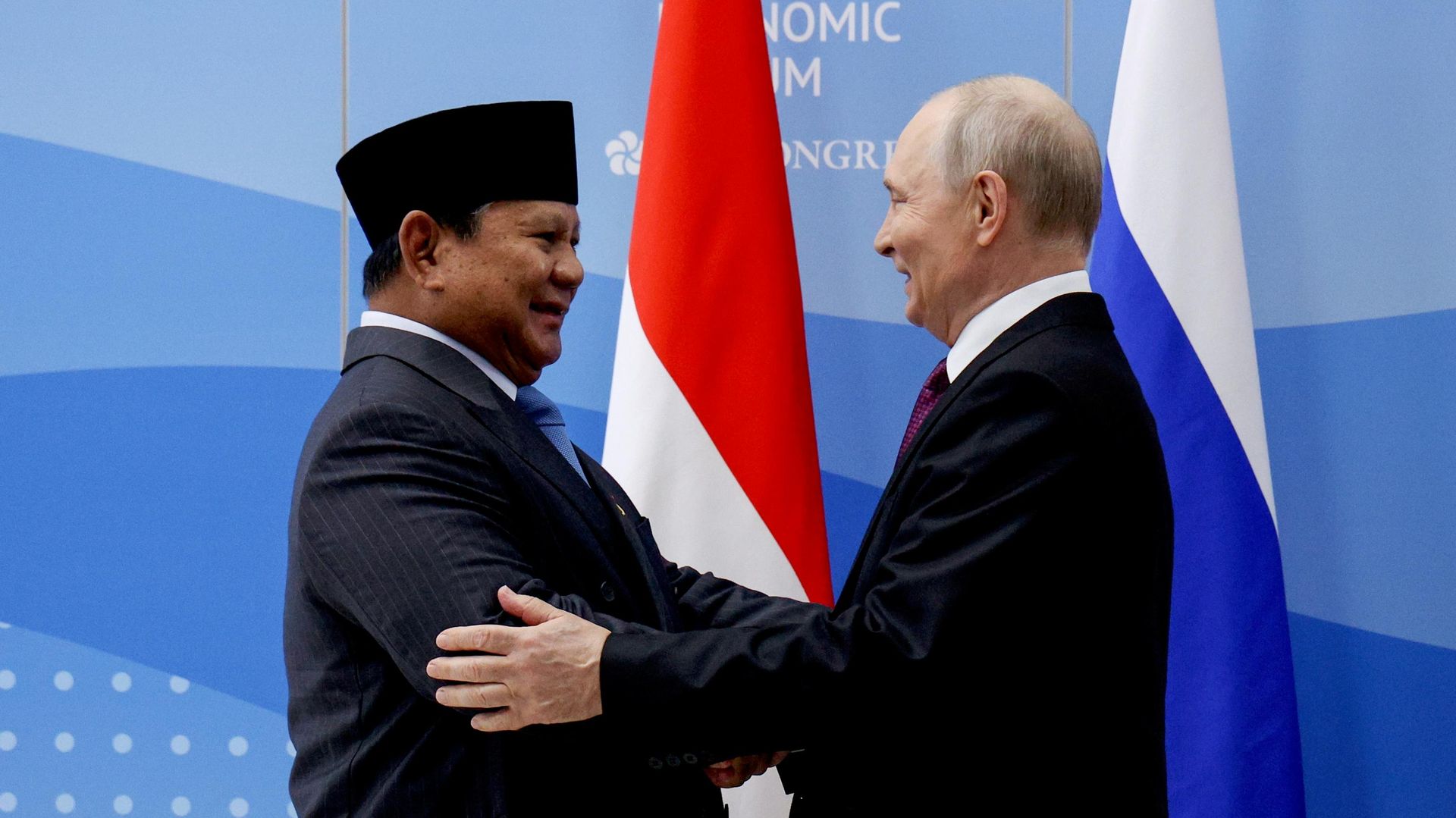
© AP Photo / Vyacheslav Prokofyev
Subscribe
If you cannot immediately find Halmahera of the North Maluku region, Indonesia, try that remote island-studded area to the west of Papua and to the south of the Philippines.
Halmahera is not just a miracle of beauty, it’s a place where nickel ore is in abundance, so here we have a miracle of another kind, an economic one of regional dimensions, with industrial zones springing up. And the only real problem there is isolation of islands from each other and from the rest of the archipelago. So how do you feed that territorially scattered miracle with power?
The contract with Russia, signed last week, says that the solution is a floating nuclear power station stationed next to the shore. It is a relatively small station, of only 200 megawatts. And it will be the first station of a kind in the world. Indonesians will get it in about 5 years, and then a new global era will start. Thing is, that nation is not the only one in the world that has plenty of islands, far from the industrial land mass. In all such cases, building other kind of power station, not to mention continuously providing it with fuel, is prohibitively complicated and expensive. Trailblazing in solving that problem is glorious.
To repeat: nobody in the world but Russia has the know-how how to build up such floating low-rise building, standing on a kind of a big raft, or rather a sea platform, like some oil drilling facilities at sea. Their drilling experience has shown that platforms are comfortably resistant to big waves, and besides no earthquake may harm it. They are also quite transportable, and will be built in Russia and then towed majestically across the seas to Halmahera.
There was a long journey that Russia has made towards the current export-oriented technology of making such stations. One usually remembers some slightly feverish ideas of the 1990-s about the proper way of scrapping old nuclear submarines, with reactors still in perfect order. The idea was simply to station these rusty heaps near the shore and use their reactors for powering old and new towns there, those with almost no land access to the rest of Russia.
But then, these were not only pipe dreams of military conversion. Not many people know that there is a whole city of Pevek on the Chukotka Peninsular, in Russia’s extreme North in the middle of the now-famous Arctic Sea Corridor, powered since 2020 by the reactor of an old civilian sea explorer ship The Academician Lomonosov. But then, the reactor there is a bit obsolete, while Indonesia gets itself a brand-new model, and will have no need to worry about fuel or the methods of its disposal.
And then there are the future Russian nuclear reactors on the Moon. Few people pay attention to the fact that a kind of a precedent happened in the USSR in 1964, when a satellite with a small reactor has been launched into space, while later on there were 34 such cases in between 1970 and 1988. Uranium-powered nuclear reactors up there, mostly on the military satellites, proved to be quite good for keeping these objects alive in space for a long time. The year 2030 may see a land-based Russian nuclear power station on the Moon, with a totally new kind of reactor to produce energy.
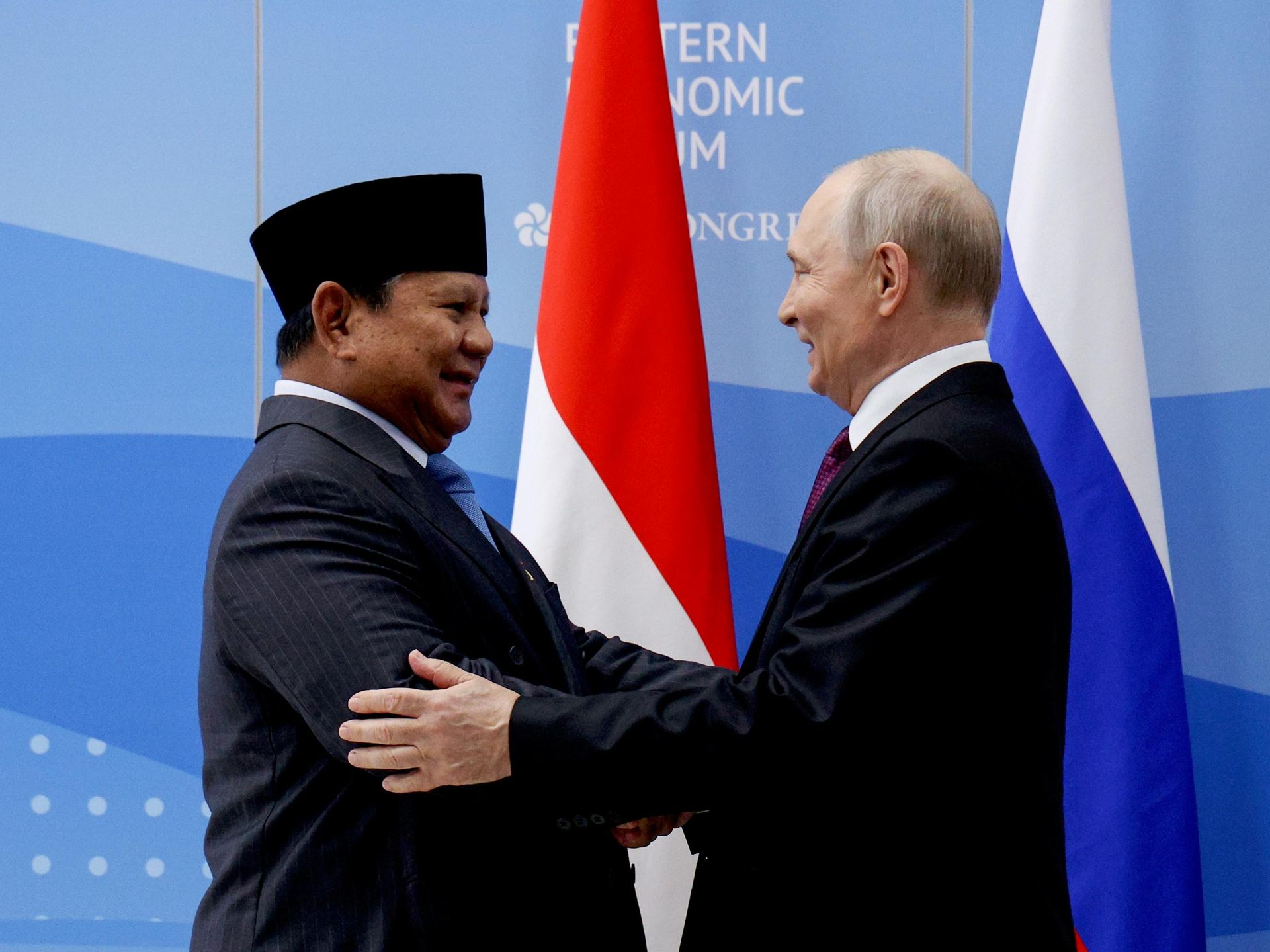
Indonesia happens to be the first foreign customer for these relatively small sea-based nuclear units. But then, that was a predictable result of the current blossoming romance of Moscow with the new leadership of the nation, headed by the President Prabowo Subianto.
What happens when nations get closer to each other? One such result is, you feel the change in your daily living, close to home, instead of watching things on the TV screen. The screen has shown General Prabovo meetings with the Russian President Vladimir Putin again and again, in Russia and other places. While my own daily living is, in part, connected with the new information project of the Institute of Oriental Studies (IOS) of the Russian Academy of Sciences.
Sleeping Beauty Awakes – that’s how I called one of my columns last May, describing how my old and esteemed friends called me up and invited to participate in their new project. What they wanted me to do was to write express commentaries about events in Asia on their brand-new website, called The Eastern Tribune. And maybe to edit some books.
And so I’ve been writing it since then, concentrating on the places I know best, that is South East Asia. While The Eastern Tribune, in the meantime, grew big – and it was Indonesia that contributed a lot to that growth.
In May, I only mentioned two books to be published within the project. Namely, the one written by Prabowo Subianto, who is telling us what it means to be a soldier and a general. And, second, about the cordial relations in 1960-s of the Russian Prime Minister Nikita Khruschev with Sukarno, the founder of the independent nation.
Well, now there are more publications to boast of. I’ve just gotten one for editing, and that is a serious methodological essay on how to study the Indonesian arts and culture, all of it. The idea is, it’s not a mix and not a melting pot, that culture is an unbelievably complicated process of adapting first Hindu, then Buddhist tradition, then the Chinese influence, and finally the Dutch colonial cultural wave, to plenty of local cultures, accepting and gently accommodating all these foreign things to several different huge local communities. And then – here I make a quick dash to the Tribune’s website, ot-portal.com – and then there is a publication about a unique collection of manuscripts, gathered together in Batavia (Jakarta today) in early 18th century by the Dutch and bought up by a Russian Orientalist in Paris, in 1926…
And then I get a call from a friend, with a question: would my Indonesian-speaking daughter teach the language to the newly-accepted students of the freshly-opened Indonesian group in Moscow’s Humanitarian University? Studying that nation is getting fashionable now. And that’s really close to home.
Restoration of Russo-Indonesian ties to the level of their heyday of the 1960-s (and after a long freeze of these ties for decades afterwards) is quite a diplomatic story. Prabovo Subianto if following faithfully the Indian recipe of balancing foreign relations. But that mostly concerns military ties, and Prabovo has signed security agreements with all kind of partners in the Pacific or any other ocean, be it West or East, the US or China.
While in the economic field it’s a bit different. Indonesia wants to be real big not only in population, but to become a superpower of South East Asia. And so it is absolutely logical of that nation to obtain the best of energy technologies from the virtual nuclear monopolist, that is, from Russia.
Dmitry Kosyrev is a Russian writer, author of spy novels and short stories. He also did columns for the Pioneer and Firstpost.com