https://sputniknews.in/20261104/we-are-a-fish-country-12848589.html
We Are a Fish Country
We Are a Fish Country
Sputnik India
Russia’s Ministry of Industry and Trade has applied gentle bureaucratic pressure on restaurants, “suggesting” that they might want to include “Russian... 04.11.2026, Sputnik India
2026-11-04T12:17+0530
2026-11-04T12:17+0530
2026-11-11T12:17+0530
sputnik opinion
russia
moscow
https://cdn1.img.sputniknews.in/img/07ea/07/0c/11622611_0:174:3022:1874_1920x0_80_0_0_b9105944d0dfc7e830e43faa8abeab66.jpg
No, if you are a Japanese or an Italian or any other such kind of restaurant, you are not supposed to comply. While the rest are faced with an officially provided long list of things that are supposed to be traditionally Russian and morning-oriented.The ministry promises to approve a nation-wide emblem stating that the place is really serving such breakfast to people, while all kind of local authorities will have to promote that idea, again without excessive pressure applied. Finally, the ministry is telling us that this is a part of nation-wide drive for promotion of national traditions, and that drive is good for business. While, currently, you are more likely to find an English or a French breakfast wherever you go, and that is bad.Here we have at least three interesting problems. First, Russia still lives in an era, when things foreign are attractive. Second, Russian national cuisine is not exactly unattractive to some folks, it is simply not known enough. It is being associated with the Soviet era, when food was often unremarkable. Finally, the general reputation of absolutely traditional Russian food is dubious, since it is supposed to be excessively heavy and even unhealthy.But, at the same time, not only the government officials are willing to correct that injustice. There are also hundreds of famous chefs who are doing a lot of research on the subject of what really was Russian national cooking tradition, and which area of Russia and which century are supposed to be the best. The results of that research are, naturally, going to your table, not only to a bookshelf.Moscow Gastrofestival, that ends next week, has brought a lot of good ideas on the subject. Theoretically, it is 21 years old, but then here we have a really old tradition of holding such festivities at the end of autumn season. The reason is simple, since harvest festivals are something every nation is doing naturally. The end of harvest season is especially noticeable in the lands where winter means snow covering the ground, with fresh products to be felicitated in these last days of abundance.So what did we see at that festival, where, among other events, a competition of 52 grand artists of cooking took place? These geniuses from all Russia have produced their masterpieces for jaded palates of the jury. The general topic for that event, as designated by organizers, was, not surprisingly, the Russian cuisine. And, what’s funny, even some chefs of Peruvian or Japanese restaurants thought of some really crazy fusion of their national foods with this or that Russian tradition.Let us do a survey of some really inventive ideas presented. Here we discover a snack invented by people from a wine bar bearing a proud English name: Blush. The Blush chef turned to the tradition of the Arctic areas, preparing a mousse of local herring, placed on pieces of typically Russian brown rye bread and covered with a thin cucumber veil. And that probably was the simplest of the festival’s masterpieces.And then there was something from a Beluga Restaurant, namely big chunks of raw trout combined with cucumber jelly and a mousse made of southern feihoa fruit (most probably unknown anywhere else in the world), boiled in fish soup.How about dumplings, are they Russian or brought from China in God knows which century? Anyway, a grand master from the Dr. Zhivago restaurant has invented a grand fried dumpling, filled with pieces of three kinds of fish, crowned by three different kinds of fish roe.My reader has probably already guessed what proved to be the most popular product in that contest, with other products playing back vocals. That was fish and all kind of seafood (or, rather, lake and river food). That has not been planned. But then that trend of researching old traditions has not been invented by the above-mentioned Ministry. The chefs, especially across the nation’s vast expanses, have long been studying all kind of local foods and discovering that Russia, basically, has been a fish country for many centuries, with vegetables and grains playing the second fiddle. People were catching fish even from under frozen water surface, and still do it today, drilling a hole in the ice. While meat was always a rare treat for a Russian table, in most cases you had to go to a forest and kill some creature there, to get that kind of provision.That fact is easy to explain, if you look at the map. The heart of the nation is located along rivers and lakes between the Baltic and the Black seas. Russia has firmly established its foothold on these sea shores only in the 18thcentury, while the birth of the grand Russian cities like Kiev or Novgorod happened much earlier due to trading activities along these rivers and on the banks of these lakes. A simple route from Moscow to St. Petersburg today takes you across literally hundreds water expanses.It’s a long story about how fish has yielded its basic place at the Russian table in the 20thcentury, Basically it has fallen victim to that time’s delusions about grand-scale food processing and packaging industries, these delusions murdering a lot of charm of that special product that has to be fresh.But by now these delusions are in the past, while rivers, lakes, sea and oceans stay a part of Russian daily living. And here it is advisable to ask a nearby AI search about Russia’s water resources in general.The answer is stunning: it’s like nowhere else in the world, as in absolute leadership. Rivers: 2.7 million in number, mostly crossing the map from South to North that is Arctic. Admittedly, Brazil has more of that flowing water. But then, Russia has lakes: also 2.7 million of these, including a miracle like Baikal, the deepest lake in the world. Swamps: 1.5 million of square kilometers, which is about 9% of all the national territories.And then there are glaciers and waters underground. And artificial reservoirs, feeding some cities. All in all, any Russian owns 30.2 thousand of cubic meters of water per year. Incredible.There was an economist who came to our club as an invited speaker a couple of weeks ago, his topic was Russia’s resources in general. He said: yes, we all know about oil, and gas, and gold, and the rest. But, still, water is our greatest treasure. And if there really will be a serious change of climate, we’ll have more water deposits unfrozen, with more arable land to till, like in South Siberia or anywhere else. So let us keep that treasure from unfriendly folks out there.He failed to mention, in his presentation, fish as Russia’s basic food of the future, but then our traditions may well change again, with all these arable lands to use.Dmitry Kosyrev is a Russian writer, author of spy novels and short stories. He also did columns for the Pioneer and Firstpost.com
https://sputniknews.in/20261111/indian-crew-being-injured-as-another-tanker-attacked-in-persian-gulf-shipping-minister-12848459.html
russia
moscow
Sputnik India
feedback.hindi@sputniknews.com
+74956456601
MIA „Rossiya Segodnya“
2026
News
en_IN
Sputnik India
feedback.hindi@sputniknews.com
+74956456601
MIA „Rossiya Segodnya“
Sputnik India
feedback.hindi@sputniknews.com
+74956456601
MIA „Rossiya Segodnya“
russia, moscow
We Are a Fish Country
12:17 04.11.2026 (Updated: 12:17 11.11.2026) Russia’s Ministry of Industry and Trade has applied gentle bureaucratic pressure on restaurants, “suggesting” that they might want to include “Russian breakfasts” in their menus.
No, if you are a Japanese or an Italian or any other such kind of restaurant, you are not supposed to comply. While the rest are faced with an officially provided long list of things that are supposed to be traditionally Russian and morning-oriented.
The ministry promises to approve a nation-wide emblem stating that the place is really serving such breakfast to people, while all kind of local authorities will have to promote that idea, again without excessive pressure applied. Finally, the ministry is telling us that this is a part of nation-wide drive for promotion of national traditions, and that drive is good for business. While, currently, you are more likely to find an English or a French breakfast wherever you go, and that is bad.
Here we have at least three interesting problems. First, Russia still lives in an era, when things foreign are attractive. Second, Russian national cuisine is not exactly unattractive to some folks, it is simply not known enough. It is being associated with the Soviet era, when food was often unremarkable. Finally, the general reputation of absolutely traditional Russian food is dubious, since it is supposed to be excessively heavy and even unhealthy.
But, at the same time, not only the government officials are willing to correct that injustice. There are also hundreds of famous chefs who are doing a lot of research on the subject of what really was Russian national cooking tradition, and which area of Russia and which century are supposed to be the best. The results of that research are, naturally, going to your table, not only to a bookshelf.
Moscow Gastrofestival, that ends next week, has brought a lot of good ideas on the subject. Theoretically, it is 21 years old, but then here we have a really old tradition of holding such festivities at the end of autumn season. The reason is simple, since harvest festivals are something every nation is doing naturally. The end of harvest season is especially noticeable in the lands where winter means snow covering the ground, with fresh products to be felicitated in these last days of abundance.
So what did we see at that festival, where, among other events, a competition of 52 grand artists of cooking took place? These geniuses from all Russia have produced their masterpieces for jaded palates of the jury. The general topic for that event, as designated by organizers, was, not surprisingly, the Russian cuisine. And, what’s funny, even some chefs of Peruvian or Japanese restaurants thought of some really crazy fusion of their national foods with this or that Russian tradition.
Let us do a survey of some really inventive ideas presented. Here we discover a snack invented by people from a wine bar bearing a proud English name: Blush. The Blush chef turned to the tradition of the Arctic areas, preparing a mousse of local herring, placed on pieces of typically Russian brown rye bread and covered with a thin cucumber veil. And that probably was the simplest of the festival’s masterpieces.
And then there was something from a Beluga Restaurant, namely big chunks of raw trout combined with cucumber jelly and a mousse made of southern feihoa fruit (most probably unknown anywhere else in the world), boiled in fish soup.
How about dumplings, are they Russian or brought from China in God knows which century? Anyway, a grand master from the Dr. Zhivago restaurant has invented a grand fried dumpling, filled with pieces of three kinds of fish, crowned by three different kinds of fish roe.
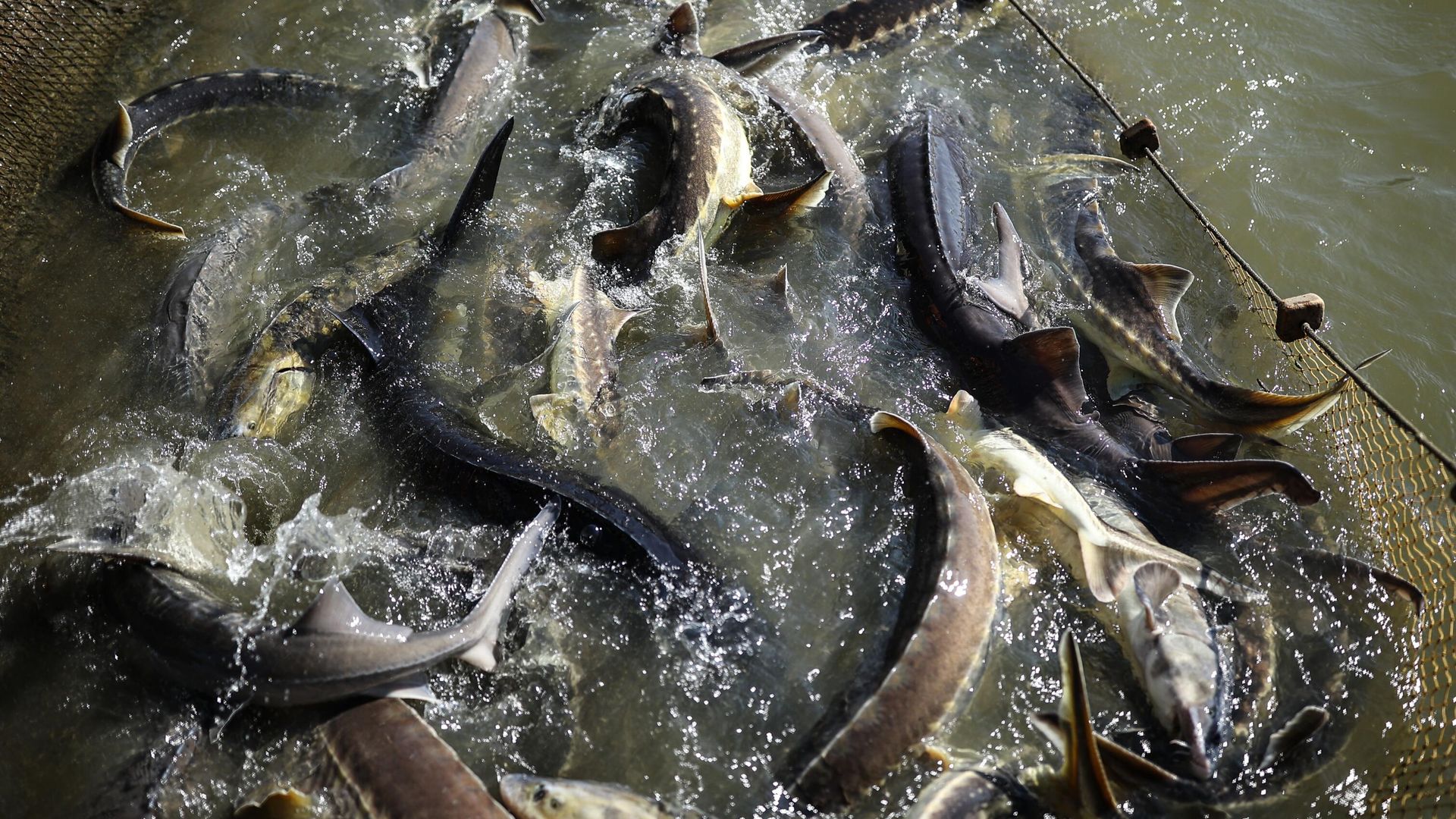
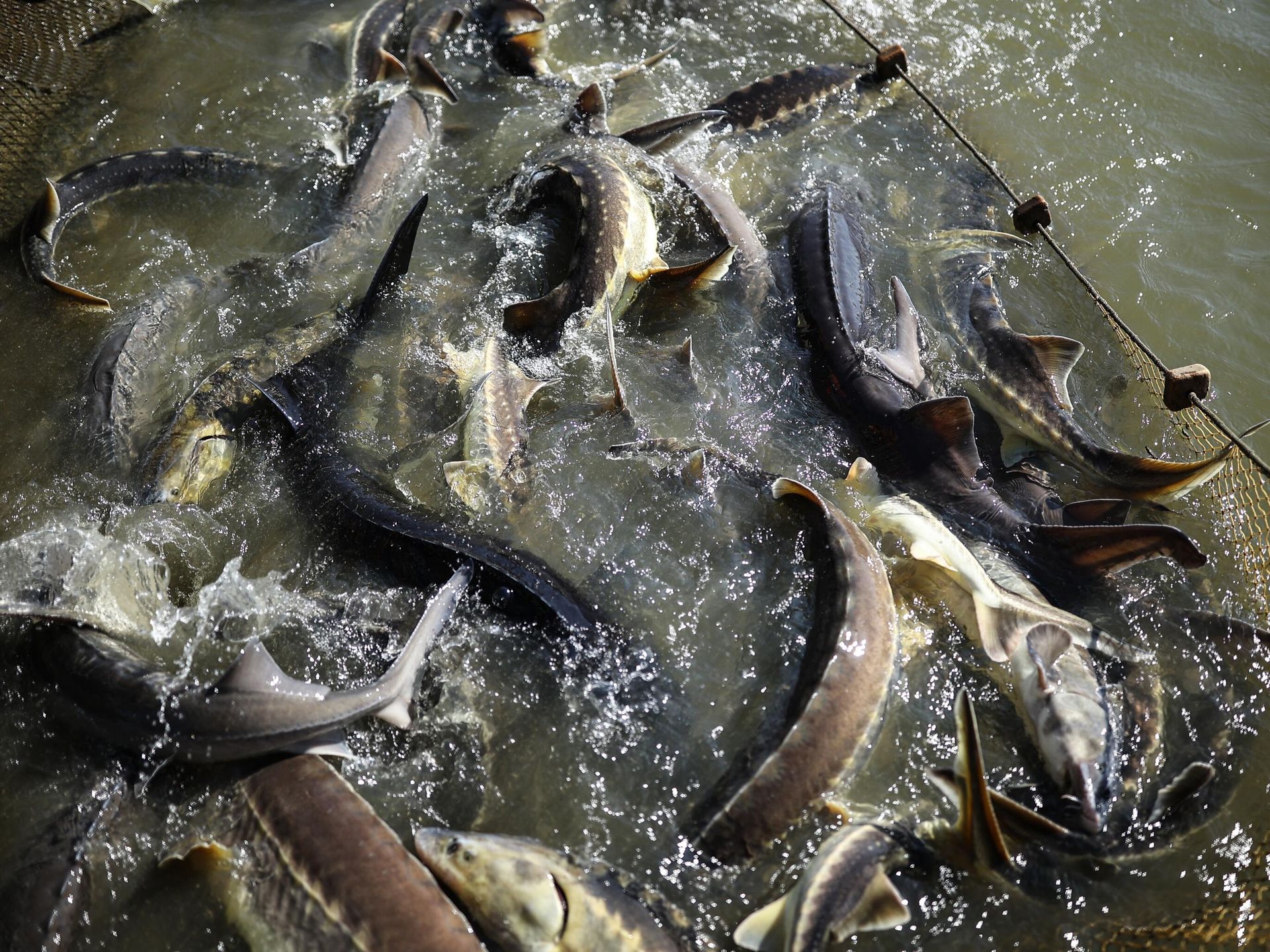
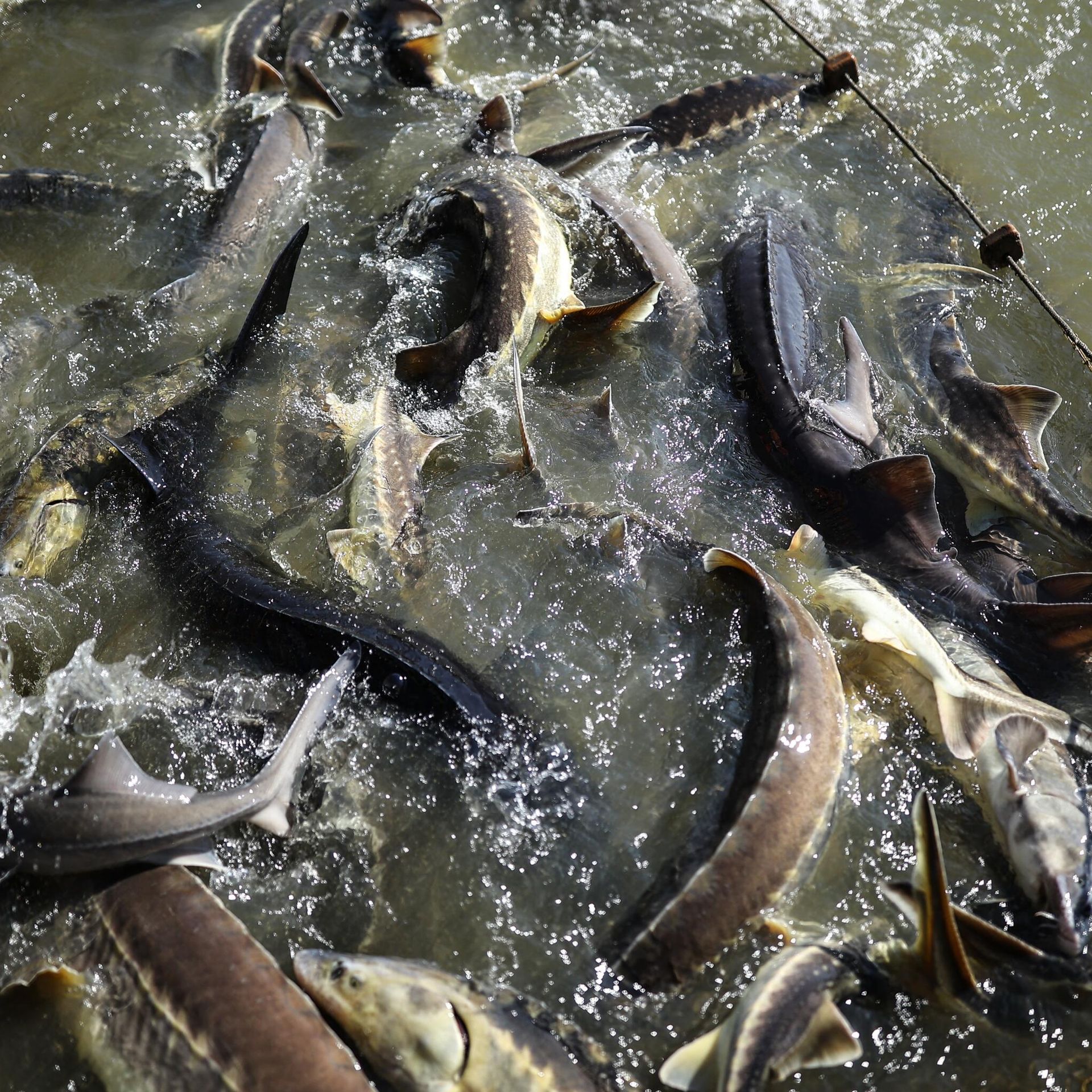
My reader has probably already guessed what proved to be the most popular product in that contest, with other products playing back vocals. That was fish and all kind of seafood (or, rather, lake and river food). That has not been planned. But then that trend of researching old traditions has not been invented by the above-mentioned Ministry. The chefs, especially across the nation’s vast expanses, have long been studying all kind of local foods and discovering that Russia, basically, has been a fish country for many centuries, with vegetables and grains playing the second fiddle. People were catching fish even from under frozen water surface, and still do it today, drilling a hole in the ice. While meat was always a rare treat for a Russian table, in most cases you had to go to a forest and kill some creature there, to get that kind of provision.
That fact is easy to explain, if you look at the map. The heart of the nation is located along rivers and lakes between the Baltic and the Black seas. Russia has firmly established its foothold on these sea shores only in the 18thcentury, while the birth of the grand Russian cities like Kiev or Novgorod happened much earlier due to trading activities along these rivers and on the banks of these lakes. A simple route from Moscow to St. Petersburg today takes you across literally hundreds water expanses.
It’s a long story about how fish has yielded its basic place at the Russian table in the 20thcentury, Basically it has fallen victim to that time’s delusions about grand-scale food processing and packaging industries, these delusions murdering a lot of charm of that special product that has to be fresh.
But by now these delusions are in the past, while rivers, lakes, sea and oceans stay a part of Russian daily living. And here it is advisable to ask a nearby AI search about Russia’s water resources in general.
The answer is stunning: it’s like nowhere else in the world, as in absolute leadership. Rivers: 2.7 million in number, mostly crossing the map from South to North that is Arctic. Admittedly, Brazil has more of that flowing water. But then, Russia has lakes: also 2.7 million of these, including a miracle like Baikal, the deepest lake in the world. Swamps: 1.5 million of square kilometers, which is about 9% of all the national territories.
And then there are glaciers and waters underground. And artificial reservoirs, feeding some cities. All in all, any Russian owns 30.2 thousand of cubic meters of water per year. Incredible.
There was an economist who came to our club as an invited speaker a couple of weeks ago, his topic was Russia’s resources in general. He said: yes, we all know about oil, and gas, and gold, and the rest. But, still, water is our greatest treasure. And if there really will be a serious change of climate, we’ll have more water deposits unfrozen, with more arable land to till, like in South Siberia or anywhere else. So let us keep that treasure from unfriendly folks out there.
He failed to mention, in his presentation, fish as Russia’s basic food of the future, but then our traditions may well change again, with all these arable lands to use.
Dmitry Kosyrev is a Russian writer, author of spy novels and short stories. He also did columns for the Pioneer and Firstpost.com