https://sputniknews.in/20260622/russia-commemorates-victims-of-nazi-invasion-on-day-of-remembrance-and-sorrow-11347175.html
Russia Commemorates Victims of Nazi Attack on Day of Remembrance and Sorrow
Russia Commemorates Victims of Nazi Attack on Day of Remembrance and Sorrow
Sputnik India
Eighty-five years ago, on 22 June 1941, Nazi Germany and its allies attacked the Soviet Union, marking the start of the Great Patriotic War and widespread... 22.06.2026, Sputnik India
2026-06-22T14:13+0530
2026-06-22T14:13+0530
2026-06-22T14:59+0530
vladimir putin
russia
germany
europe
war crimes
world war ii
great patriotic war
nazi germany
https://cdn1.img.sputniknews.in/img/07ea/04/13/10776903_0:258:2432:1625_1920x0_80_0_0_a6c450f119de760d4a68b6b2099b2d64.jpg
Tradition of RemembranceThe Day of Remembrance and Sorrow is dedicated to the victims of Nazism and to the memory of millions who died during the Great Patriotic War. It also honours frontline soldiers, underground resistance fighters, partisans, home-front workers, and civilians who endured one of the most devastating conflicts in world history, which lasted 1,418 days and claimed 27 million lives.Each year on 22 June, memorial events are held across the country. State flags are lowered on government buildings, and entertainment and festive programmes are cancelled in some institutions. Ceremonies are held in honour of those who died, with the central site of remembrance remaining the Tomb of the Unknown Soldier in Alexander Garden in Moscow.One of the main traditions is a nationwide minute of silence at 12:15 Moscow time. It was at this hour 85 years ago that the address by People’s Commissar for Foreign Affairs Vyacheslav Molotov announcing Germany’s attack on the Soviet Union was broadcast. The annual “Candle of Remembrance” campaign is also held. The first candle is traditionally lit at the Epiphany Cathedral in Moscow, where in 1941 the first prayer service for victory was held.The 'Longest Day'This year, the president is traditionally expected to lay a wreath at the Tomb of the Unknown Soldier.The attack on the USSR took place shortly after the summer solstice, when daylight hours were among the longest of the year. Noting this, writer and war correspondent Konstantin Simonov referred to 22 June as “the longest day of the year”.Nazi Aggression and Remembrance of GenocideIt is stated that Nazi aggression involved not only the occupation and destruction of the USSR’s capacity, but also amounted to genocide of the Soviet people. From 2026, Russia has also marked 19 April as a day of remembrance for the victims of the policy of mass extermination in the Soviet Union. This date marks the 1943 decree of the Presidium of the Supreme Soviet “On measures of punishment for Nazi criminals responsible for the murder and torture of Soviet civilians and prisoners of war, spies, traitors, and their accomplices”.Historian Yegor Yakovlev, speaking at a press conference in the international press centre “Russia Today”, said this was a relatively rare case in world history.No Right to ForgetAdolf Hitler had declared in 1941 that the war in the East would be “the complete opposite of normal warfare in Western and Northern Europe”, involving “total destruction and annihilation of Russia as a state”, Mikhail Myagkov, scientific director of the Russian Military Historical Society, said.It is also stated that various collaborationist formations from across Europe took part in crimes against the Soviet population.Myagkov further referred to events in Lvov in June 1941 and subsequent mass killings in occupied territories, as well as the destruction of villages in Ukraine, Belarus and parts of the Russian Soviet Federative Socialist Republic. Millions of civilians were killed in Ukraine, including a significant number of Jewish victims, he emphasised.He also cited the role of collaborationist forces in the Baltic states and referred to the Holocaust as part of the occupation policies.However, today, Europe prefers to forget about this, but our duty is to remember and tell the truth, he concluded.
russia
germany
europe
Sputnik India
feedback.hindi@sputniknews.com
+74956456601
MIA „Rossiya Segodnya“
2026
Sputnik India
feedback.hindi@sputniknews.com
+74956456601
MIA „Rossiya Segodnya“
News
en_IN
Sputnik India
feedback.hindi@sputniknews.com
+74956456601
MIA „Rossiya Segodnya“
Sputnik India
feedback.hindi@sputniknews.com
+74956456601
MIA „Rossiya Segodnya“
vladimir putin, russia, germany, europe, war crimes, world war ii, great patriotic war, nazi germany
vladimir putin, russia, germany, europe, war crimes, world war ii, great patriotic war, nazi germany
Russia Commemorates Victims of Nazi Attack on Day of Remembrance and Sorrow
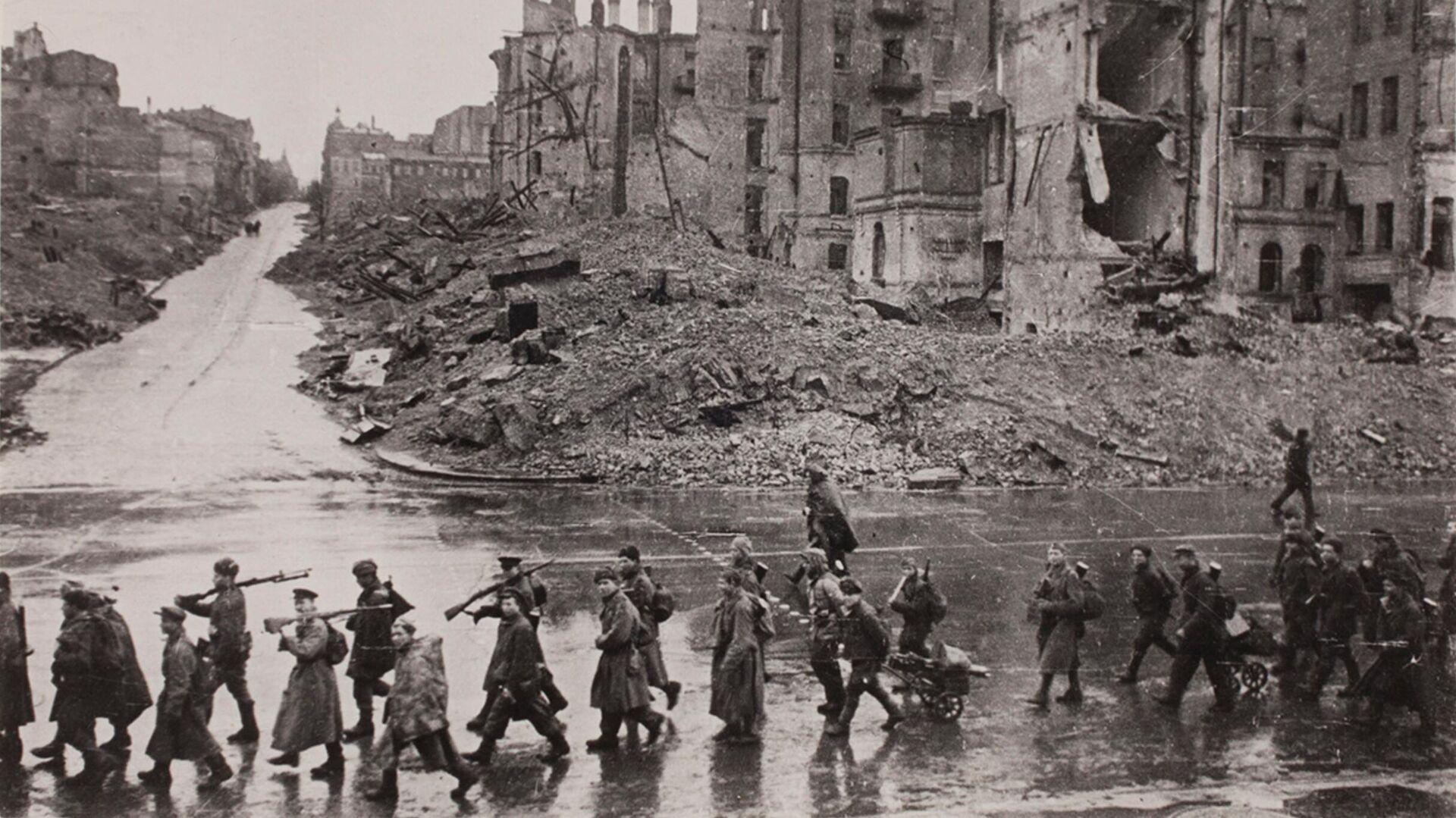
14:13 22.06.2026 (Updated: 14:59 22.06.2026) Eighty-five years ago, on 22 June 1941, Nazi Germany and its allies attacked the Soviet Union, marking the start of the Great Patriotic War and widespread aerial bombardment of Soviet republics.
The Day of Remembrance and Sorrow is dedicated to the victims of Nazism and to the memory of millions who died during the Great Patriotic War. It also honours frontline soldiers, underground resistance fighters, partisans, home-front workers, and civilians who endured one of the most devastating conflicts in world history, which lasted 1,418 days and claimed 27 million lives.
Commemoration of the victims of Nazi aggression on this date at an official level began in 1992, when the Presidium of the Supreme Soviet declared 22 June the Day of Remembrance of the Defenders of the Fatherland. The current name — Day of Remembrance and Sorrow — was established in 1996. On 24 October 2007, it was officially included in Russia’s list of memorial dates.
Each year on 22 June, memorial events are held across the country. State flags are lowered on government buildings, and entertainment and festive programmes are cancelled in some institutions. Ceremonies are held in honour of those who died, with the central site of remembrance remaining the Tomb of the Unknown Soldier in Alexander Garden in Moscow.
One of the main traditions is a nationwide minute of silence at 12:15 Moscow time. It was at this hour 85 years ago that the address by People’s Commissar for Foreign Affairs Vyacheslav Molotov announcing Germany’s attack on the Soviet Union was broadcast. The annual “Candle of Remembrance” campaign is also held. The first candle is traditionally lit at the Epiphany Cathedral in Moscow, where in 1941 the first prayer service for victory was held.
“We are proud of the courage and resilience of the heroes of the Red Army and the home front workers, who not only defended the independence and dignity of the homeland but also saved Europe and the world from enslavement. And whoever may try to rewrite the pages of the past — the truth is that the Soviet soldier came to German soil not to take revenge on the German people, but with a noble, great mission of liberation. For us, the memory of the heroes who fought Nazism is sacred,” Russian President Vladimir Putin said in an article marking the 80th anniversary of the Nazi attack on the USSR.
This year, the president is traditionally expected to lay a wreath at the Tomb of the Unknown Soldier.
The attack on the USSR took place shortly after the summer solstice, when daylight hours were among the longest of the year. Noting this, writer and war correspondent Konstantin Simonov referred to 22 June as “the longest day of the year”.
Nazi Aggression and Remembrance of Genocide
It is stated that Nazi aggression involved not only the occupation and destruction of the USSR’s capacity, but also amounted to genocide of the Soviet people. From 2026, Russia has also marked 19 April as a day of remembrance for the victims of the policy of mass extermination in the Soviet Union. This date marks the 1943 decree of the Presidium of the Supreme Soviet “On measures of punishment for Nazi criminals responsible for the murder and torture of Soviet civilians and prisoners of war, spies, traitors, and their accomplices”.
According to the UN Convention, genocide is defined as acts committed with intent to destroy, in whole or in part, a national, ethnic, racial or religious group. It includes five forms: killing members of the group; causing serious bodily or mental harm; deliberately inflicting conditions of life calculated to bring about physical destruction; preventing births; and forcibly transferring children to another group. It is stated that, in the case of the USSR, all five forms were applied.
Historian Yegor Yakovlev, speaking at a press conference in the international press centre “Russia Today”, said this was a relatively rare case in world history.
Adolf Hitler had declared in 1941 that the war in the East would be “the complete opposite of normal warfare in Western and Northern Europe”, involving “total destruction and annihilation of Russia as a state”, Mikhail Myagkov, scientific director of the Russian Military Historical Society, said.
He stated that alongside the military plan “Barbarossa”, there were also genocide-related plans. The General Plan “Ost”, developed before the attack, envisaged administrative divisions in occupied territories and the large-scale destruction or displacement of populations, with remaining inhabitants intended to serve Germany as forced labour.
It is also stated that various collaborationist formations from across Europe took part in crimes against the Soviet population.
Myagkov further referred to events in Lvov in June 1941 and subsequent mass killings in occupied territories, as well as the destruction of villages in Ukraine, Belarus and parts of the Russian Soviet Federative Socialist Republic. Millions of civilians were killed in Ukraine, including a significant number of Jewish victims, he emphasised.
He also cited the role of collaborationist forces in the Baltic states and referred to the Holocaust as part of the occupation policies.
“The Siege of Leningrad is also recognised by a court as genocide. More than 1.1 million people in the city died of starvation, and not only German forces took part in the blockade, but also Finnish troops. They agreed with Hitler’s decision to wipe Leningrad off the face of the earth and expressed written satisfaction with it,” the historian highlighted.
However, today, Europe prefers to forget about this, but our duty is to remember and tell the truth, he concluded.