Do Aircraft Carriers Still Matter as Submarine Power Grows?
© Photo : Indian Navy
Subscribe

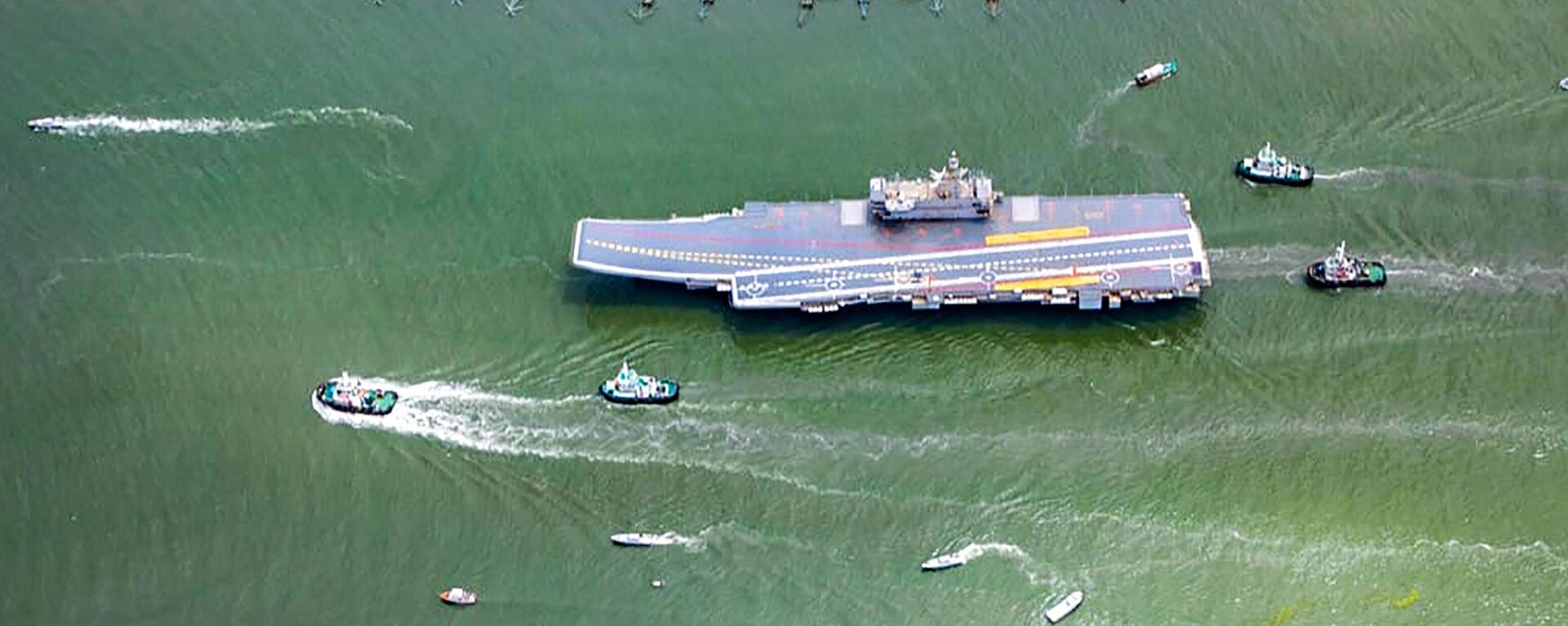
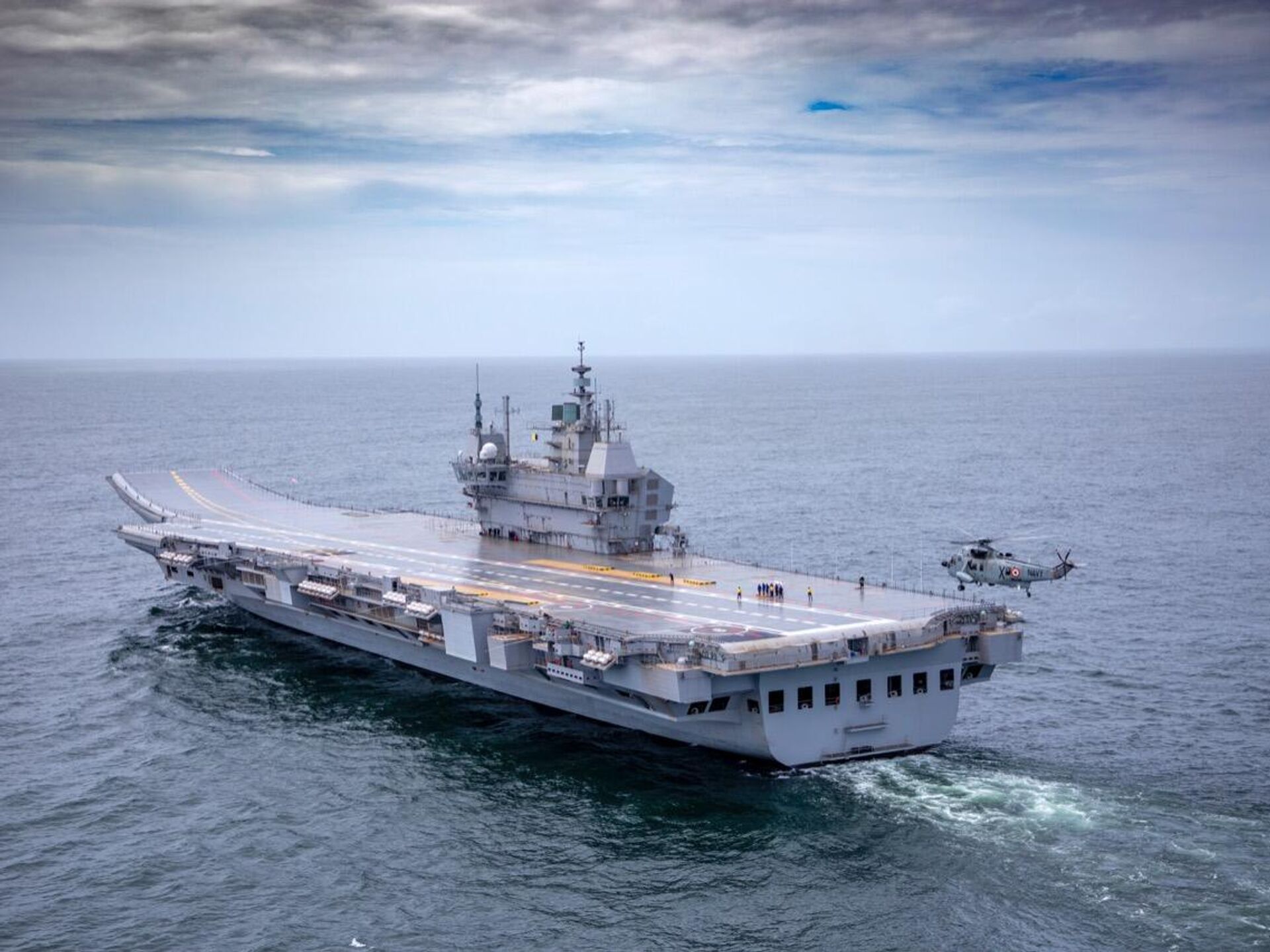
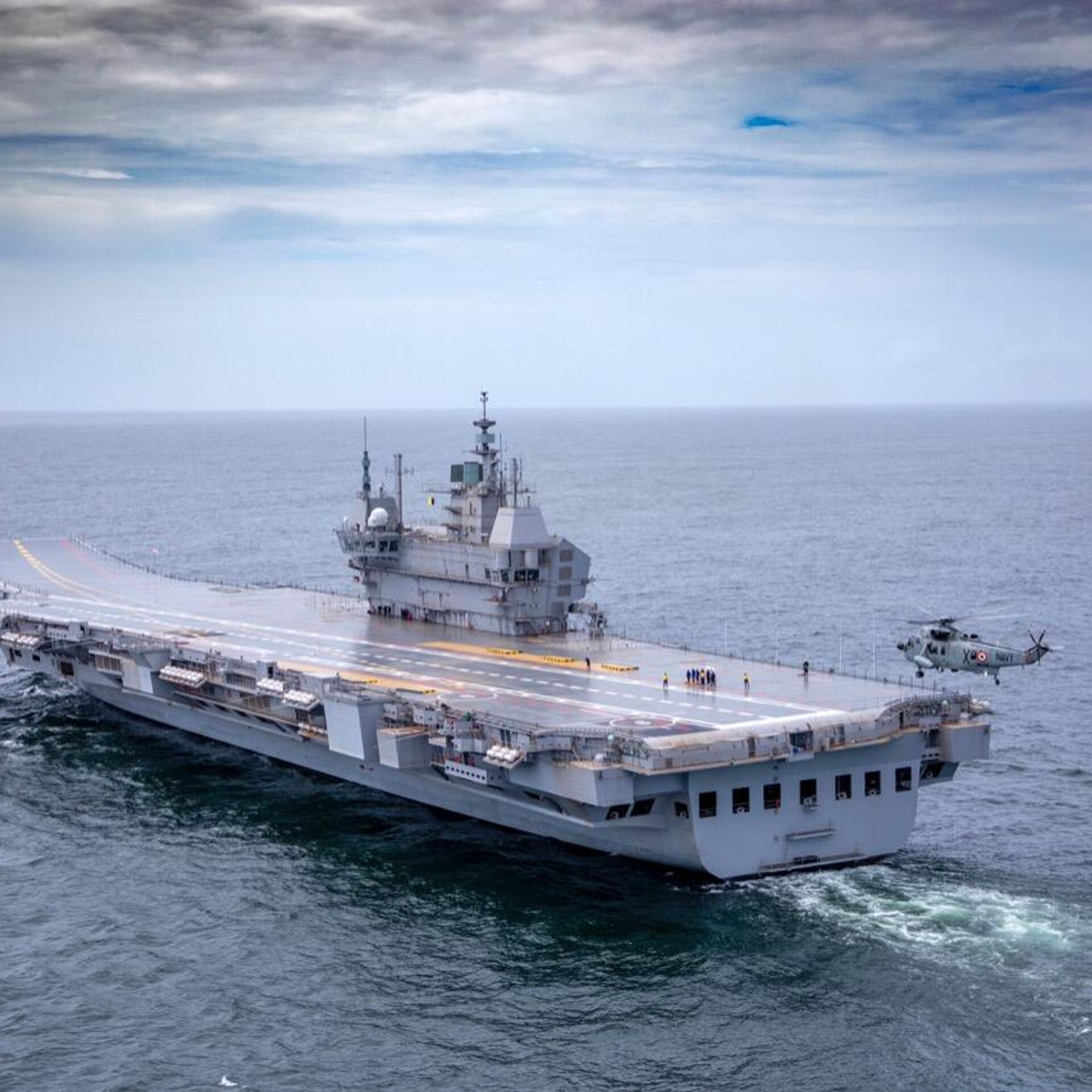
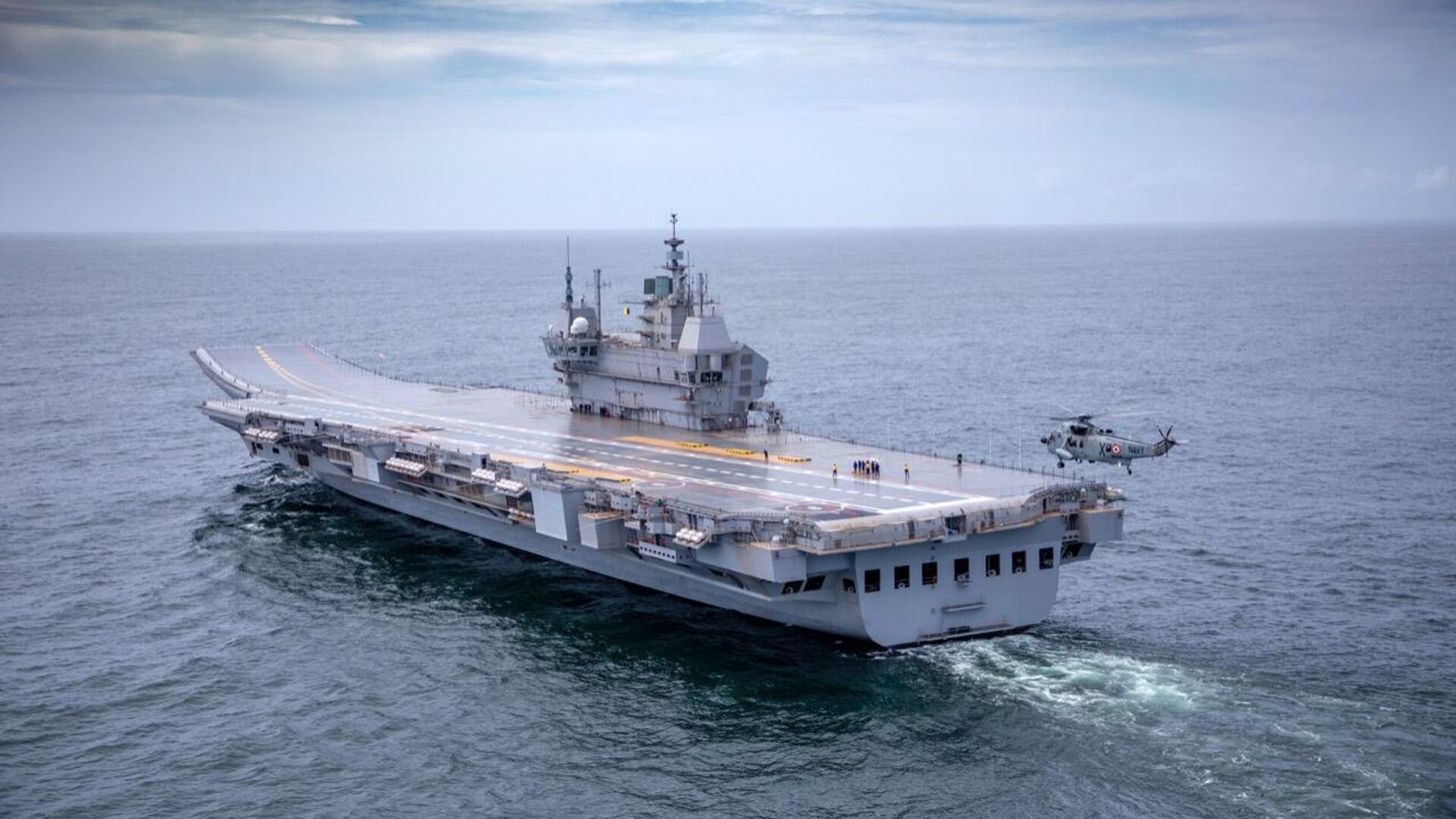
India has two aircraft carriers at present, the domestically produced INS Vikrant and the Russian-origin INS Vikramaditya.
With the Indian Navy still waiting for permission from the government for the construction of a second indigenous aircraft carrier following the induction of INS Vikrant in 2022, former Chief of Defence Staff General Anil Chauhan (Retd) has labelled these ships as "integral in ensuring deterrence and denial of space" in the Indian Ocean Region (IOR).
"Obviously, today warfare is moving subsurfaces. So a submarine is a good platform. But that doesn’t do away with the requirement of an aircraft carrier. Aircraft carriers are required even if it is huge. After a few years, you do not know actually that this will be required. But on a day-to-day basis, you are there in the Indian Ocean region. If your presence is there with those aircraft carriers in the Indian Ocean region they are a large force of deterrence," the ex-top Indian military officer said recently.
The Indian Navy's push for a third aircraft carrier is well documented, yet some defence pundits, both retired and serving, have supported the idea of having a large fleet of submarines, calling them hunter-killers.
Notwithstanding that, one must understand that the role of an aircraft carrier and the role of a submarine are different, said retired Captain Sarabjeet Singh Parmar, a former naval pilot in the Indian Navy.
Notwithstanding that, one must understand that the role of an aircraft carrier and the role of a submarine are different, said retired Captain Sarabjeet Singh Parmar, a former naval pilot in the Indian Navy.
"What the aircraft carrier can do, the submarine cannot do, and what the submarine can do, the aircraft carrier cannot do. Hence, the two cannot replace one another as both have an equal position or have an important stature or a role in a balanced maritime path or structure," Parmar told Sputnik India.
While there is a push for a third aircraft carrier from the Indian Navy, the country's blue water force has been pushing for submarines too. The only thing is that the planning got a little delayed. The navy is looking at a total force of around 24 submarines, which will be a mix and match of conventional and nuclear-powered submarines, he added.
Moreover, SSBNs are not a part of this figure. This force of 24 subs only includes SSNs (submarine, attack, nuclear), which are nuclear-attack submarines. Plus, there will be conventional diesel-powered but air-independent propulsion (AIP) equipped underwater boats. Therefore, these submarines will have their role and their deployment patterns, which signifies that their uses are of a different nature, the military veteran underscored.
Moreover, SSBNs are not a part of this figure. This force of 24 subs only includes SSNs (submarine, attack, nuclear), which are nuclear-attack submarines. Plus, there will be conventional diesel-powered but air-independent propulsion (AIP) equipped underwater boats. Therefore, these submarines will have their role and their deployment patterns, which signifies that their uses are of a different nature, the military veteran underscored.
"On the other hand, the Indian Navy requires an aircraft carrier for two distinct reasons. First, to project power on the seas and second, to have its maritime footprint. That's why there is a need to have at least three aircraft carriers at the same time, because one carrier will always be undergoing upgrades, repair or annual maintenance. So, at any given time, the Indian Navy need a force of two carriers, and that is how the balance comes about," Parmar explained.
When the military is looking at a balanced force, which will provide cover in the air, on the surface and subsurface, one needs all of this as neither can replace one for the other, he stated.
Aircraft carriers have always been the focus of attention and have been the centre of gravity, which is true ever since these large vessels have come into being. Despite their enormous size, they are not sitting ducks, yet a vital target for the adversary to take out. However, taking out an aircraft carrier is extremely difficult, given their protection mechanisms, the defence analyst stressed.
Aircraft carriers have always been the focus of attention and have been the centre of gravity, which is true ever since these large vessels have come into being. Despite their enormous size, they are not sitting ducks, yet a vital target for the adversary to take out. However, taking out an aircraft carrier is extremely difficult, given their protection mechanisms, the defence analyst stressed.
"For example, the Royal Navy during the Second World War ended up deploying around 55 different types of aircraft carriers, from light to medium to heavy. Over a six-year-period of intense fighting at different theatres in deep waters, only 10 were sunk by the Axis powers," Parmar underlined.
The statistics show that an aircraft carrier will always be the centre of attack for the enemy, especially an adversary that does not have a similar boat. But it doesn't mean that it's a sitting duck. The most important factor here is how a naval force utilises and deploys the aircraft carrier so that it can inflict maximum damage, he emphasised.
The main weapon of an aircraft carrier is the aircraft and with aircraft now working at longer ranges, an aircraft carrier doesn't have to be close to the adversary's coast. Rather, the fighter jets functioning from its deck can wreak havoc on the enemy, particularly if they are equipped with beyond-visual-range or ship-fired missiles, the expert concluded.
The main weapon of an aircraft carrier is the aircraft and with aircraft now working at longer ranges, an aircraft carrier doesn't have to be close to the adversary's coast. Rather, the fighter jets functioning from its deck can wreak havoc on the enemy, particularly if they are equipped with beyond-visual-range or ship-fired missiles, the expert concluded.