Bear As National Symbol: How Russia-Haters Attack The Animated Series (Again)
14:27 19.08.2026 (Updated: 15:03 02.09.2026)
© YouTube
Subscribe
Ever since 2009, Russia-haters of Europe have been attacking, with zero success, a 4-year-old Russian girl.
The girl is, of course, Masha from the Masha and the Bear animated television series, with its 100 billion viewers around the world, so far. No mistake here, I do mean 100 billion, not any other figure.
This summer, the Masha-busters are at it again. Fifty glorious UK Members of Parliament signed a petition about banning the series at least on the British territory, whatever it means in the age of Internet. Masha, they say, is guilty of being a “nice form of Russian propaganda”.
At the same time Margus Tsakhia, the Foreign Minister of Estonia (there is that tiny nation on the Baltic Sea) proclaimed the cartoon being a tool of Kremlin’s soft power, pushing militaristic ideas into kids’ programs.
The new bout of hysterics is due to Netlix’s fresh contract for broadcasting the series for the new season.
Anyone who saw the hyperactive Masha, always bringing trouble, and her mentor, the infinitely patient brown bear, living in the woods with plenty of animals around, would only heave a sigh: serious-looking European personalities are making utter idiots of themselves, and not for the first time. It’s a bit like banning “Mary had a little lamb” as evil English colonialist propaganda. Some exasperated European voices could be heard, though, like the one of Mr. Florian Filippo, the head of the Patriots Party of France, who remarked last week that the Russophobe hawks are getting more hysterical by the day.
Filippo is only too right, these folks are hysterical (and plainly ridiculous), and that’s because they are losing in all senses. Let us have a look at Masha’s impressive record. There are 191 series so far, they have been translated into 40 languages and viewed in about 100 nations. Masha is one of the world’s top five most popular entertainment brands, it has got the Diamond Award from YouTube, and so on. And it is clear as a day that you cannot be less political than a child, doing mischief together with her friends rabbits and squirrels, under the Bear’s all-forgiving and tender care.
But let us get serious and really discover some Russian propaganda hidden in the never-ending story of Masha. First, everything emanating from Russia is propaganda, and should not be allowed anywhere and at any time, right? Second, forget Masha, who is that Bear fellow, if you give him a good squint?
One cannot be more Russian than a bear, a globally accepted and locally cherished symbol of the nation. It is also a mascot of the United Russia party, currently holding the majority in the Parliament, and, to sum it, he is simply Russia.
The problem is, a bear is a terrible animal for every nation in the world but for Russians… and Indians. It’s not only about Baloo and Mowgli. To remind, you can see a tamed dancing bear on this or that highway around the tourist areas near Delhi. Yes, you can tame a bear and put it into a circus show. Only thing, not many nations in the world know how to do it.
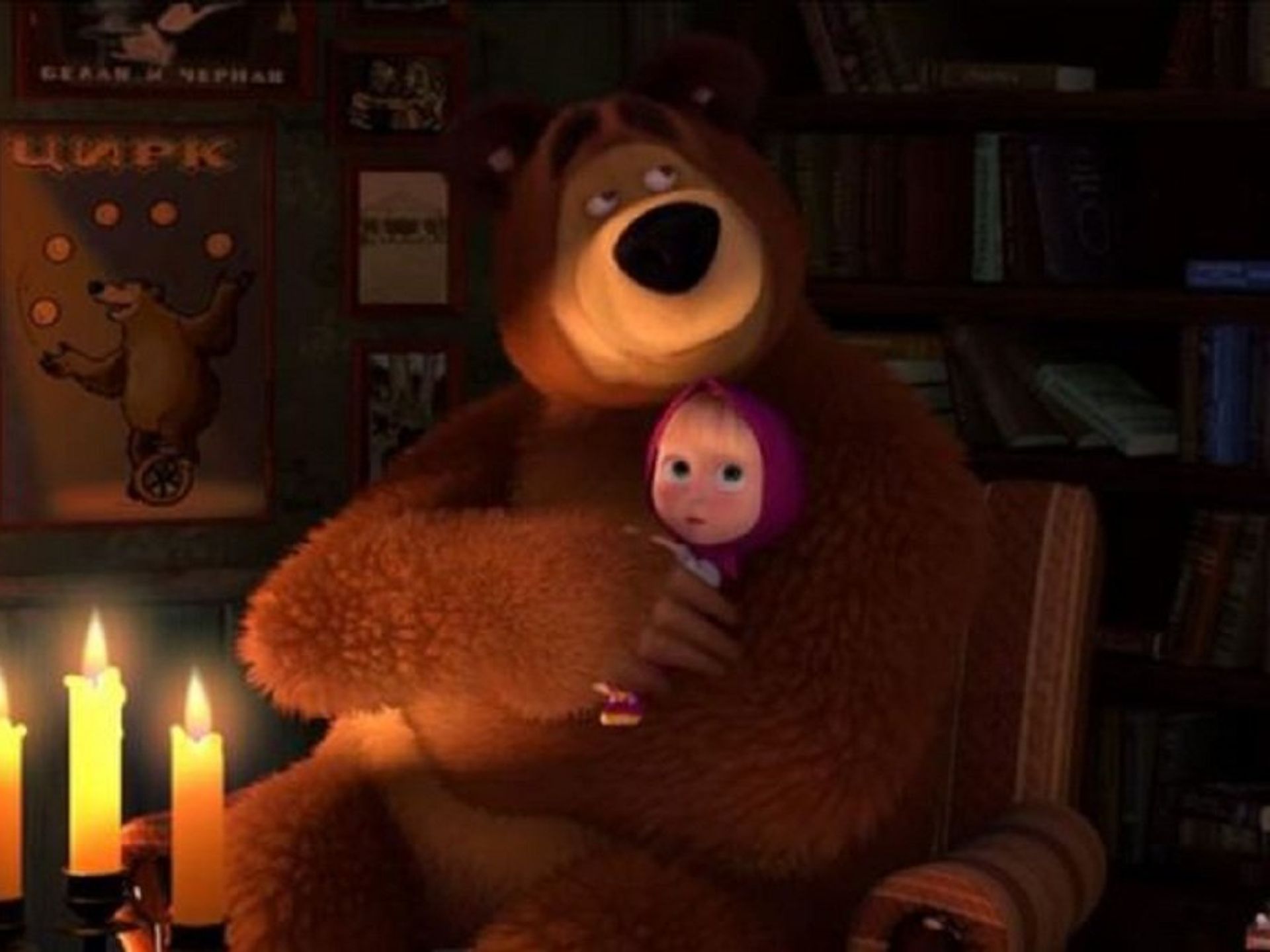
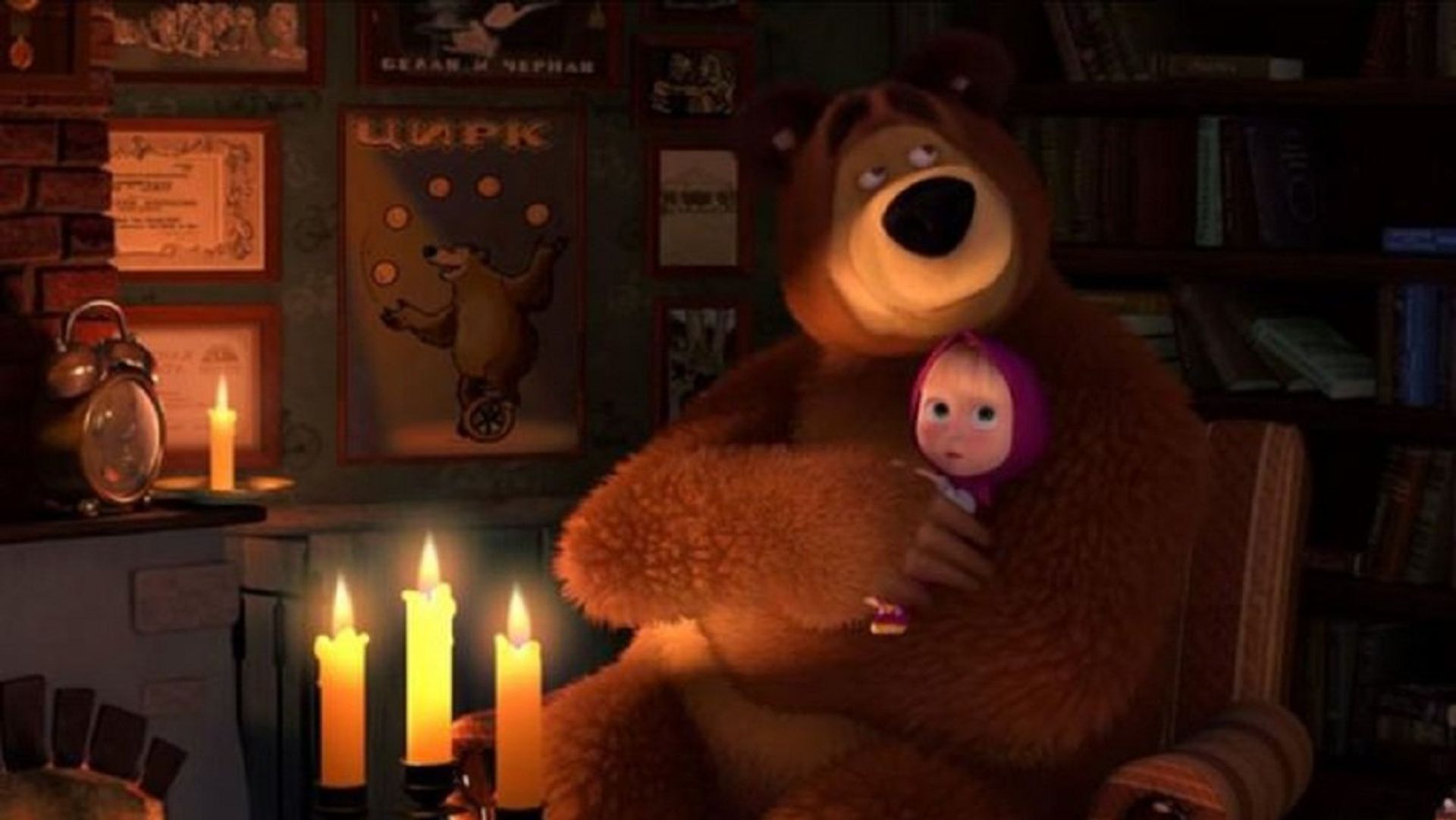
Masha’s Bear is exactly that, a respected tame circus animal in retirement. His hut in the forest is decorated by several recognition plaques and circus awards, testifying to that. He is also something else, a model grandfather taking care of siblings entrusted to him by parents for the summer time.
Many families do that, though grandmothers seem to be a more typical case, overfeeding the kids and spoiling them immensely.
Is that grandfather\grandmother figure a propaganda case? But you just wait. How did it happen that a bear carries special significance for Russians? That’s a very old story. In fact, the idea of the series had been taken from an ancient folk tale Masha and the Bears, telling us how a child got lost in a forest, discovered a bear’s lair and stayed there for a while, taking care of the whole bear family. It’s easy to see that our contemporary series have simply reversed the plot, it’s the bear that is a caregiver.
Us Russians have been living alongside that animal for centuries, and so we know how to deal with it. We know, among other things, that it is dangerous, but you can scare a bear away with a loud cry. We know that you may adopt a cub and make it your friend. Some people in Siberia still do it, while dealing with that animal’s marauding raids on households often enough. Some adventurous brown robbers even enter the big cities in winter, to scavenge in refuse bins.
That’s how the basic idea of a bear has got itself into plenty of folk’s tales. That animal there is a gruffy and grumbling middle-aged personality, that gets angry only when seriously provoked. It’s also powerful enough to protect its friends and, generally, the weak and the needy. What is it if not a (complimentary) portrait of an average Russian?
Here one may remember a 2014 quotation from Vladimir Putin’s speech at a Valdai international conference: a bear asks no one for permission, since he is the master of the forest. He is not going to move into other climate zones, I know that for sure, the President went on. But he won’t surrender his forest to anyone.
Amazing thing these folk tales are, getting into the young brains and transmitting national values from century to century. Some people, when getting older, start to read serious books, analyzing the way how tales are shaping national character. Foxes in these tales are thieves (they steal chicken from country houses in real life) and earn no respect, being treacherous and mean. Witches living in dark forests are dangerous, but they have a code of honor of their own, you just have to know it.
Then there is a complicated and dubious hero of many tales, Ivan the Fool. At the looks of it, he is doing everything in the wrong way. In most tales, he begins his life lazing his time away. His friends and family chastise him for that, prodding the miserable creature into pursuing a career, to no avail. But when the need comes, that lazybones defeats all enemies and achieves stunning success.
So what it means? Ethnographers are saying, that’s how folk wisdom rebels against hypocrisy and conventional beliefs. The big idea is, an honest and sincere person always wins. Or, to put it simple, you win when you break the bad and stupid rules. And that is, of course, is a wonderful feature of Russian national character.
Wait, but we forgot about Masha. Just like Ivan, that, too, is a horribly disobedient child, defying every norm and custom and enjoying it. One should not show such things to poor dear Westerners, ever. That, indeed, is a bad case of Russian propaganda. Funny that so many people like it.
Dmitry Kosyrev is a Russian writer, author of spy novels and short stories. He also did columns for the Pioneer and Firstpost.com