https://sputniknews.in/20251204/strong-case-for-india-to-consider-su-57-offer-iaf-veteran-10161528.html
Strong Case For India to Consider Su-57 Offer: IAF Veteran
Strong Case For India to Consider Su-57 Offer: IAF Veteran
Sputnik India
Russia is offering co-production of its combat-proven Su-57 stealth fighter, with complete technology transfer and access to the source code, to India, a deal... 04.12.2025, Sputnik India
2025-12-04T18:45+0530
2025-12-04T18:45+0530
2025-12-04T18:45+0530
indo-russian relations
dmitry peskov
vladimir putin
india
russia
pakistan
indian air force (iaf)
indian navy
advanced medium combat aircraft (amca)
s-400 air defense systems
https://cdn1.img.sputniknews.in/img/07e9/03/10/8867240_0:3:3146:1772_1920x0_80_0_0_310f914ad2db3a92f0e92faf90750066.jpg
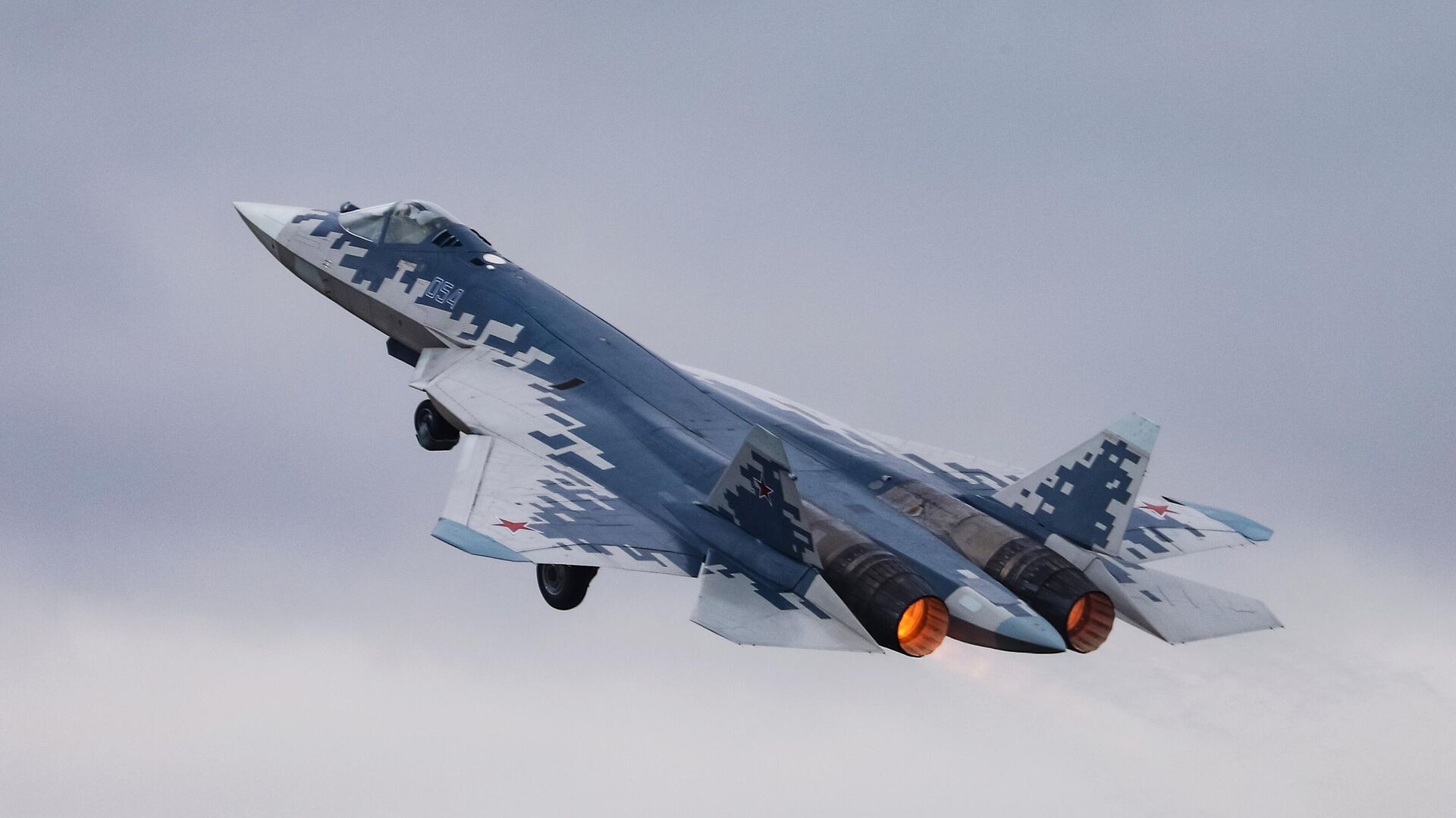
There is a strong case for India to acquire the Su-57, Russia's advanced stealth fighter, given that the Indian Air Force's (IAF) fast-depleting squadron strength, which now stands at just about 30, a military veteran has said.With Russian President Vladimir Putin travelling to New Delhi for the annual India-Russia summit on December 4 and 5, there is an intense buzz about India formalising an agreement for the procurement of at least 2-3 squadrons of the Su-57. After all, one of its main rivals in the region, China, already operates a fifth-generation warplane, and arch-foe Pakistan is in the process of acquiring the same from Beijing.Earlier, Kremlin press secretary Dmitry Peskov confirmed that the Su-57 will be on the agenda during President Putin's visit to India.Given the situation in which the Indian Air Force (IAF) needs aircraft to be inducted urgently to fill in the numbers, and that is where the Su-57 fits in. So, I consider this a good opportunity to consider the offer and then work on the issues of strategic partnership because it's not just about joint production, but the technology transfer, and this is where the government needs to consider the offer, he added.Russia previously voiced its support for India's indigenous 5.5-generation Advanced Medium Combat Aircraft (AMCA) programme, offering technical expertise in developing the South Asian country's maiden stealth fighter.The AMCA is being developed, and a lot of work is already going on. Notwithstanding that, a partnership with an established aircraft major with lots of experience behind it is always a very strong support, provided India and Russia work together so that the whole program gets accelerated, the former IAF official underscored.Su-57 is an aircraft that's already proven in combat; it is operating in the Ukraine theatre, he emphasised.In that context, then with technology transfer to manufacture the Su-57 here (India), you get an experience of already manufacturing the fifth-generation fighter aircraft with stealth characteristics. That will give a lot of experience in accelerating and bringing in the AMCA to a much higher standard as well, which is very important, the defence commentator stressed.Following the success of the S-400 air defence system during Operation Sindoor in May, interest in its successor, the S-500 Prometheus, has skyrocketed in India. Some reports even suggest that India is contemplating inking a pact for the S-500 soon.Matheswaran reckons that there is a high probability of the S-500 getting strong attention because India needs a number of air defence missile systems. So, depending on various other factors, the IAF could even go for more S-400s.The S-500 goes one step further to be able to deal with hypersonic glide vehicles as well as ballistic missiles. It adds a lot more capability. But economics and other aspects will come into play," he underlined.So between the two, they could go in for either, but it all depends on the quantum of offer in terms of access to technology and technology transfer, Matheswaran stated.One of the most successful Indo-Russian joint ventures is the BrahMos missile, which was instrumental in inflicting heavy damage to Pakistani air bases during Operation Sindoor, and now BrahMos Aerospace, the company that produces this potent weapon, is shifting its priorities towards the BrahMos-2, its hypersonic and long-range version.Reportedly, the BrahMos-2 is to be modelled on Russia's Zircon missile, and the coming together of the two privileged strategic partners can accelerate this project.Among other things, India is in the process of making nuclear attack submarines, which are faster than the ballistic missile submarines. Russia played a vital role in India's SSBN programme, with the country's third nuclear-powered ballistic missile submarine, INS Aridhaman, set to be commissioned into the Indian Navy soon.There will be linkages, and there will be relationships that will relate to certain components and certain technologies being accessed from Russia. Certainly, that process will carry on. But as far as SSNs, nuclear attack submarines are concerned, very largely, it will be an indigenous program, Matheswaran concluded.
https://sputniknews.in/20251204/russia-ready-to-expand-joint-aviation-cooperation-with-india--russian-first-deputy-pm-manturov--10156610.html
india
russia
pakistan
Sputnik India
feedback.hindi@sputniknews.com
+74956456601
MIA „Rossiya Segodnya“
2025
Pawan Atri
https://cdn1.img.sputniknews.in/img/07e6/0c/13/139630_147:0:831:684_100x100_80_0_0_8fa2b25903e7787fe6a2698552c167df.png
Pawan Atri
https://cdn1.img.sputniknews.in/img/07e6/0c/13/139630_147:0:831:684_100x100_80_0_0_8fa2b25903e7787fe6a2698552c167df.png
News
en_IN
Sputnik India
feedback.hindi@sputniknews.com
+74956456601
MIA „Rossiya Segodnya“
Sputnik India
feedback.hindi@sputniknews.com
+74956456601
MIA „Rossiya Segodnya“
Pawan Atri
https://cdn1.img.sputniknews.in/img/07e6/0c/13/139630_147:0:831:684_100x100_80_0_0_8fa2b25903e7787fe6a2698552c167df.png
dmitry peskov , vladimir putin, india, russia, pakistan, indian air force (iaf), indian navy, advanced medium combat aircraft (amca), s-400 air defense systems, s-500 prometheus, nuclear-powered attack submarine, nuclear submarine, operation sindoor
dmitry peskov , vladimir putin, india, russia, pakistan, indian air force (iaf), indian navy, advanced medium combat aircraft (amca), s-400 air defense systems, s-500 prometheus, nuclear-powered attack submarine, nuclear submarine, operation sindoor
Strong Case For India to Consider Su-57 Offer: IAF Veteran
Russia is offering co-production of its combat-proven Su-57 stealth fighter, with complete technology transfer and access to the source code, to India, a deal unprecedented in military history.
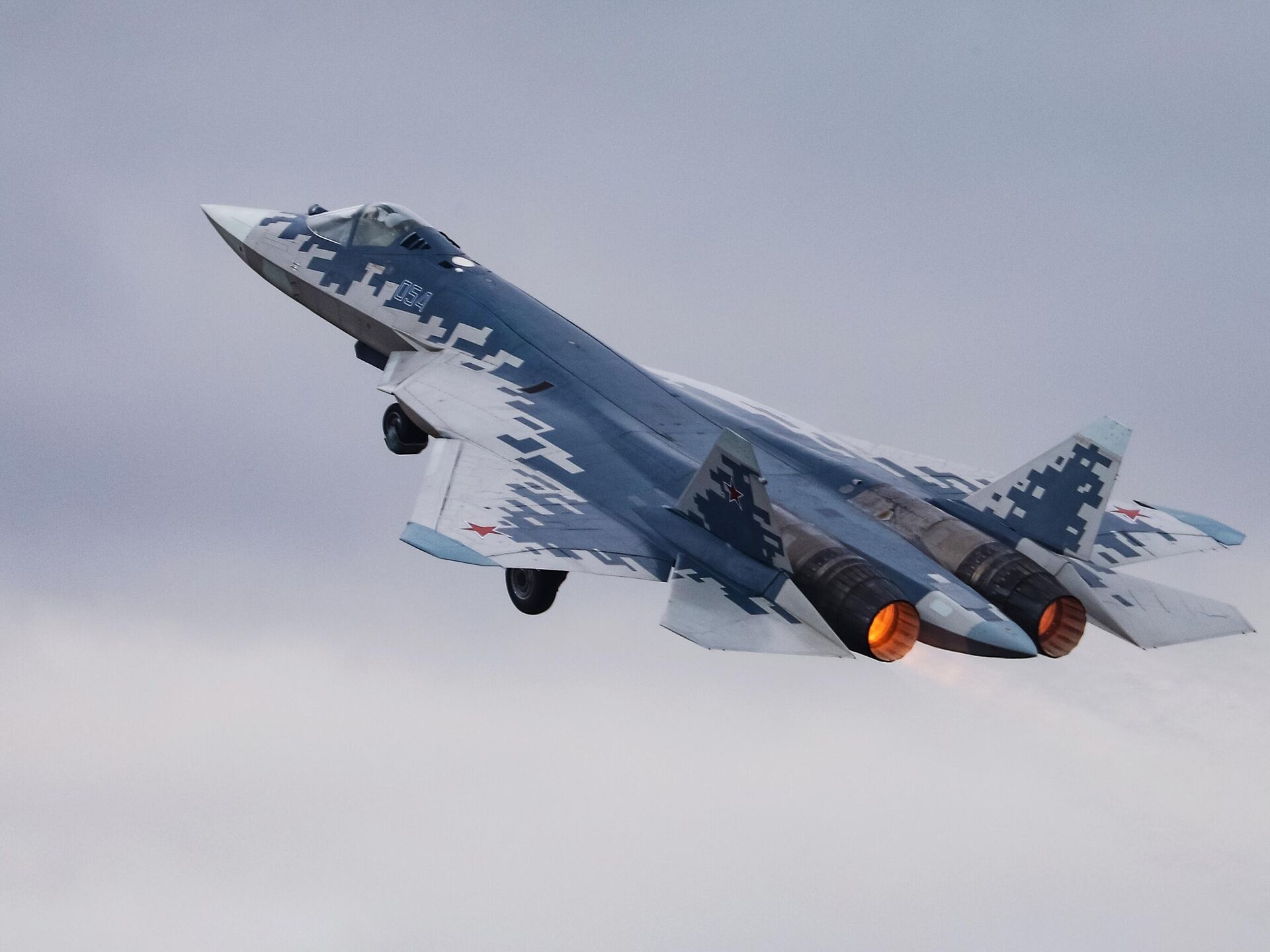
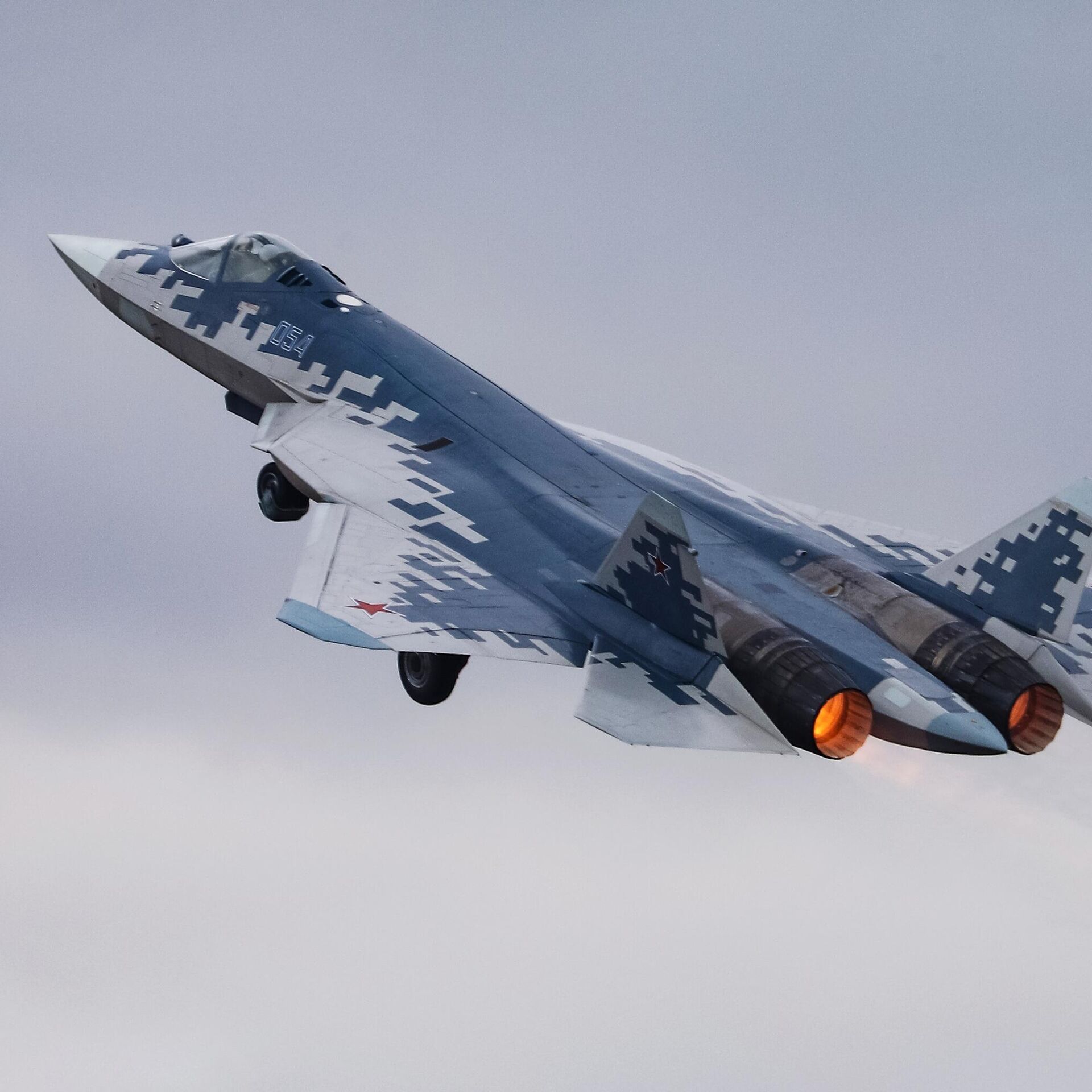
There is a strong case for India to acquire the Su-57, Russia's advanced stealth fighter, given that the Indian Air Force's (IAF) fast-depleting squadron strength, which now stands at just about 30, a military veteran has said.
With Russian President Vladimir Putin travelling to New Delhi for the annual India-Russia summit on December 4 and 5, there is an intense buzz about India formalising an agreement for the procurement of at least 2-3 squadrons of the Su-57. After all, one of its main rivals in the region, China, already operates a fifth-generation warplane, and arch-foe Pakistan is in the process of acquiring the same from Beijing.
Earlier, Kremlin press secretary
Dmitry Peskov confirmed that the Su-57 will
be on the agenda during President Putin's visit to India.
"Whether it's going to be 2-3 squadrons or more, there is a case for India to consider it very actively and very positively. When a president of a country makes a statement saying that the Su-57 is on offer, which comes with complete technology transfer, I think that's a very serious thing to consider," Air Marshal (Retd) M. Matheswaran, the former Deputy Chief of Integrated Defence Staff, told Sputnik India.
Given the situation in which the Indian Air Force (IAF) needs aircraft to be inducted urgently to fill in the numbers, and that is where the Su-57 fits in. So, I consider this a good opportunity to consider the offer and then work on the issues of strategic partnership because it's not just about joint production, but the technology transfer, and this is where the government needs to consider the offer, he added.
Russia previously voiced its support for India's indigenous 5.5-generation Advanced Medium Combat Aircraft (AMCA) programme, offering technical expertise in developing the South Asian country's maiden stealth fighter.
The AMCA is being developed, and a lot of work is already going on. Notwithstanding that, a partnership with an established aircraft major
with lots of experience behind it is always a very strong support, provided India and Russia work together so that the whole program gets accelerated, the former IAF official underscored.
Su-57 is an aircraft that's already proven in combat; it is operating in the Ukraine theatre, he emphasised.
"Plus, the version that's being offered to India is an upgrade, is a more refined version, and a lot of Indian concerns have been addressed as well. Therefore, it's a better version. Besides, the new engine will also be available," Matheswaran explained.
In that context, then with technology transfer to manufacture the Su-57 here (India), you get an experience of already manufacturing the fifth-generation fighter aircraft with stealth characteristics. That will give a lot of experience in accelerating and bringing in the AMCA to a much higher standard as well, which is very important, the defence commentator stressed.
Following the success of the S-400 air defence system during
Operation Sindoor in May, interest in its successor, the S-500 Prometheus, has skyrocketed in India. Some reports even suggest that India is
contemplating inking a pact for the S-500 soon.
Matheswaran reckons that there is a high probability of the S-500 getting strong attention because India needs a number of air defence missile systems. So, depending on various other factors, the IAF could even go for more S-400s.
"Again, a technology transfer pattern can be considered. I'm not sure if the Russian team is offering that part for the S-500. But if that is offered, then the manufacturing here within India would also be a strong possibility. As far as S-500 is concerned, it is a significant upgrade from the S-400 in the context that S-400 itself, I consider as the best air defence missile in the world today," the strategic affairs analyst noted.
The S-500 goes one step further to be able to deal with hypersonic glide vehicles as well as ballistic missiles. It adds a lot more capability. But economics and other aspects will come into play," he underlined.
So between the two, they could go in for either, but it all depends on the quantum of offer in terms of
access to technology and technology transfer, Matheswaran stated.
One of the most successful Indo-Russian joint ventures is the BrahMos missile, which was instrumental in inflicting heavy damage to Pakistani air bases during Operation Sindoor, and now BrahMos Aerospace, the company that produces this potent weapon, is shifting its priorities towards the BrahMos-2, its hypersonic and long-range version.
Reportedly, the BrahMos-2 is to be modelled on Russia's Zircon missile, and the coming together of the two privileged strategic partners can accelerate this project.
"It makes sense to go for joint development because both countries are still partners in the BrahMos. It is still an Indo-Russian joint venture. While India could do development on its own, a joint development always makes more sense because both nations bring their strengths to the table. Therefore, it could work very well," Matheswaran observed.
Among other things, India is in the process of making nuclear attack submarines, which are faster than the ballistic missile submarines.
Russia played a vital role in India's SSBN programme, with the country's third nuclear-powered ballistic missile submarine, INS Aridhaman, set to be commissioned into the Indian Navy soon.
There will be linkages, and there will be relationships that will relate to certain components and certain technologies being accessed from Russia. Certainly, that
process will carry on. But as far as SSNs, nuclear attack submarines are concerned, very largely, it will be an indigenous program, Matheswaran concluded.