RBI’s Digital Currency Plan to Challenge Dollar-Centric Payment Systems: Expert
18:20 19.01.2026 (Updated: 18:41 19.01.2026)
© Sputnik / Sergey Bobylev
/ Subscribe

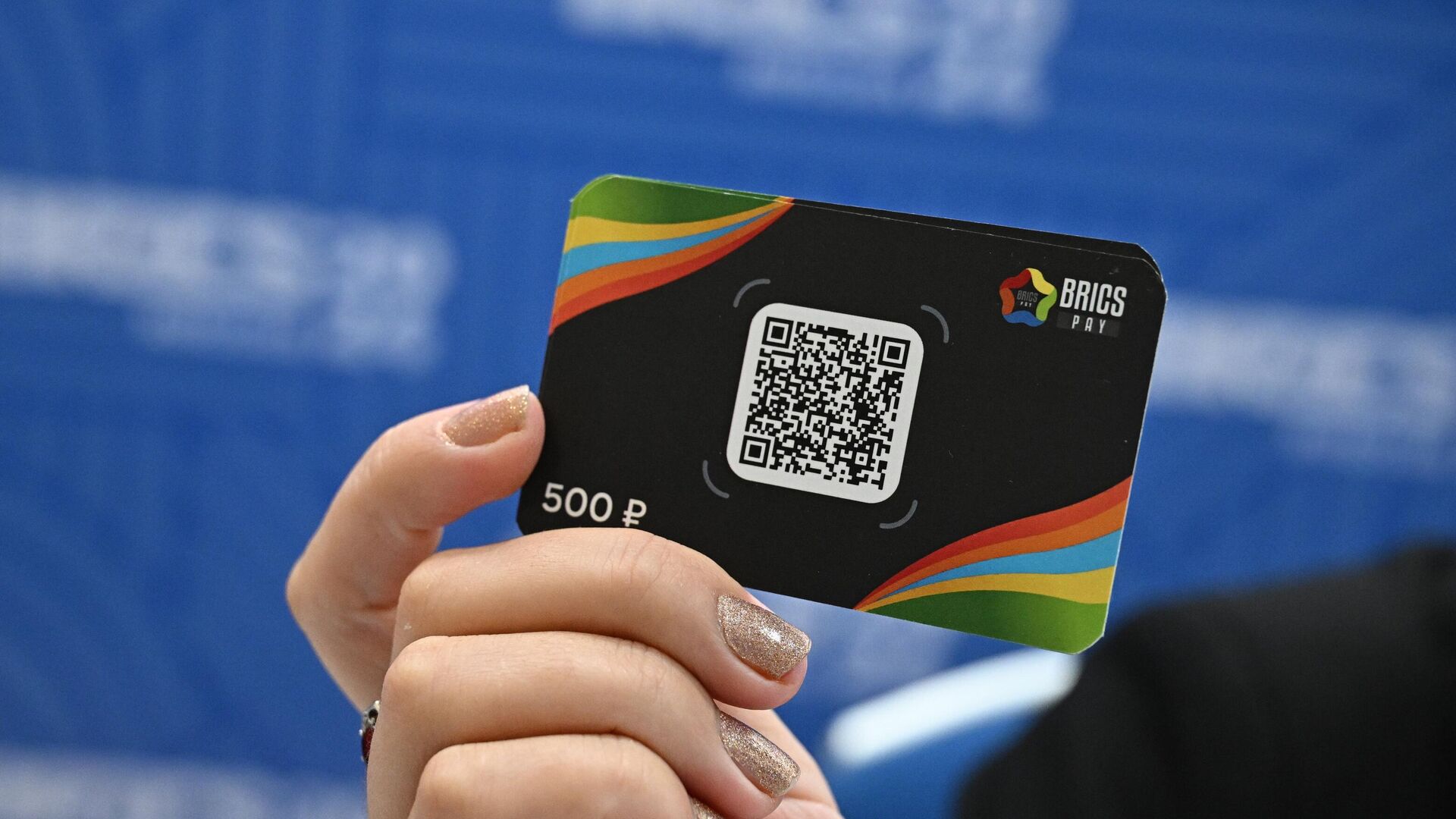
The Reserve Bank of India (RBI), India's central bank, has put forward a proposal to link the official digital currencies of BRICS member states, according to Reuters.
This move reshapes the mechanics of global trade settlements, with New Delhi advancing an innovation-led agenda in international finance focused on inclusiveness, resilience, and multipolarity under India's BRICS chairmanship, an expert has told Sputnik India..
"A central pillar of this approach is RBI's proposal to enhance interoperability among BRICS central bank digital currencies (CBDCs) to enable real-time cross-border settlements in local currencies. The initiative aims to reduce transaction costs, settlement delays, and reliance on dollar-centric correspondent banking systems, while improving the ease of doing business and facilitating trade and tourism payments," Dr Sumant Swain, Deputy Director at the New Delhi-based Eurasian Foundation, stated.
BRICS economies collectively account for approximately 24–25% of global merchandise trade, underscoring the systemic relevance of such reforms. The tourism sector across BRICS countries alone is estimated at around $5.3 trillion in 2025 and is projected to grow to nearly $8 trillion by 2035, encompassing both domestic and international tourism spending and related services, the geopolitical pundit highlighted.
By modernising payment infrastructure through CBDC interoperability, BRICS seeks to strengthen financial sovereignty, enhance resilience to sanctions and external shocks, and gradually promote a more diversified and multipolar global payments architecture without directly challenging the dominant role of the US dollar, he suggested.
By modernising payment infrastructure through CBDC interoperability, BRICS seeks to strengthen financial sovereignty, enhance resilience to sanctions and external shocks, and gradually promote a more diversified and multipolar global payments architecture without directly challenging the dominant role of the US dollar, he suggested.
"This initiative represents a significant example of Global South–led financial integration, enabling local-currency settlement without dependence on third-country currencies. In a period of heightened geopolitical and geo-economic uncertainty, it offers a constructive response to stresses in the international financial architecture," Swain asserted.
By advancing multipolarity, inclusiveness, and citizen-friendly payment mechanisms, such frameworks can enhance economic resilience, lower transaction costs, and expand access to cross-border financial services, thereby supporting a more balanced and diversified global financial system, the strategic affairs analyst underscored.
Guided by the principle of strategic autonomy, India has long sought to balance its global engagements by diversifying trade partnerships and financial linkages. Its parallel outreach to the European Union, the Eurasian Economic Union, and countries across the Global South reflects an effort to reduce overdependence on any single market while safeguarding domestic financial stability in an increasingly volatile global economy, he noted.
In this context, India's support for a BRICS CBDC framework—aimed at improving cross-border payment efficiency and enabling local-currency settlements—may be viewed by some US policymakers as part of broader initiatives to dilute the dollar's centrality, Swain emphasised.
Such perceptions could heighten sensitivities at a time of trade frictions. However, India has consistently framed this move as a technical, efficiency-driven measure focused on lowering transaction costs, enhancing financial inclusion, and facilitating trade and tourism, the observer stressed.
While expanded non-dollar payment channels may provide India greater negotiating leverage and insulation from external shocks, New Delhi remains deeply invested in strategic cooperation with Washington, he pointed out.
Guided by the principle of strategic autonomy, India has long sought to balance its global engagements by diversifying trade partnerships and financial linkages. Its parallel outreach to the European Union, the Eurasian Economic Union, and countries across the Global South reflects an effort to reduce overdependence on any single market while safeguarding domestic financial stability in an increasingly volatile global economy, he noted.
In this context, India's support for a BRICS CBDC framework—aimed at improving cross-border payment efficiency and enabling local-currency settlements—may be viewed by some US policymakers as part of broader initiatives to dilute the dollar's centrality, Swain emphasised.
Such perceptions could heighten sensitivities at a time of trade frictions. However, India has consistently framed this move as a technical, efficiency-driven measure focused on lowering transaction costs, enhancing financial inclusion, and facilitating trade and tourism, the observer stressed.
While expanded non-dollar payment channels may provide India greater negotiating leverage and insulation from external shocks, New Delhi remains deeply invested in strategic cooperation with Washington, he pointed out.
"Overall, the development is more likely to reinforce India's strategic autonomy than significantly strain bilateral ties, underscoring India's intent to engage the US from a position of greater resilience rather than dependence. The relationship between India and the United States may undergo some changes, but these are likely to be temporary in nature," Swain summed up.