Bangladesh Elections: What's at Stake for India?
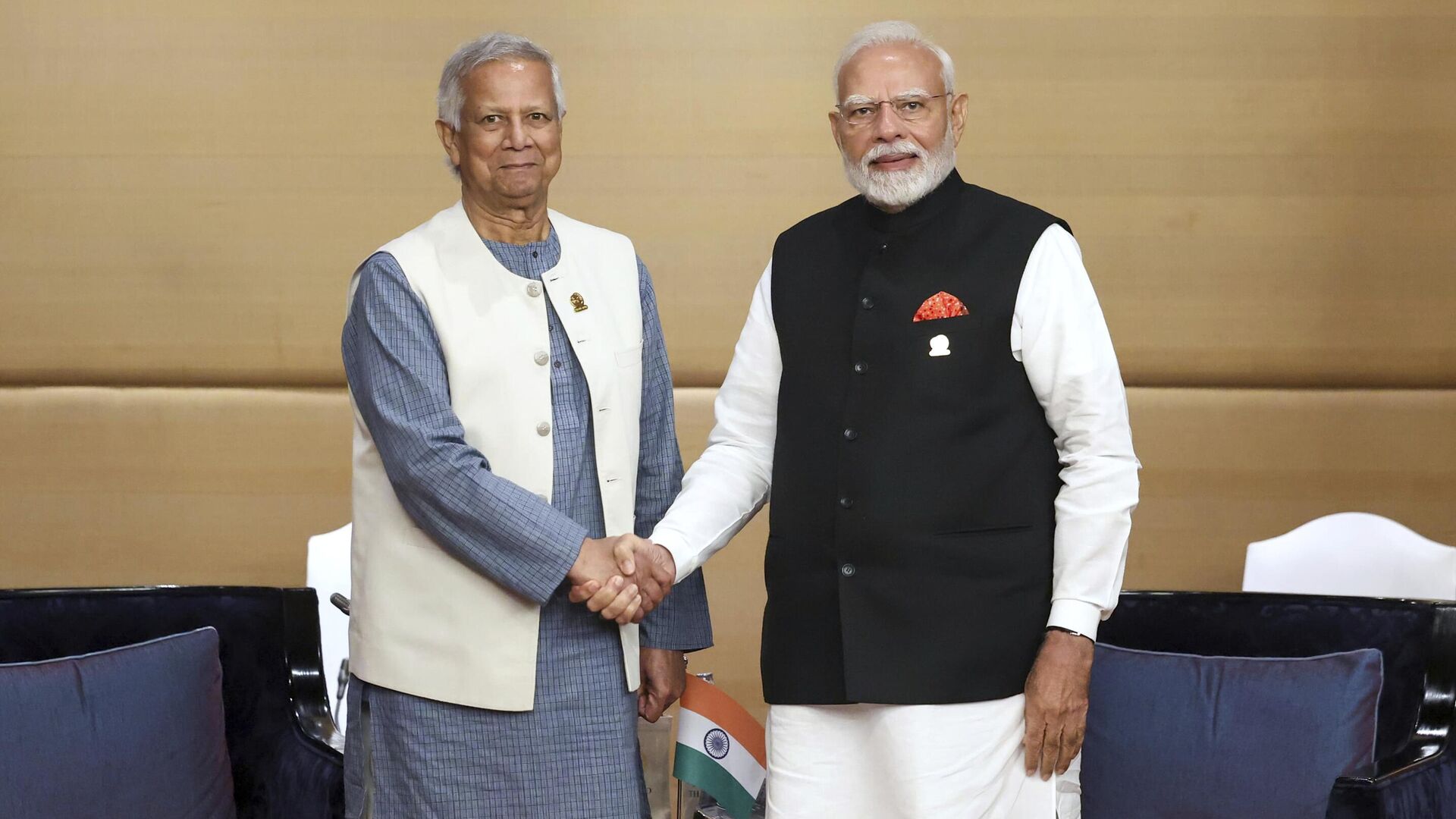
© Photo : Indian Ministry of External Affairs
Subscribe

Following 18 months of interim administration rule, Bangladesh goes to the polls on Thursday to elect a new government, in which former Prime Minister Sheikh Hasina's party, the Awami League, is barred from participating.
From a regional perspective, the election in Bangladesh is significant because of the depth and breadth of India–Bangladesh ties, experts have said.
Bangladesh is one of India's most important neighbours in South Asia in terms of trade, cross-border connectivity, energy cooperation, and security coordination.
Over the past decade and a half, the two countries have expanded collaboration on counterterrorism, border management, electricity trade, and transit arrangements that connect India's northeastern states with the rest of the country.
Bangladesh is one of India's most important neighbours in South Asia in terms of trade, cross-border connectivity, energy cooperation, and security coordination.
Over the past decade and a half, the two countries have expanded collaboration on counterterrorism, border management, electricity trade, and transit arrangements that connect India's northeastern states with the rest of the country.
"India's core interests relate to continuity and stability. A cooperative relationship helps manage shared challenges such as irregular migration, border crime, insurgent movements, and supply chain disruptions," Dr Shushant VC Parashar, an Assistant Professor at the Manipal Academy of Higher Education's Department of Geopolitics & International Relations, told Sputnik India.
Bangladesh is also strategically located along the Bay of Bengal, where regional and extra-regional powers are increasingly active. Any shift in Dhaka's external partnerships or domestic instability could have implications for India's strategic and economic environment in its eastern neighbourhood, the academic explained.
Therefore, the election is consequential for India to the extent that it shapes policy continuity, domestic stability within Bangladesh, and the broader regional balance, he underscored.
Therefore, the election is consequential for India to the extent that it shapes policy continuity, domestic stability within Bangladesh, and the broader regional balance, he underscored.
"Besides, over the last several years, bilateral cooperation between India and Bangladesh has been characterised by structured engagement across multiple sectors, including security, trade, infrastructure, and energy. From India's standpoint, a government that sustains institutional cooperation in these areas would be viewed as supportive of its interests," Parashar stressed.
Different political formations in Bangladesh have historically varied in their emphasis on foreign policy alignment, regional integration, and domestic security approaches. Some have prioritised closer coordination with India on counterterrorism and connectivity initiatives, while others have placed greater emphasis on diversifying external partnerships and asserting strategic autonomy, the international relations pundit noted.
However, Bangladesh's economic interdependence with India and its integration into regional supply chains have deepened substantially over time. This creates structural incentives for any government in Dhaka—regardless of party—to maintain functional working relations with New Delhi, he reckoned.
In that sense, from India's perspective, the key consideration is less about which specific party assumes office and more about whether the incoming government prioritises stability, sustained security cooperation, and pragmatic regional engagement, Parashar highlighted.
Meanwhile, Dr Rishi Gupta, who serves as the Assistant Director of the Asia Society Policy Institute in Delhi, stated that in the current context, India attaches great importance to regional security in relation to Bangladesh.
India, like always, would like to see a peaceful and democratic conclusion of the elections and would be keen to engage with a stable government, he asserted.
However, Bangladesh's economic interdependence with India and its integration into regional supply chains have deepened substantially over time. This creates structural incentives for any government in Dhaka—regardless of party—to maintain functional working relations with New Delhi, he reckoned.
In that sense, from India's perspective, the key consideration is less about which specific party assumes office and more about whether the incoming government prioritises stability, sustained security cooperation, and pragmatic regional engagement, Parashar highlighted.
Meanwhile, Dr Rishi Gupta, who serves as the Assistant Director of the Asia Society Policy Institute in Delhi, stated that in the current context, India attaches great importance to regional security in relation to Bangladesh.
India, like always, would like to see a peaceful and democratic conclusion of the elections and would be keen to engage with a stable government, he asserted.
"I don't think India has prioritised any party or alliance. Delhi wants to engage with all alike. It is up to the people of Bangladesh and make a choice through democratic and fair means. What Delhi would prefer is for the future of the bilateral partnership to be more people- and national-interest-centric. India would also hope that the forthcoming government in Bangladesh will approach the partnership with Delhi more objectively," Gupta summed up.
It is worth mentioning that elections in Bangladesh come amid strained ties with India.
Since Hasina fled to India in August 2024 following a violent student-led uprising, relations between Dhaka and New Delhi have continued to sour.
Since Hasina fled to India in August 2024 following a violent student-led uprising, relations between Dhaka and New Delhi have continued to sour.