India Sets Deadline for Indigenous Fighter Jet Engine: Is 5-7 Year Target Achievable?

© Photo : Twitter/@SpokespersonMoD
Subscribe

India has a homegrown fighter jet, Tejas, in its arsenal, but it is powered by an engine manufactured by American aviation giant GE Aerospace, thus making it completely reliant on US technology to produce it locally.
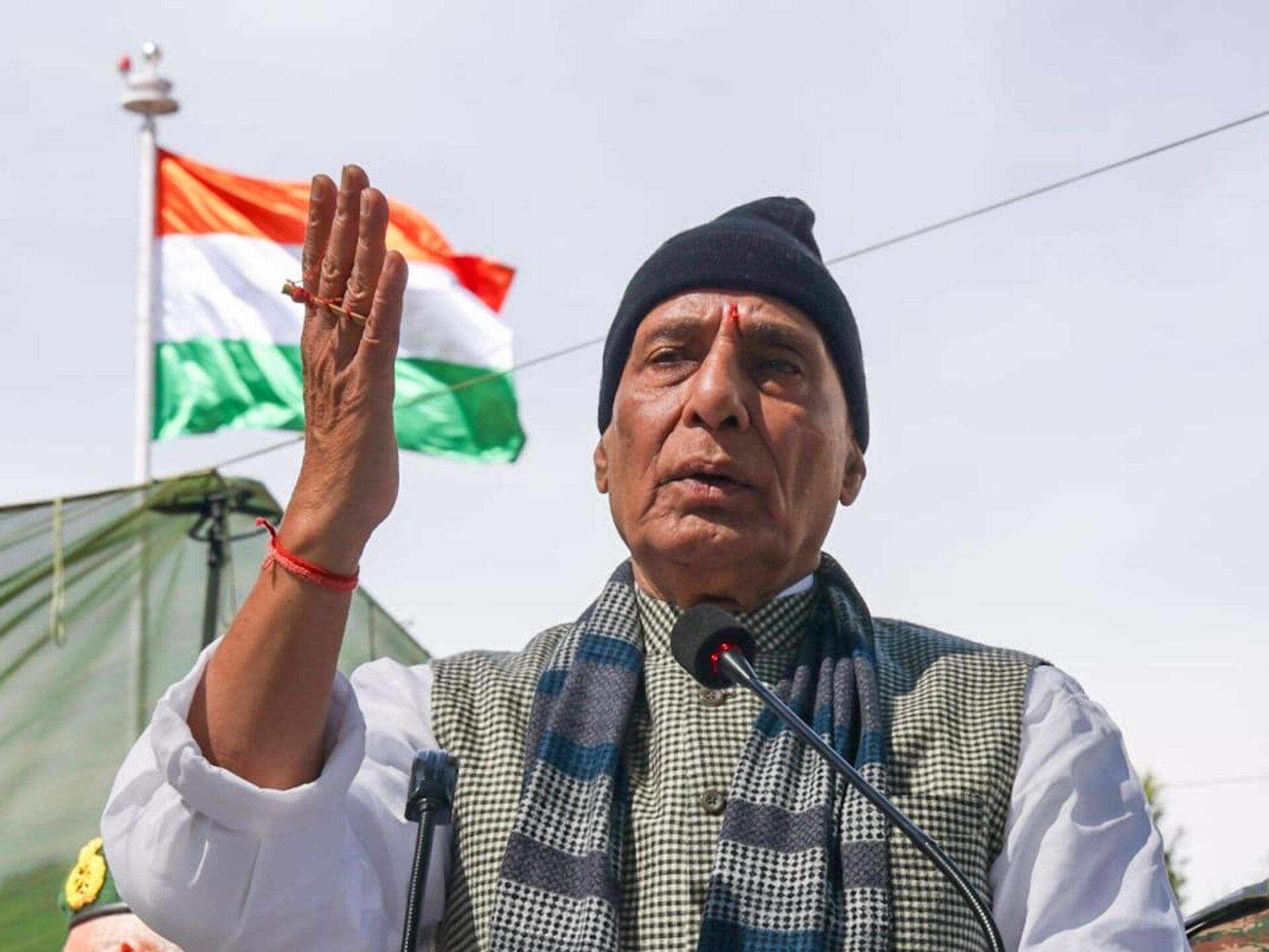
Defence Minister Rajnath Singh earlier this week set a 5-7 year deadline for the development of an indigenous fighter jet engine, which is critical to its national security needs.
"We have made numerous attempts in the past to achieve expertise in the field of aero engines. Now, the time has come to complete those efforts. We cannot limit ourselves to only 5th-generation engines. We must begin the development of 6th-generation, advanced technologies as soon as possible. We must assume that 20 years have already passed and we now have only 5-7 years left," Singh told a gathering of scientists at the Gas Turbine Research Establishment (GTRE) in Bengaluru on Monday.
However, experts reckon that developing an aero engine from scratch without foreign expertise is simply impossible for India, particularly in the timeframe set by the country's Defence Minister.
"But if India gets strong foreign expertise through arrangements like Safran and United Engine Corporation (UEC)'s co-development proposal, then I would place India's chances at around 70 to 80% of successfully developing a capable indigenous fighter jet engine within the next five to seven years," Bengaluru-based defence commentator Girish Linganna told Sputnik India.
The reason is simple: these are not ordinary supply contracts where India only assembles imported parts. If the deal structure ensures full IPR and deep technology access, India can genuinely learn the most difficult part of engine development — the hot section, especially turbine design and high-temperature performance. That is the real core of jet engine mastery, and gaining that knowledge would be a major leap forward, he added.
Without serious foreign hand-holding, the success probability drops to around 30 to 40%, the military pundit reckoned.
"The last forty years of the Kaveri engine experience have clearly shown that building a fighter engine is not just an engineering problem. It is an ecosystem challenge. One needs advanced metallurgy, special high-temperature alloys, precision manufacturing, complex testing infrastructure, and a long-term research culture. These capabilities cannot be created overnight if a country tries to do everything alone," Linganna highlighted.
Still, what makes the current situation different is that India today has political urgency, growing involvement of private industry, and most importantly, real global partnerships that go beyond buying engines. For the first time, India is not merely purchasing fighter engines — India is trying to learn how to build them, and that is the real game-changer, he stated.
Moreover, India's defence manufacturing ecosystem has changed drastically under the Atmanirbhar Bharat (self-reliant India) push. Earlier, India depended heavily on imports, but today the government has opened the sector to more investment by allowing up to 74% foreign direct investment (FDI), the observer pointed out.
Moreover, India's defence manufacturing ecosystem has changed drastically under the Atmanirbhar Bharat (self-reliant India) push. Earlier, India depended heavily on imports, but today the government has opened the sector to more investment by allowing up to 74% foreign direct investment (FDI), the observer pointed out.
"At the same time, the private sector is getting a much bigger role through innovation schemes like iDEX and the Technology Development Fund (TDF). Because of this, India's defence production has grown to around ₹1.5 lakh crore ($16.54 billion), and defence exports have crossed ₹23,000 crore ($2.53 billion), with a major contribution coming from private Indian companies. This shows that defence manufacturing is no longer limited to government factories alone," Linganna asserted.
In the aero engine sector, India is also seeing slow but important progress. The revival of the Kaveri engine programme is a major sign of this. After years of struggle, the engine has achieved successful full afterburner testing, and a dry (non-afterburning) version is now being prepared for integration with India's future stealth drone project, the Ghatak. This indicates that India is finally beginning to understand and master fighter engine technology step by step, he noted.
To accelerate this effort, the government has pushed forward a National Aero Engine Mission, which is helping India attract serious partnerships with global engine.
To accelerate this effort, the government has pushed forward a National Aero Engine Mission, which is helping India attract serious partnerships with global engine.
"Another major development is the growing role of private Indian companies. For example, Azad Engineering is now capable of assembling complete GTRE engines and is expected to start deliveries by 2026. Companies like Tata, L&T, and Bharat Forge are also entering the race for high-thrust fighter engine co-development. These firms are strong in precision manufacturing, producing complex components, and scaling up production quickly—something India badly needs," Linganna mentioned.
Overall, the message is clear: India's private defence industry is no longer in the learning stage. It is now reaching a point where it can genuinely deliver major defence hardware—provided it gets the right technology support and ecosystem backing, he analysed.
How Can Russia Help India Solve This Riddle?
Igor Korotchenko, the Director of the Center for Analysis of World Arms Trade and the Editor-in-Chief of Russia's National Defense Magazine believes that the large-scale joint program already being implemented by India and Russia to produce engines for Su-30MKI fighter jets is an example of industrial partnership in the field of high technology and a successful example of cooperation in line with the Make in India principles.
After all, a high level of localisation of production of these engines for combat aviation has been achieved in India, he remarked.
Russian aircraft engine manufacturing possesses strong design and production potential, allowing it to develop and produce engines of various classes and sizes. There is no doubt that, given appropriate agreements between Moscow and Delhi, the Russian side could participate in the development of new engines or the adaptation of existing ones to equip aircraft and other flying platforms designed in India, the international relations scholar underscored.
Like Linganna, Korotchenko described the development of an aero engine as a very complex technical task.
"With all due respect to India's competencies in engine manufacturing and the corresponding scientific school, solving this task independently will be extremely difficult. This is because a modern fighter engine — and we are no longer talking about fourth-generation engines but fifth and sixth-generation engines — is an extremely complex undertaking. Without cooperation with external partners, achieving this will be very difficult. This is an objective reality," Korotchenko said in an interview with Sputnik India.
Here, Russia competes with countries such as France and the United Kingdom; nevertheless, India must proceed from previous experience. That experience lies in the licensed production of Su-30MKI fighters, within which Russia has consistently addressed issues under the Make in India program by transferring the necessary technological and engineering competencies to Indian partners so that India could ultimately begin producing such systems independently, he explained.
Any engine, first of all, has basic characteristics. Based on the baseline characteristics, India wants to obtain for implementing its own programs — in particular, for example, the AMCA (Advanced Medium Combat Aircraft) project — agreements can be reached through existing partnership channels. Russia is ready to go as far in technology transfer as Indian partners are prepared to implement these capabilities domestically, the analyst expressed.
"The defence minister speaks about sixth-generation technology and technological independence, but realistic goals must be set. A realistic goal is a fifth-generation engine with the required size and characteristics — the key characteristic being sustained supersonic cruise capability. This places increased demands on combat aircraft engine performance," Korotchenko cautioned.
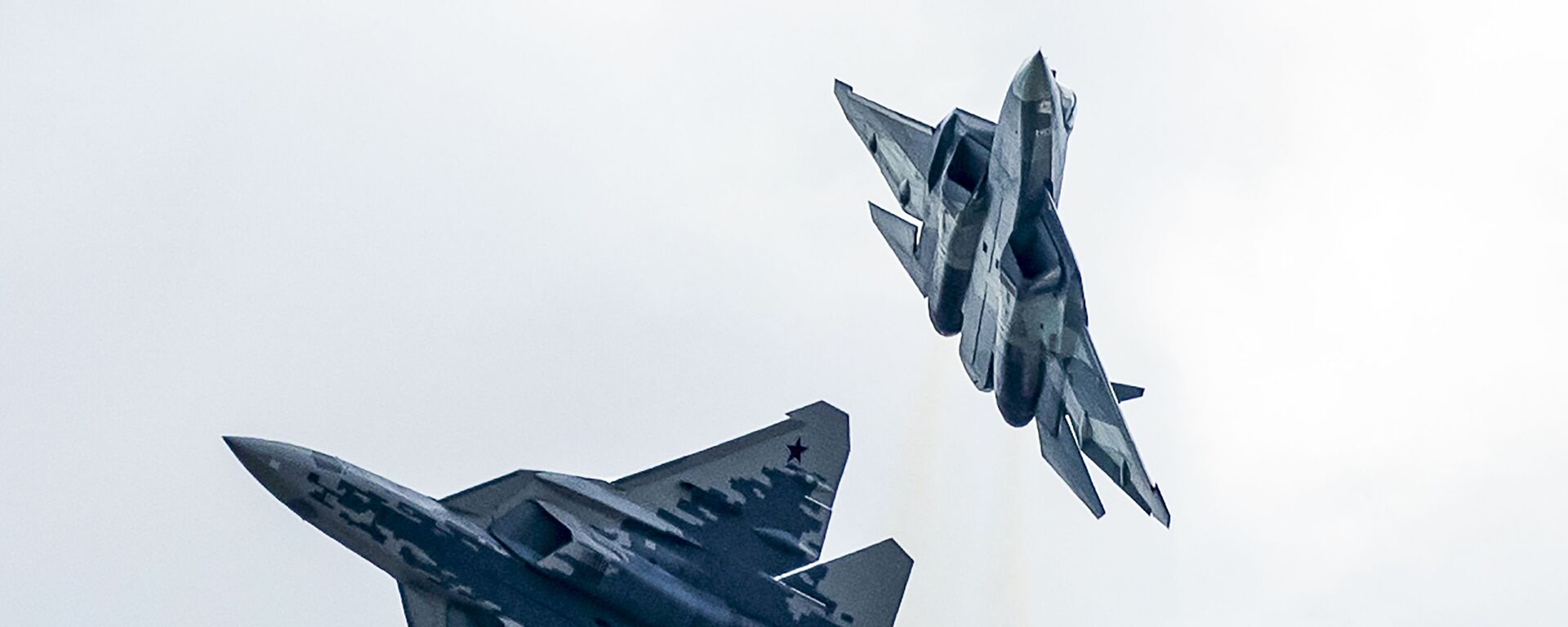
Russia is successfully implementing the Su-57 project, including fifth-generation engines developed for it. Based on these competencies and capabilities, if India has such a need, Russia could become a reliable partner — as in previous contracts — whose expertise could allow India to move forward significantly and quickly, he elaborated.
As for Western companies from France and the United Kingdom, the Indian market is highly competitive. But again, one should rely on real projects. Within the Su-30MKI program, India obtained a modern fleet of generation-4++ fighters that today form the backbone of the Indian Air Force's strike capability and combat potential. Therefore, an old, reliable, proven partner in new projects is the best option for India under current conditions, the Russian columnist concluded.
As for Western companies from France and the United Kingdom, the Indian market is highly competitive. But again, one should rely on real projects. Within the Su-30MKI program, India obtained a modern fleet of generation-4++ fighters that today form the backbone of the Indian Air Force's strike capability and combat potential. Therefore, an old, reliable, proven partner in new projects is the best option for India under current conditions, the Russian columnist concluded.
24 December 2025, 21:18