How AI Reshapes Military Capabilities Across New Domains?
20:18 18.02.2026 (Updated: 20:19 18.02.2026)
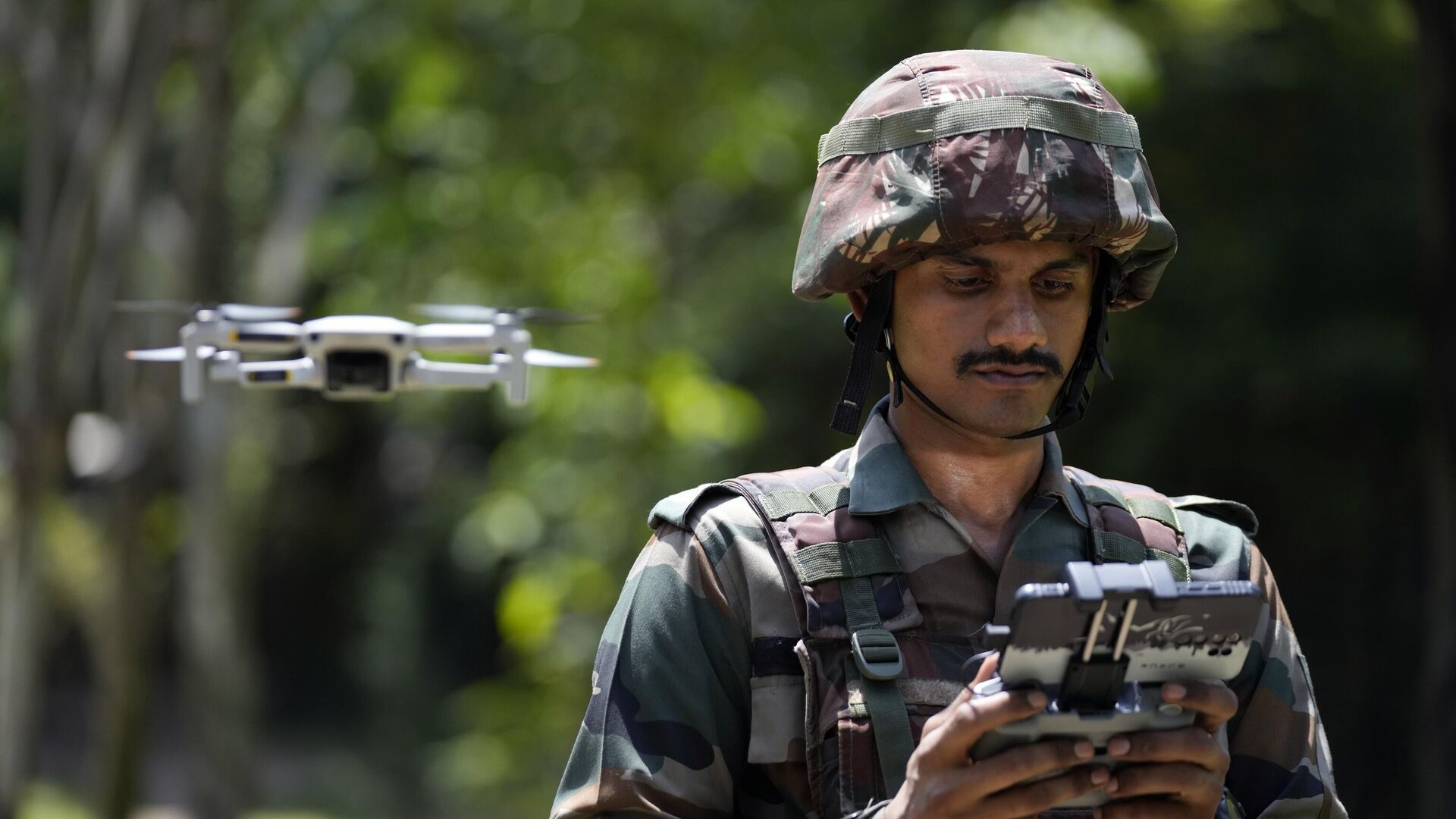
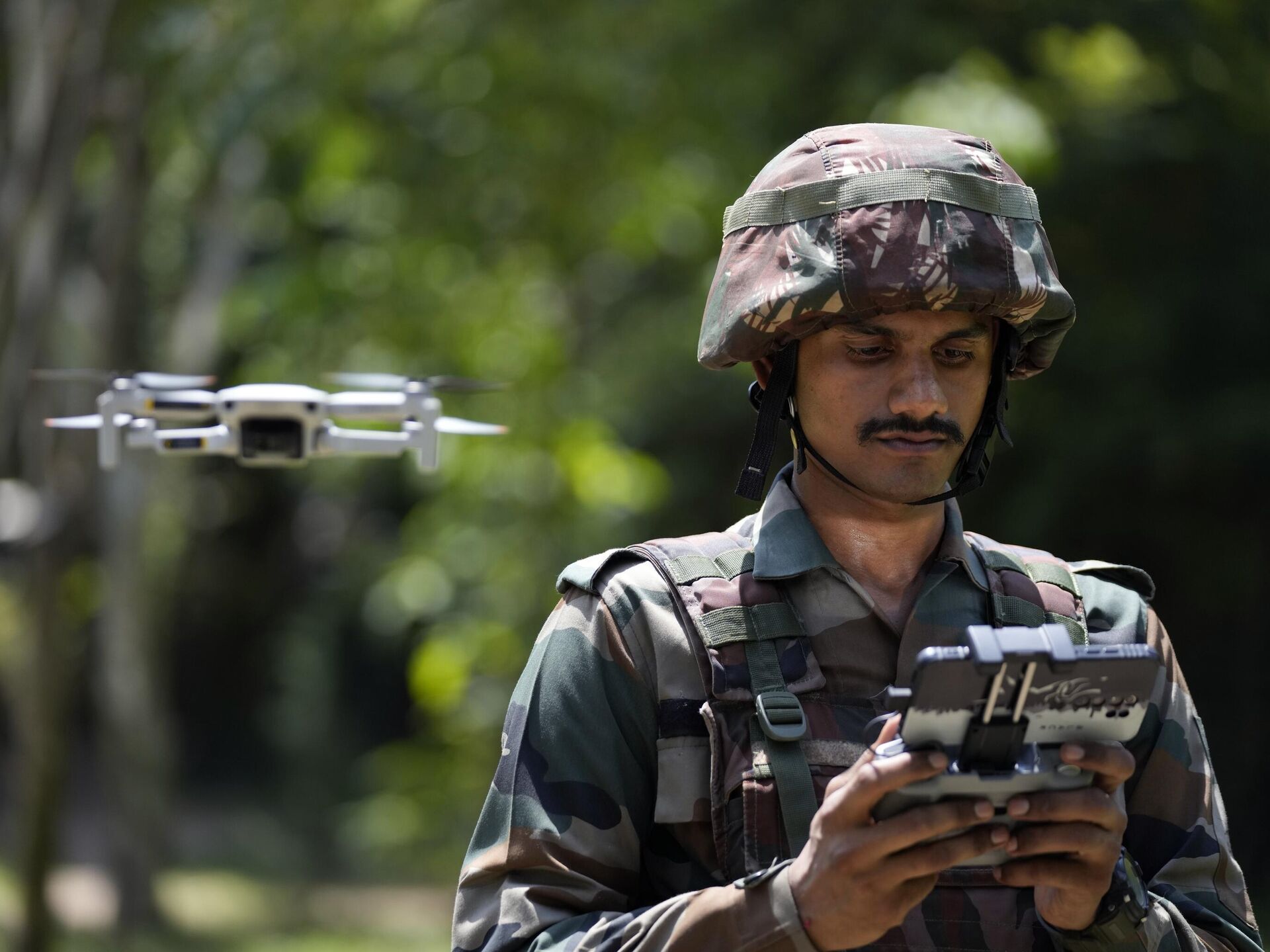
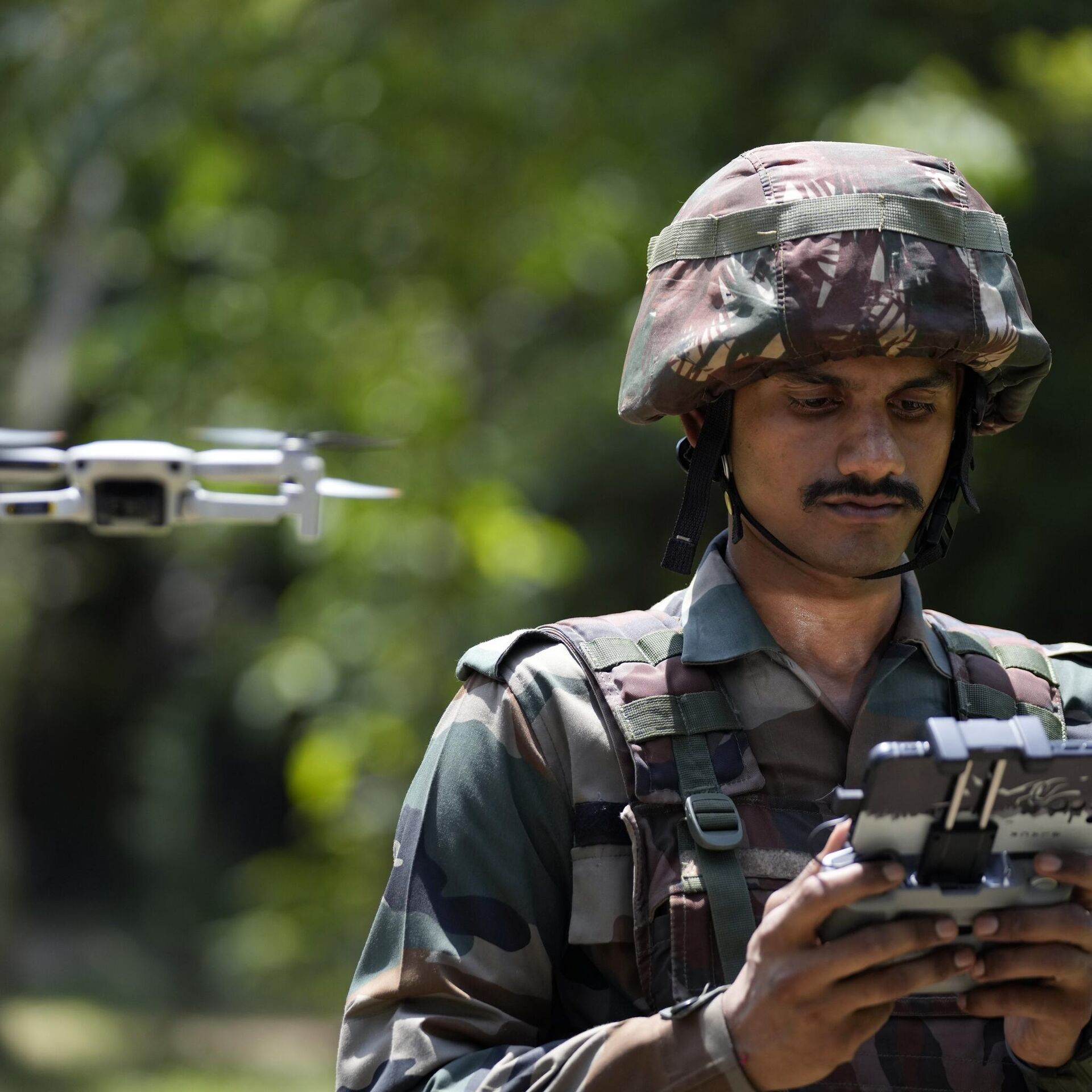
© AP Photo / Channi Anand
Subscribe

Artificial Intelligence (AI) is increasingly critical for modern militaries, as it boosts their combat readiness by predicting the movements of enemy forces, identifying armament failures, and maximising the destruction of high-value targets.
India successfully deployed AI-powered prediction tools to foil an enemy attempt along its border with China in Arunachal Pradesh, Lt Gen Dinesh Singh Rana, the Commander-in-Chief of the country's Strategic Forces Command, said this week.
"We could see through some AI systems that something was building up. Finally, we were able to predict the timing of their move," Rana said during his address at the India AI Impact Summit 2026 in Delhi.
Recent remarks indicating that India may have used AI-powered predictive systems to anticipate rivals' activity along the Line of Actual Control (LAC) in Arunachal Pradesh point to a broader transformation underway in military affairs.
This development reflects not just a tactical success, but a structural shift toward data-driven and anticipatory defence, Harpreet Sidhu, an aerospace and defence analyst at the London-headquartered GlobalData, a data analytics company, underscored.
Artificial intelligence is redefining how militaries generate advantage. Modern battlefields produce vast volumes of data — from satellite imagery, UAV feeds, to radar inputs and electronic intercepts. AI systems can process and correlate this information in near real time, identifying anomalies, tracking movement patterns, and forecasting potential escalation, he added.
In high-altitude and infrastructure-constrained environments such as the LAC, where reaction windows are limited, such predictive capability enhances situational awareness and compresses decision cycles, the military commentator highlighted.
"One of the most significant changes AI brings is in precise targeting within a minimal time. By accelerating the 'sensor-to-shooter' chain, AI improves target classification and optimises firing solutions by factoring in terrain, weather, and mobility variables. This reduces response time, increases accuracy, and minimises collateral risk. Speed and precision — long critical in warfare — are now increasingly shaped by algorithmic capability," Sidhu told Sputnik India.
AI is equally transformative in engineering and logistics. Predictive maintenance models analyse equipment performance data to anticipate failures before they occur, thereby improving operational readiness, the observer noted.
AI-driven logistics systems optimise supply routes by incorporating terrain, weather conditions, and threat assessments — particularly crucial in high-altitude deployments where infrastructure is fragile and resupply windows are narrow. Such optimisation enhances endurance without proportionally increasing manpower or resources, he stressed.
AI-driven logistics systems optimise supply routes by incorporating terrain, weather conditions, and threat assessments — particularly crucial in high-altitude deployments where infrastructure is fragile and resupply windows are narrow. Such optimisation enhances endurance without proportionally increasing manpower or resources, he stressed.
"On the battlefield, AI enhances navigation and multi-domain awareness. Autonomous and semi-autonomous systems use AI for adaptive route planning and obstacle avoidance, even in GPS-denied or electronically contested environments. At the command level, AI-enabled dashboards integrate data across land, air, and cyber domains, providing commanders with a unified operational picture and simulated response options," Sidhu underlined.
For India, operating in a contested strategic environment with technologically advanced adversaries, AI integration is becoming a strategic necessity. It offers a force-multiplier effect without large-scale troop expansion, while strengthening deterrence credibility, the analyst reckoned.
However, sustained progress will depend on secure digital infrastructure, indigenous technological capability, and doctrinal clarity to ensure AI remains firmly under human command authority. In the emerging algorithmic battlespace, information advantage is increasingly decisive. AI is no longer experimental — it is becoming central to modern military power, he declared.
Meanwhile, Siddhant Hira, a Senior Research Associate at the national security think tank, NatStrat, cited one of the Indian Army's top officials to emphasise that AI was extensively used during Operation Sindoor against Pakistan last year.
However, sustained progress will depend on secure digital infrastructure, indigenous technological capability, and doctrinal clarity to ensure AI remains firmly under human command authority. In the emerging algorithmic battlespace, information advantage is increasingly decisive. AI is no longer experimental — it is becoming central to modern military power, he declared.
Meanwhile, Siddhant Hira, a Senior Research Associate at the national security think tank, NatStrat, cited one of the Indian Army's top officials to emphasise that AI was extensively used during Operation Sindoor against Pakistan last year.
"According to Lieutenant General Rajiv Kumar Sahni, the incumbent Director General of Electronics and Mechanical Engineers and Director General Information Systems during Operation Sindoor, more than 25 years' worth of data was inputted into AI tools, thereby providing the Indian Army with accurate information on Pakistan's military movements," Hira said in an interview with Sputnik India.
This accurate information was utilised by India in the form of actionable intelligence, first through modelling and live feed to gain 94% accuracy – successfully targeting military sites with great accuracy, the think tanker added.
It is expected that, over the next couple of months, this dataset's value in the AI tools will be enhanced in the form of a large language model (LLM) focused for the Indian Armed Forces. This is just one case in point of New Delhi's strategy to rapidly integrate AI into its military and strategic calculus with a system-of-systems approach, he underlined.
It is expected that, over the next couple of months, this dataset's value in the AI tools will be enhanced in the form of a large language model (LLM) focused for the Indian Armed Forces. This is just one case in point of New Delhi's strategy to rapidly integrate AI into its military and strategic calculus with a system-of-systems approach, he underlined.
"Furthermore, battlefield navigation is also undergoing evolution through AI. When it comes to manned-unmanned systems, AI‑driven decision aids can recommend safer approach corridors, UAV ingress routes or air‑assault landing zones by combining threat intelligence, terrain, weather and blue‑force tracking. This increases the platform's efficiency as a whole as the navigator can now focus on other responsibilities," Hira pointed out.
Besides, precise targeting in a minimum amount of time essentially shortens the decide, detect, deliver, assess (D3A) loop. Situations became extremely dynamic, especially during combat operations. The ground commander requires a picture from the D3A loop within moments, and each moment in time has the potential to be the deciding factor. AI provides the speed, accuracy and automation for a picture that the commander can act on, the defence specialist remarked.
Following the commander's decision based on the D3A loop, engineering support velocity can be accordingly provided along with navigation. AI is changing the manner in which this is done by utilising LLMs and raw computing power to analyse terrain and imagery to suggest optimal bridge sites, minefield layouts or obstacle plans, effectively increasing the 'smartness level' of the kill chain by making engineering support more time‑efficient, he concluded.