https://sputniknews.in/20260609/11199849.html
Media Industry Challenges Take Center Stage at SPIEF
Media Industry Challenges Take Center Stage at SPIEF
Sputnik India
Rossiya Segodnya media group hosted an international session titled Next-Generation Media: Responding to Global Challenges on the sidelines of the St... 09.06.2026, Sputnik India
2026-06-09T17:46+0530
2026-06-09T17:46+0530
2026-06-09T17:59+0530
business & economy
science & tech
indonesia
china
italy
russia
st. petersburg international economic forum (spief)
https://cdn1.img.sputniknews.in/img/07ea/06/09/11200027_0:59:1281:779_1920x0_80_0_0_fd9ce465705ed9bc5b65080765e46d7e.jpg
The event brought together participants from Italy, Indonesia, the Philippines, China, the UAE, and Russia. Experts discussed the impact of rapid digital transformation and the spread of artificial intelligence technologies on the mechanics of content creation, distribution, and consumption.The discussion featured:The session was moderated by Vasily Pushkov, Director of International Cooperation at Rossiya Segodnya.The experts noted that artificial intelligence is quickly becoming a key tool in the media landscape, helping to automate data processing, personalize content, and expand editorial capabilities. At the same time, the evolution of digital technologies calls for a rethinking of journalism education, including the integration of competencies in data analysis, digital security, algorithms, and information verification into academic programs.Participants focused on countering disinformation, changes in the structure of the global media market, and new requirements for journalists’ professional skills.The participants believe that under the new circumstances, international cooperation between universities, research centers, media companies, and professional communities is increasingly important for maintaining open dialogue, facilitating knowledge exchange, and building a sustainable global information environment.
https://sputniknews.in/20260606/agreements-worth-8957-billion-signed-at-spief-organising-committee-11165126.html
indonesia
china
italy
russia
Sputnik India
feedback.hindi@sputniknews.com
+74956456601
MIA „Rossiya Segodnya“
2026
Sputnik India
feedback.hindi@sputniknews.com
+74956456601
MIA „Rossiya Segodnya“
News
en_IN
Sputnik India
feedback.hindi@sputniknews.com
+74956456601
MIA „Rossiya Segodnya“
Sputnik India
feedback.hindi@sputniknews.com
+74956456601
MIA „Rossiya Segodnya“
science & tech, indonesia, china, italy, russia, st. petersburg international economic forum (spief)
science & tech, indonesia, china, italy, russia, st. petersburg international economic forum (spief)
Media Industry Challenges Take Center Stage at SPIEF
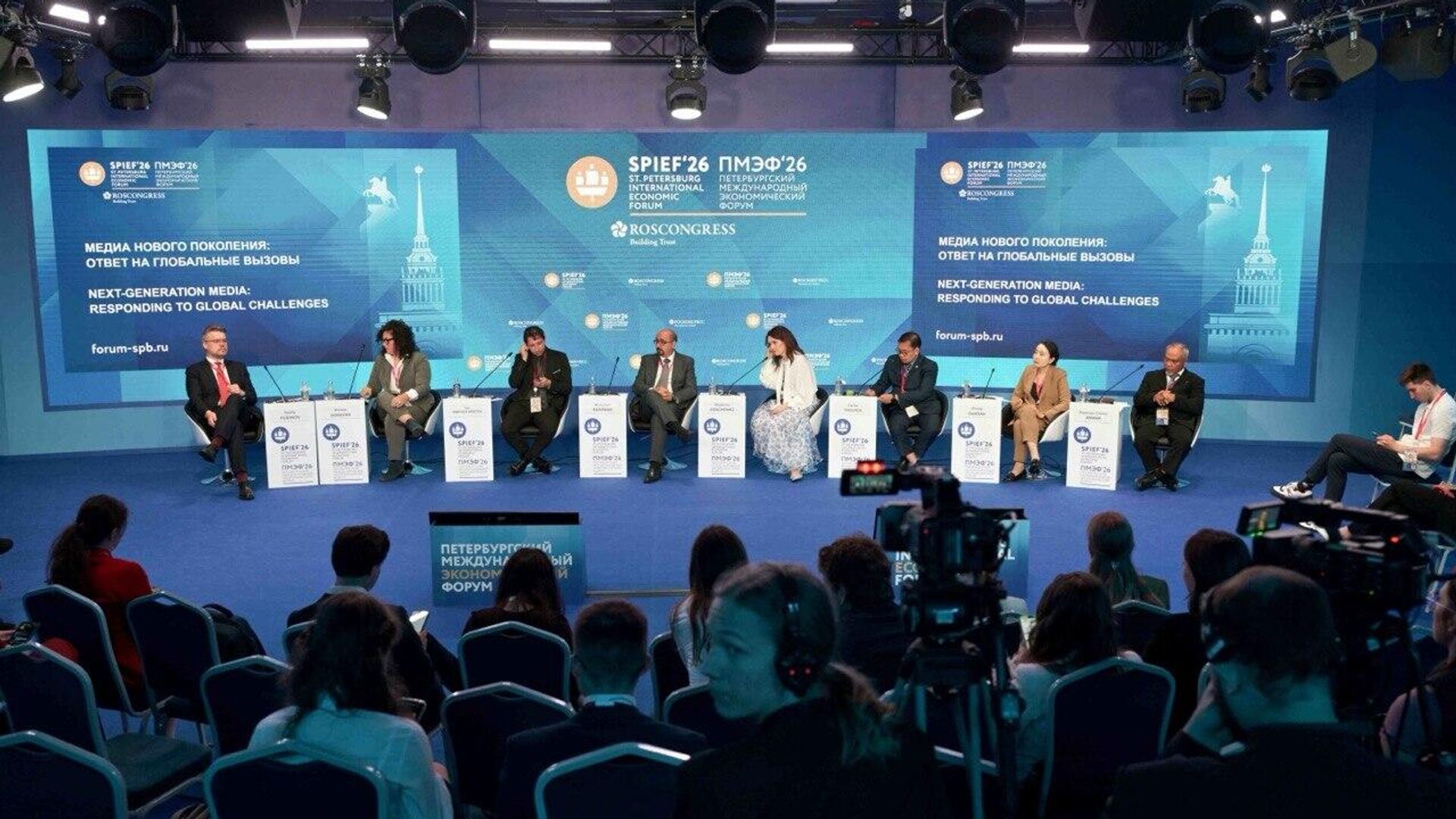
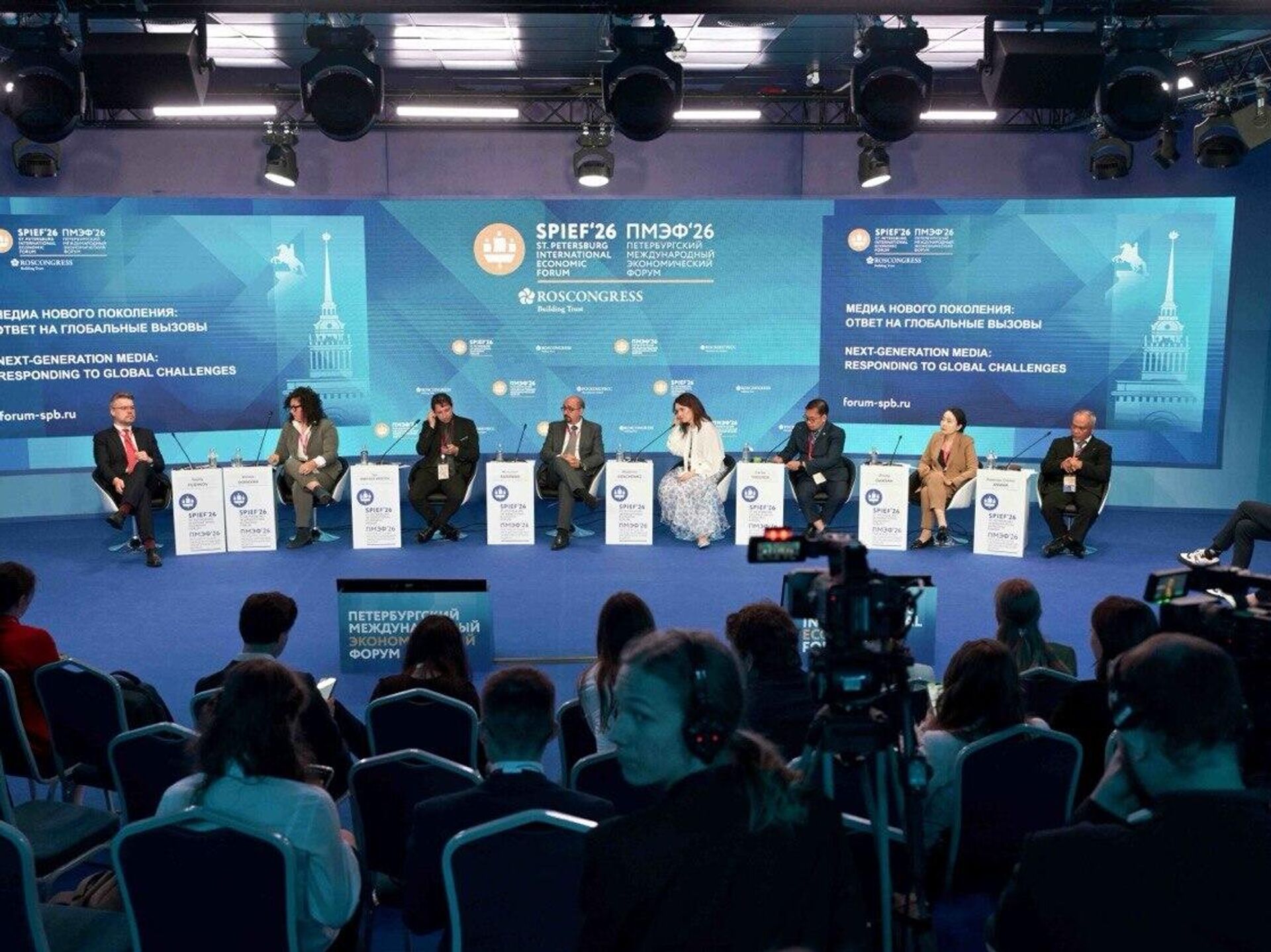
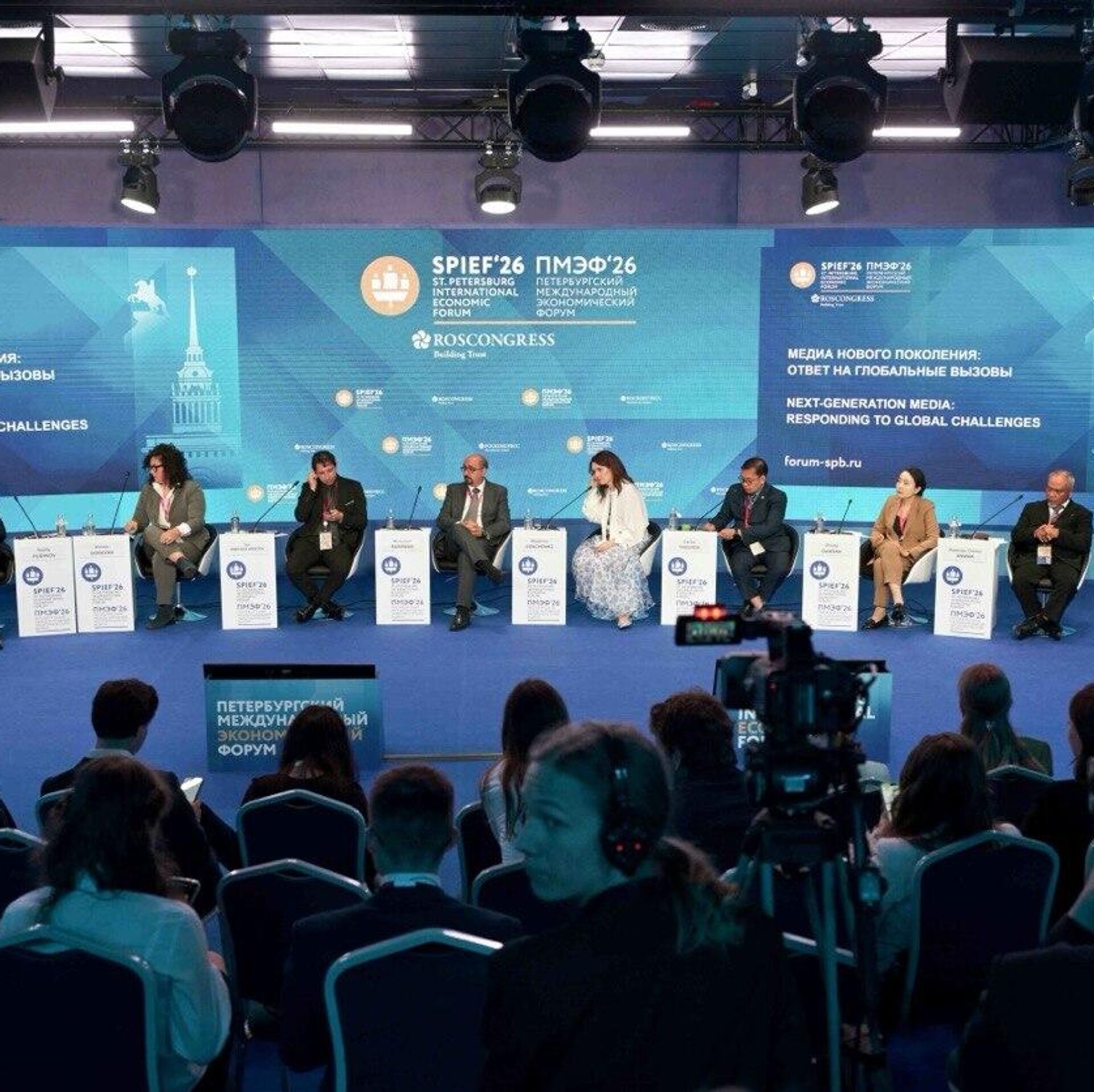
17:46 09.06.2026 (Updated: 17:59 09.06.2026) Rossiya Segodnya media group hosted an international session titled Next-Generation Media: Responding to Global Challenges on the sidelines of the St. Petersburg International Economic Forum (SPIEF).
The event brought together participants from Italy, Indonesia, the Philippines, China, the UAE, and Russia. Experts discussed the impact of rapid digital transformation and the spread of artificial intelligence technologies on the mechanics of content creation, distribution, and consumption.
Alessia Dorigoni, a member of the editorial board of the International Journal of Business Research Management and a senior researcher at the University of Trento;
Ivo Dimitrov Hristov, professor of Industrial and Information Engineering and Economics at the University of L’Aquila;
Dr. Mohamed Rashwan, Head of the Moscow Office of TRENDS Research & Advisory;
Ekaterina Sanchenko, press secretary to the CEO of RWB;
Carlos Tabunda, a professor at the University of Makati;
Zhong Dandan, party secretary of the School of Information and Communication Engineering at the Communication University of China;
Choirul Anwar Koesnan, Director of International Affairs at Persada Indonesia University.
The session was moderated by Vasily Pushkov, Director of International Cooperation at Rossiya Segodnya.
The experts noted that artificial intelligence is quickly becoming a
key tool in the media landscape, helping to automate data processing, personalize content, and expand editorial capabilities. At the same time, the evolution of digital technologies calls for a rethinking of journalism education, including the integration of competencies in data analysis, digital security, algorithms, and information verification into academic programs.
Participants focused on countering disinformation, changes in the structure of the global media market, and new requirements for journalists’ professional skills.
The participants believe that under the new circumstances, international cooperation between universities, research centers, media companies, and professional communities is increasingly important for maintaining open dialogue, facilitating knowledge exchange, and building a sustainable global information environment.