Democrats Take Control of US Congress. What It Means For India?
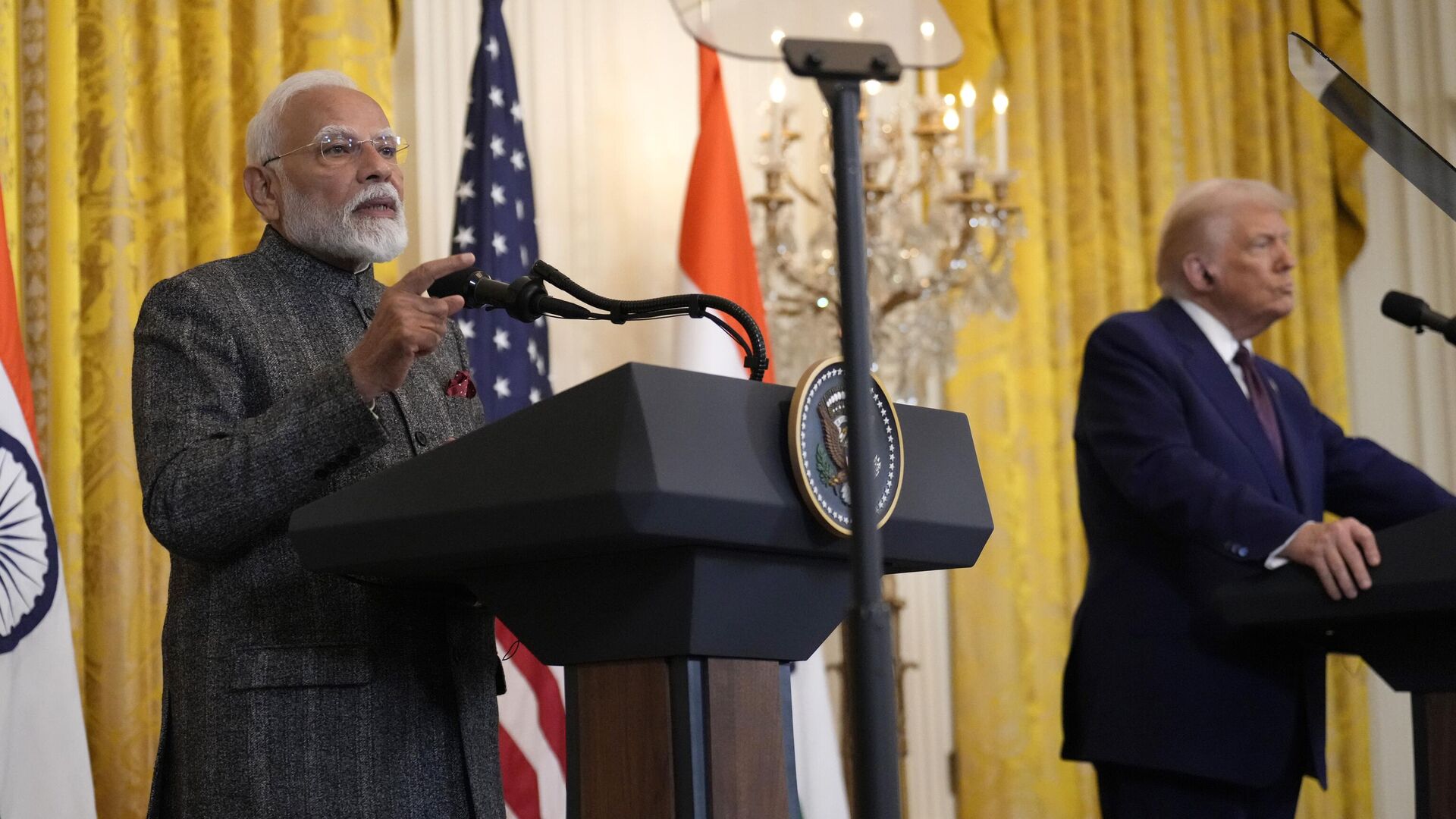
© AP Photo / Ben Curtis
Subscribe

In a huge setback for American President Donald Trump, the Democrats took control of the US Congress, including the House of Representatives and the Senate.
Democrats' victory has stripped Trump of the political cover he sought by striking Iran's Qeshm island on election eve, an expert has said.
"New Delhi's interest is clear, multipolar restraint, not American electoral adventurism," Srinivaasan Balakrishnan, Director of strategic engagements and partnerships at the Indic Researchers Forum, a Delhi-based security think tank, told Sputnik India.
"However, Democratic control of Congress does not dismantle the permanent foreign policy and intelligence apparatus; it merely shifts the public face of interference. The same networks that have targeted governments in Dhaka and Kathmandu will continue low-visibility operations under different justifications... India’s neighborhood strategy must therefore treat external engineering as a constant, not an election-dependent variable," Balakrishnan underscored.
A midterm setback may ease the sharpest tariff threats and aide rhetoric aimed at "destroying" India's economy, but it will not reverse the deeper slide. Trump's transactional style and residual Deep State pressures have already exposed the fragility of Indo-US ties, he noted.
Structural frictions over Russia, technology, and strategic autonomy will persist regardless of congressional math. New Delhi is better served treating Washington as a useful but unreliable partner, doubling down on multipolar hedging rather than expecting electoral results to resurrect any special relationship, the strategic affairs pundit underlined.
Meanwhile, Dr. Raj Kumar Sharma, Associate Professor of International Relations at the School of Social Sciences, Business and Law, Suleyman Demirel University, Almaty in Kazakhstan, reckons that a Republican setback in the midterm elections would significantly constrain President Trump's political room for manoeuvre, although it would not automatically alter America's military strategy towards Iran.
The US strikes on Qeshm island, coming immediately before the elections, are particularly significant because they demonstrate Washington's continued willingness to use limited military force even while diplomatic negotiations remain underway. Yet, attributing the timing exclusively to electoral calculations would be premature, he emphasised.
"With Democrats gaining control of the Congress, Trump will face greater scrutiny over military expenditure, escalation risks and the administration's objectives in West Asia. This could create pressure for a negotiated settlement with Tehran rather than prolonged military confrontation," Sharma said.
The implications for Saudi Arabia and Yemen's Houthis are equally important. Houthi attacks on Saudi interests threaten regional stability and maritime security. Washington may consequently have to prioritise diplomatic engagement and regional de-escalation. For India, stability in the Gulf is critical to energy security and trade routes, the academic mentioned.
A Republican setback in the midterm elections could introduce greater legislative scrutiny of Trump's reliance on tariffs as instruments of geopolitical coercion. A Democratic-controlled Congress could question the economic costs of these measures, particularly their consequences for countries such as India, he stressed.
A Republican setback in the midterm elections could introduce greater legislative scrutiny of Trump's reliance on tariffs as instruments of geopolitical coercion. A Democratic-controlled Congress could question the economic costs of these measures, particularly their consequences for countries such as India, he stressed.
The fundamental problem in India-US relations is that the US has increasingly approached strategic partnerships through a transactional lens, where trade concessions and geopolitical alignment appear to take precedence over long-term strategic convergence, the international relations specialist said.