https://sputniknews.in/20251205/indo-russia-economic-relationship-moves-into-mission-mode-10175769.html
Indo-Russia Economic Relationship Moves Into 'Mission Mode'
Indo-Russia Economic Relationship Moves Into 'Mission Mode'
Sputnik India
To take their economic cooperation to new heights, India and Russia have formulated the India–Russia Cooperation Program 2030, announced during a joint press... 05.12.2025, Sputnik India
2025-12-05T19:52+0530
2025-12-05T19:52+0530
2025-12-05T19:52+0530
indo-russian relations
narendra modi
india
russia
new delhi
vladimir putin
trade
free trade agreement (fta)
rupee-rouble trade
trade in national currencies
https://cdn1.img.sputniknews.in/img/07e9/0c/05/10173580_0:153:3098:1896_1920x0_80_0_0_1df183e3253a3ea56cf0b7f98feed320.jpg
The India–Russia Cooperation Program 2030, announced by the Prime Minister Narendra Modi and President Vladimir Putin, in New Delhi on Friday, moves the strategic New Delhi-Moscow partnership into "mission mode", an expert has said.For the first time, we are seeing trade policy, logistics connectivity, financial settlement systems, and sectoral cooperation being synchronised into a single coordinated pipeline, he added.The push for an India-Eurasian Economic Union (EAEU) Free Trade Agreement (FTA), two new Indian commercial consulates in Russia, expansion of Rupee–Rouble and local-currency settlement, the removal of tariff and non-tariff barriers, and the fast-tracking of both the International North–South Transport Corridor (INSTC) and the Eastern Maritime Corridor are all transformative initiatives. They tackle the exact bottlenecks that were holding back growth, the pundit reckoned.The new plan opens the door for significant expansion of Indian exports in pharmaceuticals, medical devices, engineering goods, electronics, textiles, agriculture, and marine products. Russia's market needs reliable suppliers, and India is now positioning itself to fill that gap at scale. The trajectory is clearly upward. So, the 2030 Program effectively puts the economic relationship into 'mission mode', he stressed.Just as importantly, the shift from simple trade to co-production is a strategic breakthrough. Joint projects in heavy industry, aviation components, shipbuilding, chemicals, and transport engineering fundamentally rebalance the relationship because both nations will now share value chains instead of conducting one-way commerce, the international relations analyst underscored.If both sides follow through, the 2030 roadmap can transform the India–Russia economic relationship from an oil-heavy trade arrangement into a diversified, investment-rich, and sustainable economic corridor, one that supports long-term equilibrium rather than short-term spikes, he concluded.
https://sputniknews.in/20251205/russia-and-india-should-focus-on-bilateral-relations-not-on-third-countries-oreshkin-10173872.html
india
russia
new delhi
Sputnik India
feedback.hindi@sputniknews.com
+74956456601
MIA „Rossiya Segodnya“
2025
Pawan Atri
https://cdn1.img.sputniknews.in/img/07e6/0c/13/139630_147:0:831:684_100x100_80_0_0_8fa2b25903e7787fe6a2698552c167df.png
Pawan Atri
https://cdn1.img.sputniknews.in/img/07e6/0c/13/139630_147:0:831:684_100x100_80_0_0_8fa2b25903e7787fe6a2698552c167df.png
News
en_IN
Sputnik India
feedback.hindi@sputniknews.com
+74956456601
MIA „Rossiya Segodnya“
Sputnik India
feedback.hindi@sputniknews.com
+74956456601
MIA „Rossiya Segodnya“
Pawan Atri
https://cdn1.img.sputniknews.in/img/07e6/0c/13/139630_147:0:831:684_100x100_80_0_0_8fa2b25903e7787fe6a2698552c167df.png
narendra modi, india, russia, new delhi, vladimir putin, trade, free trade agreement (fta), rupee-rouble trade, trade in national currencies, trade barriers, sea trade
narendra modi, india, russia, new delhi, vladimir putin, trade, free trade agreement (fta), rupee-rouble trade, trade in national currencies, trade barriers, sea trade
Indo-Russia Economic Relationship Moves Into 'Mission Mode'
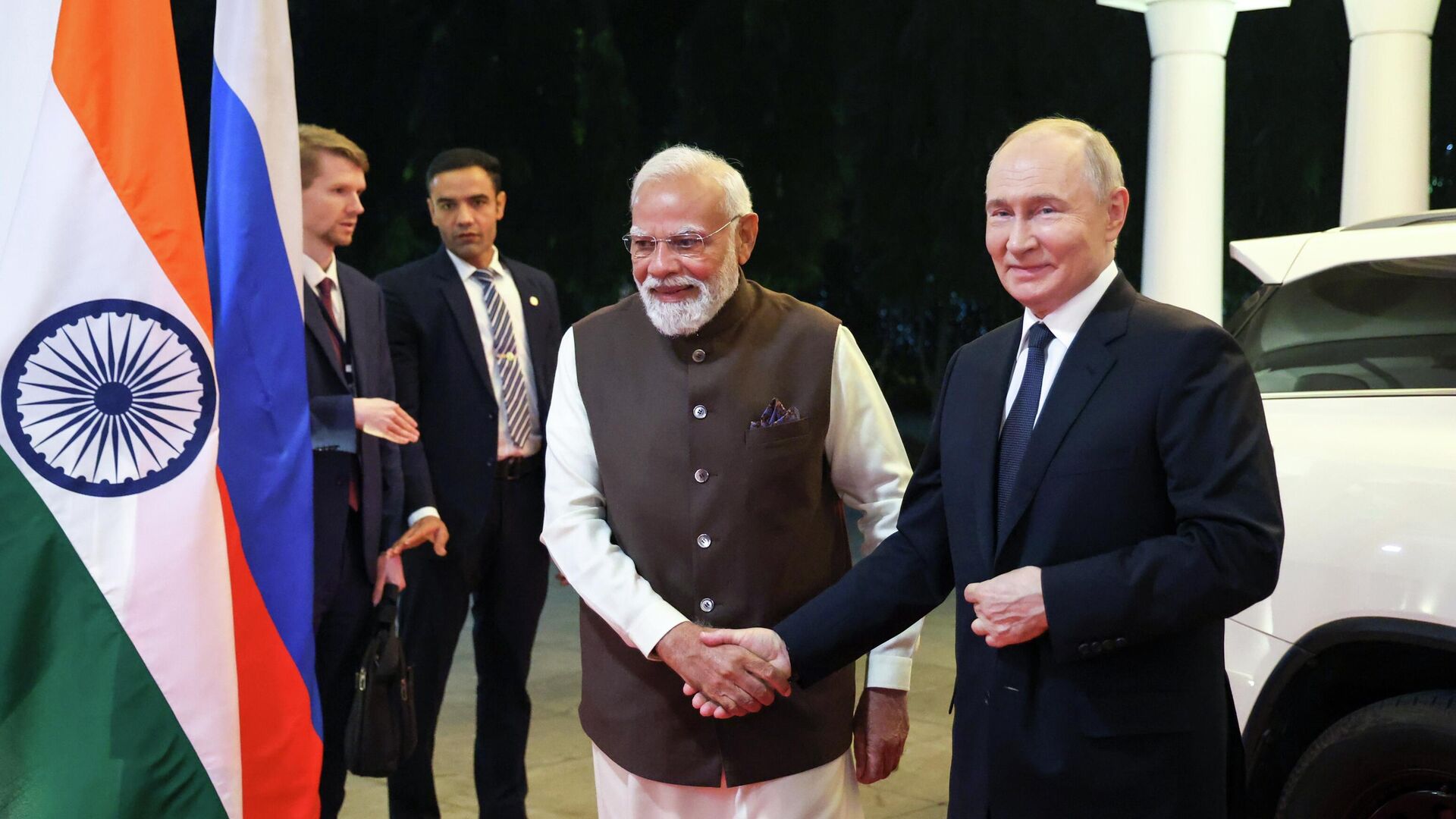
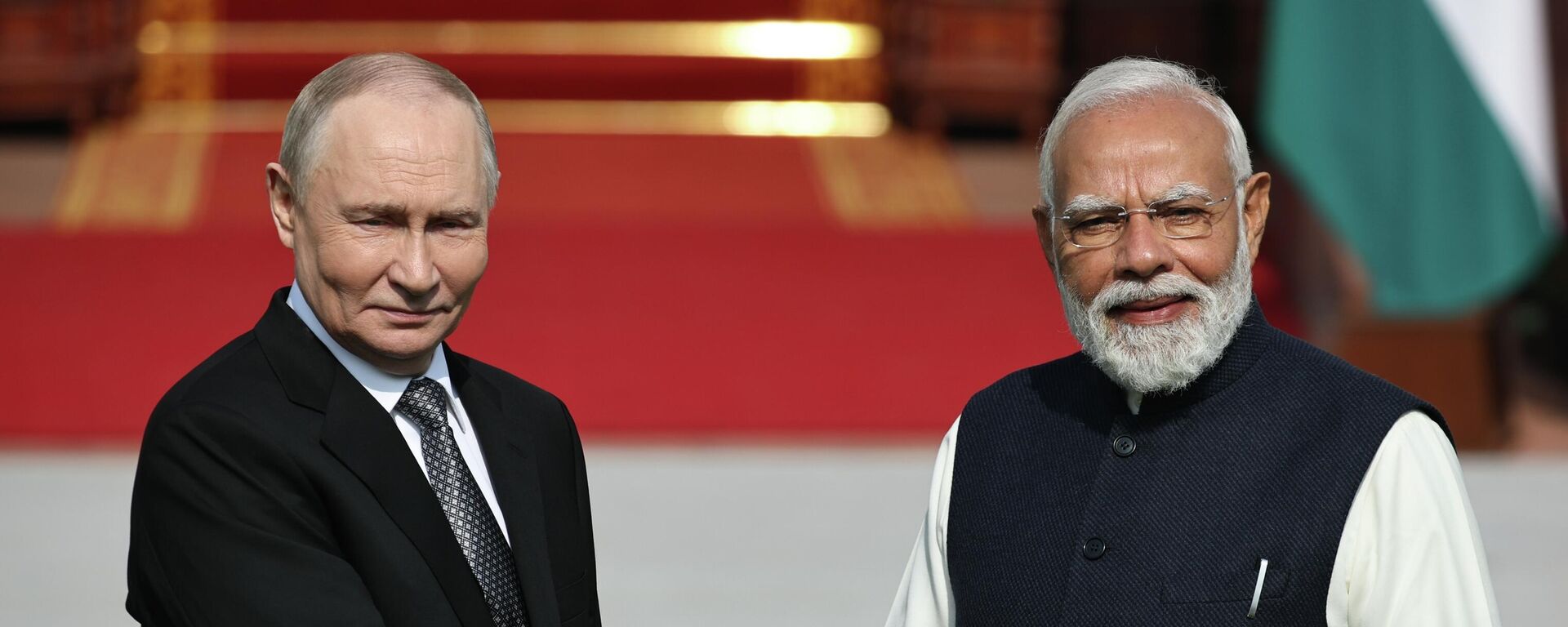
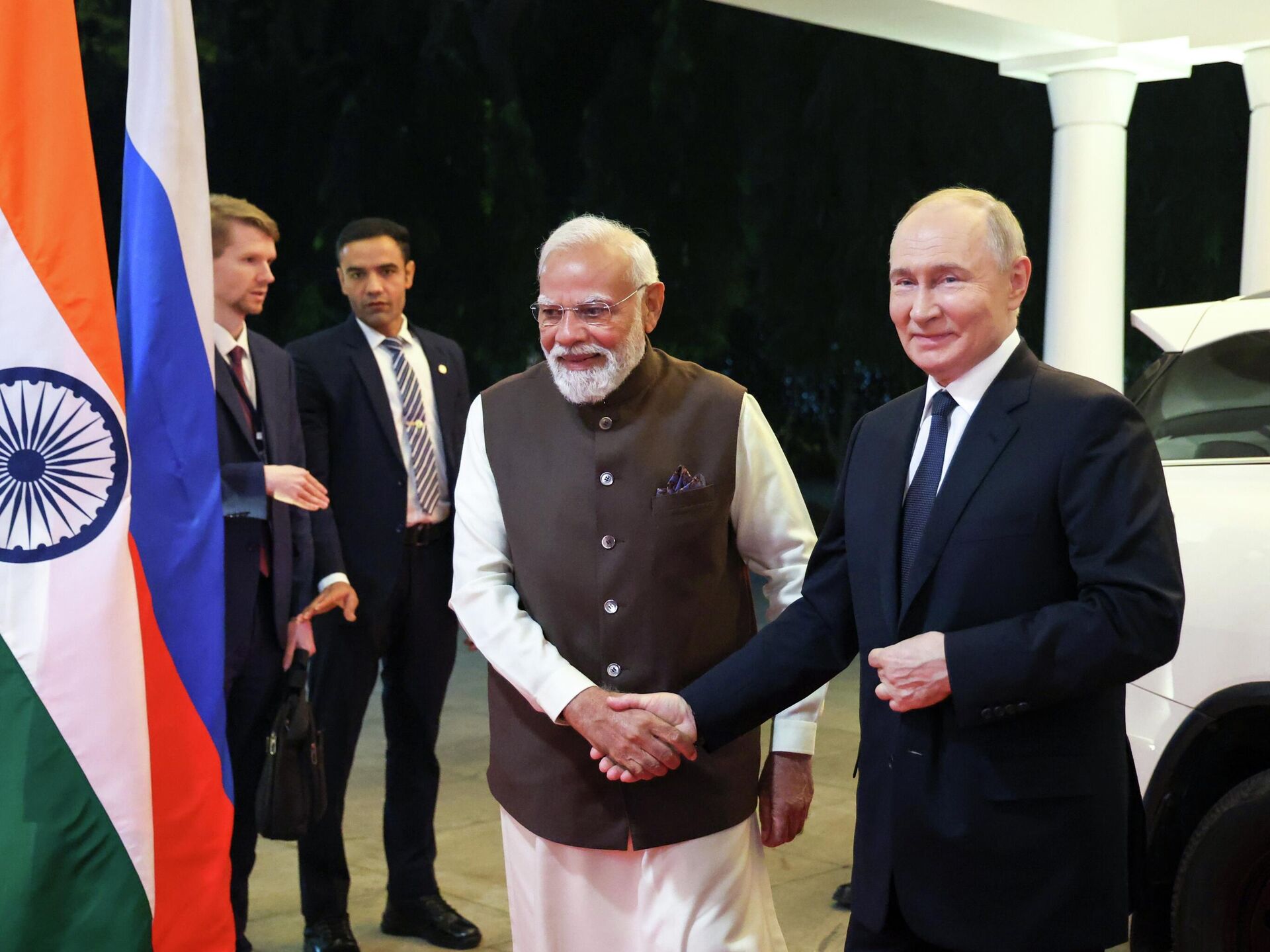
To take their economic cooperation to new heights, India and Russia have formulated the India–Russia Cooperation Program 2030, announced during a joint press briefing in New Delhi today.
The India–Russia Cooperation Program 2030, announced by the Prime Minister Narendra Modi and President Vladimir Putin, in New Delhi on Friday, moves the strategic New Delhi-Moscow partnership into "mission mode", an expert has said.
"The India–Russia Cooperation Program 2030 is not just another policy document. It is, in many ways, the economic operating system for the next decade of their bilateral partnership. After all, this roadmap finally gives the partnership the structure, the direction, and crucially, the mechanism needed to actually deliver on its vast potential," Gaurav Kumar, a researcher at the United Service Institution of India (USI), a national security and foreign affairs think tank, told Sputnik India.
For the first time, we are seeing trade policy, logistics connectivity, financial settlement systems, and sectoral cooperation being synchronised into a single coordinated pipeline, he added.
The push for an
India-Eurasian Economic Union (EAEU) Free Trade Agreement (FTA), two new Indian commercial consulates in Russia, expansion of Rupee–Rouble and local-currency settlement, the removal of tariff and non-tariff barriers, and the
fast-tracking of both the International
North–South Transport Corridor (INSTC) and the
Eastern Maritime Corridor are all transformative initiatives. They tackle the exact bottlenecks that were holding back growth, the pundit reckoned.
"Furthermore, when we place all this against the backdrop of India-Russia trade having already crossed $68.7 billion, Prime Minister Modi's confidence that the $100 billion mark can be reached well before 2030 suddenly makes perfect sense. This is not political optimism; it is a data-backed projection," Kumar noted.
The new plan opens the door for significant expansion of Indian exports in pharmaceuticals, medical devices, engineering goods, electronics, textiles, agriculture, and marine products. Russia's market needs reliable suppliers, and India is now positioning itself to fill that gap at scale. The trajectory is clearly upward. So, the 2030 Program effectively puts the economic relationship into 'mission mode', he stressed.
Just as importantly, the shift from simple trade to co-production is a strategic breakthrough. Joint projects in heavy industry, aviation components, shipbuilding, chemicals, and transport engineering fundamentally rebalance the relationship because both nations
will now share value chains instead of conducting one-way commerce, the international relations analyst underscored.
"Add to this the move toward national currency settlements and streamlined customs procedures, and we get a partnership that is more stable, less vulnerable, and structurally more balanced," Kumar asserted.
If both sides follow through, the 2030 roadmap can transform the India–Russia economic relationship from an oil-heavy trade arrangement into a diversified, investment-rich, and sustainable economic corridor, one that supports long-term equilibrium rather than short-term spikes, he concluded.