https://sputniknews.in/20260108/india-doubles-down-on-multipolarity-amid-us-attacks-on-multilateral-groupings-10321623.html
India Doubles Down on Multipolarity Amid US Attacks on Multilateral Groupings
India Doubles Down on Multipolarity Amid US Attacks on Multilateral Groupings
Sputnik India
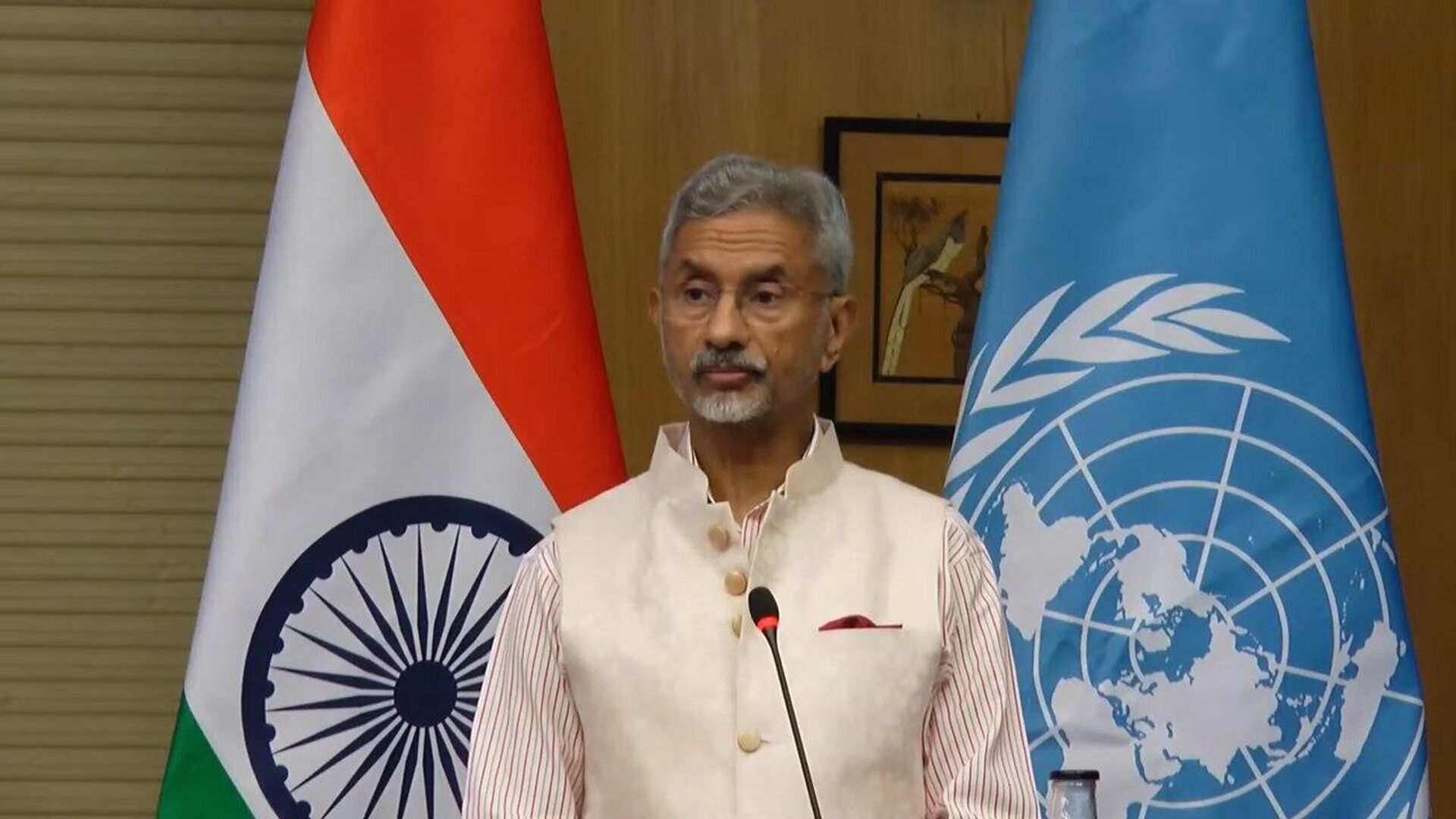
India’s External Affairs Minister S Jaishankar has said that Delhi remains committed to multipolarity as the chair of BRICS this year.
2026-01-08T12:14+0530
2026-01-08T12:14+0530
2026-01-08T12:14+0530
world news
s. jaishankar
donald trump
narendra modi
us
india
paris
brics
the united nations (un)
g7
https://cdn1.img.sputniknews.in/img/07e9/0a/18/9969725_0:0:1280:720_1920x0_80_0_0_c51b10591fe61f23c736f161d0835739.jpg
India’s External Affairs Minister S Jaishankar has said that Delhi remains committed to multipolarity as the chair of BRICS this year.The remarks were made during his meeting with French Foreign Minister Jean-Noël Barrot in Paris late on Wednesday evening (IST).Later, at the India-Weimar Format Meeting, Jaishankar stressed that the world was "moving in a multi-polar direction".The meeting was also attended by Barrot, German Foreign Minister Johann Wadephul and Polish top diplomat Radosław Sikorski.The Indian diplomat also emphasised the importance of collaboration to stabilise international politics and economy.Incidentally, Jaishankar's reaffirmation to multipolarity came just hours before the US President Donald Trump signed an Executive Order (EO) withdrawing Washington from 66 multilateral groupings, which include 35 non-UN and 31 UN forums.The Presidential order stated that it would be "contrary to the interests of the United States" to participate, remain a member of or fund any of the 66 groupings."From DEI (Diversity, Equality and Inclusion) mandates to “gender equity” campaigns to climate orthodoxy, many international organizations now serve a globalist project rooted in the discredited fantasy of the “End of History.” These organizations actively seek to constrain American sovereignty," it said.The other groupings from which the US has withdrawn include the Intergovernmental Panel on Climate Change (IPCC), International Energy Forum (IEF), Colombo Plan Council (Sri-Lanka based), International Institute for Democracy and Electoral Assistance (currently chaired by India).Since the return of the US President to power last year, Washington has withdrawn from the World Health Organisation (WHO), UNICEF, Paris Climate Deal and gone back on US commitments on tariffs at the World Trade Organisation (WTO).
https://sputniknews.in/20231227/russia-is-indias-time-tested-partner-jaishankar-5981248.html
us
india
paris
germany
france
Sputnik India
feedback.hindi@sputniknews.com
+74956456601
MIA „Rossiya Segodnya“
2026
Dhairya Maheshwari
https://cdn1.img.sputniknews.in/img/07e6/0c/13/138962_0:0:641:640_100x100_80_0_0_2cb44360dbcdf6d84bf4b299cd045917.jpg
Dhairya Maheshwari
https://cdn1.img.sputniknews.in/img/07e6/0c/13/138962_0:0:641:640_100x100_80_0_0_2cb44360dbcdf6d84bf4b299cd045917.jpg
News
en_IN
Sputnik India
feedback.hindi@sputniknews.com
+74956456601
MIA „Rossiya Segodnya“
Sputnik India
feedback.hindi@sputniknews.com
+74956456601
MIA „Rossiya Segodnya“
Dhairya Maheshwari
https://cdn1.img.sputniknews.in/img/07e6/0c/13/138962_0:0:641:640_100x100_80_0_0_2cb44360dbcdf6d84bf4b299cd045917.jpg
trump india, trump news, trump india news, jaishankar news, modi trump, international solar alliance, india us relations, trump on modi
trump india, trump news, trump india news, jaishankar news, modi trump, international solar alliance, india us relations, trump on modi
India Doubles Down on Multipolarity Amid US Attacks on Multilateral Groupings
External Affairs Minister (EAM) S Jaishankar has said that the world is moving in a "multipolar direction".
India’s External Affairs Minister S Jaishankar has said that Delhi remains committed to multipolarity as the chair of BRICS this year.
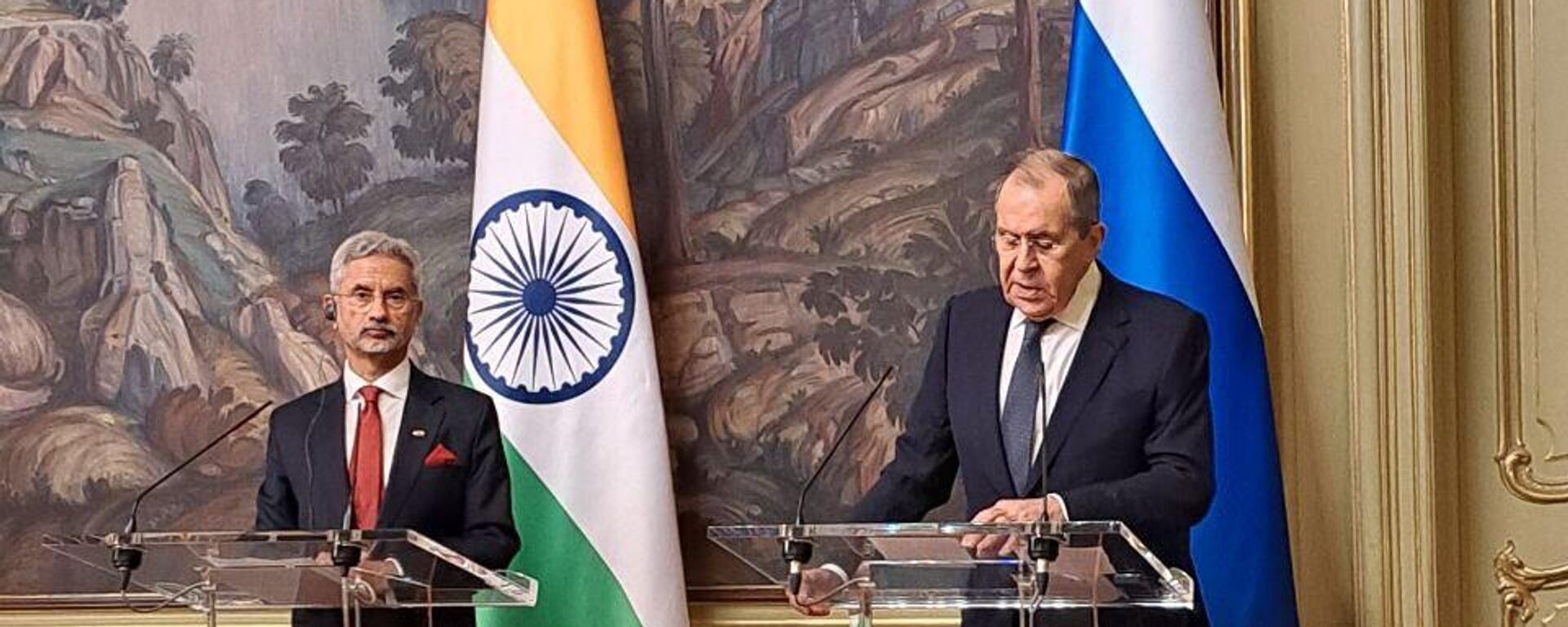
The remarks were made during his meeting with French Foreign Minister Jean-Noël Barrot in Paris late on Wednesday evening (IST).
“As you noted, apart from our bilateral ties, we are both very active in the international arena. This year we chaired the BRICS, you chaired the G7. We are both members of the G20. We are also otherwise active in a number of international organizations,” Jaishankar told Barrot at the meeting.
So as two nations committed to multi-polarity, I believe that working together is important for ourselves, also for stabilizing the global politics at this stage, the Indian foreign minister emphasised.
Later, at the India-Weimar Format Meeting, Jaishankar stressed that the world was "moving in a multi-polar direction".
"Factors and events that make it more volatile and uncertain also make a very powerful argument for deeper collaboration among those who are like-minded, those who have convergence, and those who have shared views. That is the exercise that has brought us together," Jaishankar told a joint four-way presser following the Weimar Meeting.
The meeting was also attended by Barrot, German Foreign Minister Johann Wadephul and Polish top diplomat Radosław Sikorski.
The Indian diplomat also emphasised the
importance of collaboration to stabilise international politics and economy.
Incidentally, Jaishankar's reaffirmation to multipolarity came just hours before the US President Donald Trump signed an Executive Order (EO) withdrawing Washington from 66 multilateral groupings, which include 35 non-UN and 31 UN forums.
The Presidential order stated that it would be "contrary to the interests of the United States" to participate, remain a member of or fund any of the 66 groupings.
A US State Department statement described these
multilateral groupings as "wasteful, ineffective, and harmful" and described them as a "threat" to American sovereignity.
"From DEI (Diversity, Equality and Inclusion) mandates to “gender equity” campaigns to climate orthodoxy, many international organizations now serve a globalist project rooted in the discredited fantasy of the “End of History.” These organizations actively seek to constrain American sovereignty," it said.
In particular, the withdrawal of the US from India-led International Solar Alliance (ISA), a treaty-led
grouping proposed by Prime Minister Narendra Modi in 2015, has raised eyebrows in the country.
The other groupings from which the US has withdrawn include the Intergovernmental Panel on Climate Change (IPCC), International Energy Forum (IEF), Colombo Plan Council (Sri-Lanka based), International Institute for Democracy and Electoral Assistance (currently chaired by India).
Among the UN groupings, the US has decided to withdraw from Department of Economic and Social Affairs (DESA), ECOSOC groups, forums to combat sexual violence against children and during conflicts as well as the UN Conference on Trade and Development (UNCTAD) among others.
Since the return of the US President to power last year, Washington has withdrawn from the World Health Organisation (WHO), UNICEF, Paris Climate Deal and gone back on US commitments on tariffs at the World Trade Organisation (WTO).