What the Israel-US-Iran Conflict Means for India?
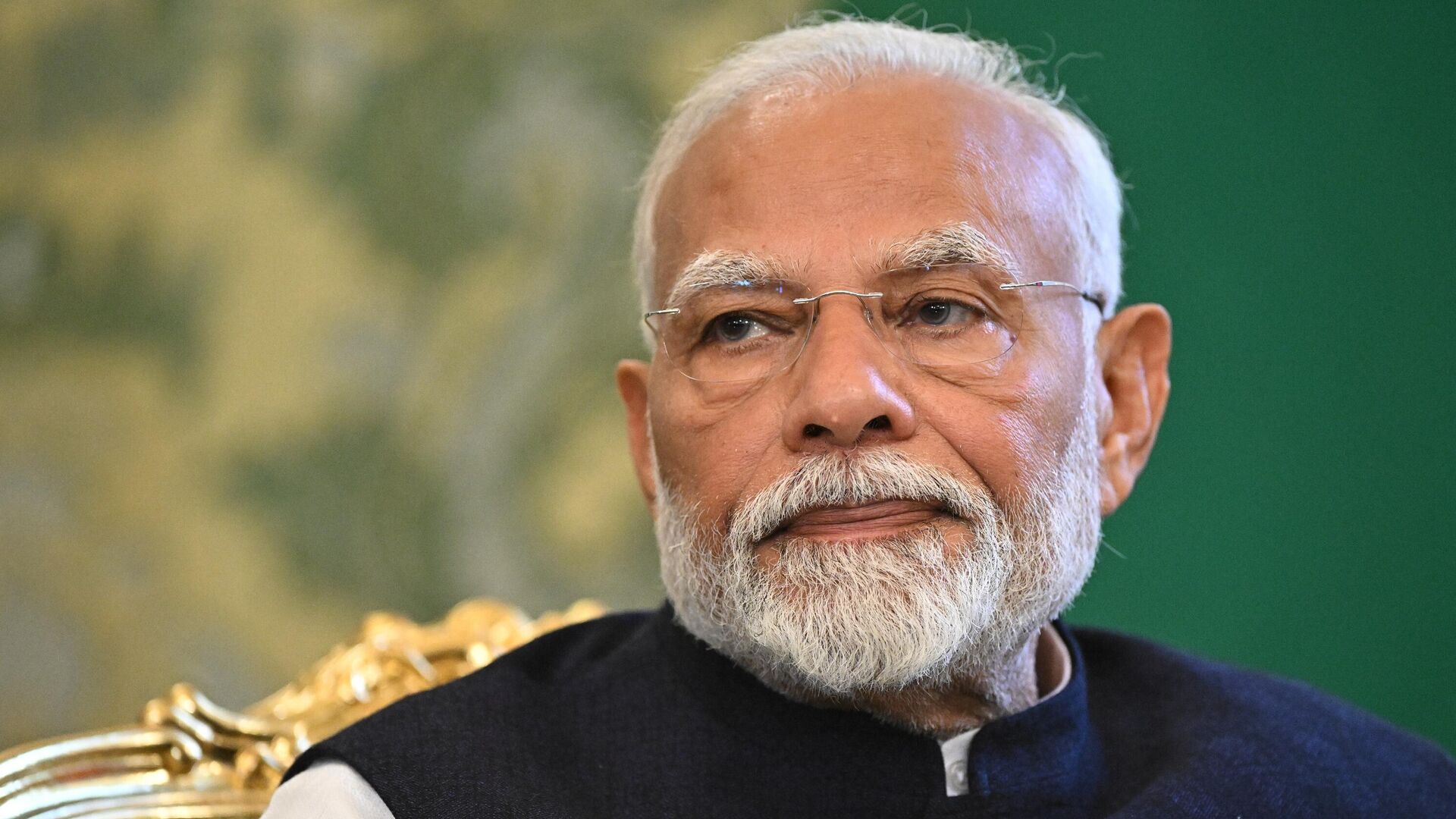
© Sputnik / Sergey Bobylev
/ Subscribe

With Israel and its closest ally, the US, trading missiles with Iran since Saturday, turning the Middle East into a conflict zone, India is among the top countries that have been impacted severely by the crisis.
India's Eurasian export architecture, built around Iran's Chabahar port and the International North-South Transport Corridor (INSTC), faces structural vulnerability due to US/Israeli attacks on Iran as well as Iran's retaliation on US bases in Gulf countries, an expert has said.
"The immediate priority is activating the INSTC Eastern Route via Bandar Abbas as the primary fallback for pharmaceutical and engineering exports to Russia and Central Asia, while diplomatically securing continuity of the 10-year Chabahar contract with any successor authority in Tehran," Dr Shubhda Chaudhary, the Founder of the Middle East Insights Platform, a Delhi-based think tank, told Sputnik India.
Explaining India's short-term and medium-term priorities, she stated:
Short-term (3–12 months)
Short-term (3–12 months)
Scale up the Chennai–Vladivostok Maritime Corridor (CVMC) for Russia-bound trade.
This Iran-independent route reduces transit time from 40 to 24 days (40% faster than Suez), and is already facilitating crude, LNG, fertilisers, coal, and manufactured goods.
It strengthens India–Russia trade while insulating shipments from sanctions risks tied to Iran.
Medium-term (1–3 years):
Operationalise the Ashgabat Agreement corridor (acceded in 2018) as a structured Iran-bypass route via Turkmenistan and the Caspian.
This must transition from an insurance policy to an active strategic alternative.
In March 2025, India shipped a cargo consignment from Mundra Port in Gujarat to Kazakhstan via the Eastern Route of INSTC, travelling from Bandar Abbas to Central Asia — the first such test of the route's commercial viability. Critically, this route does not require transiting the Chabahar terminal itself; it uses Bandar Abbas, bypassing the Iranian interior instability vector. But the risk is - Bandar Abbas itself handles 85% of Iran's seaborne trade and is highly congested; any Iranian regime transition could impose port closures or access restrictions here too.
"India's over-reliance on Iran represents a single-point-of-failure risk. Chabahar should be retained as a strategic political foothold, but not remain the core logistics artery. Diversification via Bandar Abbas, the CVMC, and the Ashgabat corridor is essential to reduce cost exposure, sanctions risk, and transit disruption vulnerabilities," Chaudhary underscored.
For India, this is not a distant geopolitical event. It is an immediate national security emergency because nearly 9 to 10 million Indian nationals — the largest expatriate concentration anywhere in the world — live and work in precisely the countries now under attack or at imminent risk, the strategic affairs commentator highlighted.
Breaking down the numbers by each nation, the UAE has 3.5–4 million Indians followed by Saudi Arabia (2.6 million) and Kuwait (1 million), while Qatar (0.75–0.84 million), Oman (0.78 million), and Bahrain (0.32 million), have significant populations from India plus smaller but strategically sensitive communities in Israel (97,000) and Iran (4,000–10,000), she added.
Breaking down the numbers by each nation, the UAE has 3.5–4 million Indians followed by Saudi Arabia (2.6 million) and Kuwait (1 million), while Qatar (0.75–0.84 million), Oman (0.78 million), and Bahrain (0.32 million), have significant populations from India plus smaller but strategically sensitive communities in Israel (97,000) and Iran (4,000–10,000), she added.
"These citizens generate 38–40 % of India's total remittances (estimated $50–55 billion annually from the Gulf alone in FY 2025–26), underpin our current account stability, and sustain millions of households back home. Any mass disruption — evacuation, job losses, or worse — would transmit shockwaves directly into our domestic economy and social fabric," Chaudhary emphasised.
India's calculus in the Middle East has therefore shifted decisively and must remain guided by the protection of Indian Lives. After all, citizen safety is the red line, the international relations pundit reasoned.
All contingency plans under Operation Vande Bharat and the Ministry of External Affairs' (MEA) emergency protocols are activated at full scale. Naval assets are being positioned in the Arabian Sea for a possible large-scale extraction. Air corridors, land routes via Oman, and coordination with host governments and friendly powers (including the US for secure airspace) are being finalised hour-by-hour. Voluntary repatriation advisories have been issued; non-essential travel has been banned, she pointed out.
All contingency plans under Operation Vande Bharat and the Ministry of External Affairs' (MEA) emergency protocols are activated at full scale. Naval assets are being positioned in the Arabian Sea for a possible large-scale extraction. Air corridors, land routes via Oman, and coordination with host governments and friendly powers (including the US for secure airspace) are being finalised hour-by-hour. Voluntary repatriation advisories have been issued; non-essential travel has been banned, she pointed out.
"India has successfully evacuated thousands in past crises (Kuwait 1990, Yemen 2015, Lebanon 2023–24); the current scale is larger, but the template exists. No Indian life will be treated as expendable collateral. India should not be drawn into any military entanglement," Chaudhary stressed.
India's statements and actions will be calibrated solely to safeguard its citizens, secure its energy lifelines, and preserve its economic momentum. Weekly war-gaming at the PMO level continues; inter-ministerial task forces (MEA, MoD, MoF, Petroleum) are meeting round-the-clock, the think tanker mentioned.
This escalation reinforces a truth India has long internalised: in an unstable neighbourhood, strategic autonomy is not a slogan — it is the difference between resilience and vulnerability, she underlined.
This escalation reinforces a truth India has long internalised: in an unstable neighbourhood, strategic autonomy is not a slogan — it is the difference between resilience and vulnerability, she underlined.
"We will evacuate our people if required, insulate our economy, and emerge from this crisis with our partnerships diversified and our national interests intact. India's rise cannot be held hostage by any single theatre or any single conflict," Chaudhary concluded.