https://sputniknews.in/20260722/how-big-is-irans-missile-arsenal-11746076.html
How Big is Iran's Missile Arsenal?
How Big is Iran's Missile Arsenal?
Sputnik India
Iran and the US have traded aerial attacks for 11 consecutive days after the collapse of the original memorandum of understanding, which included defining... 22.07.2026, Sputnik India
2026-07-22T21:19+0530
2026-07-22T21:19+0530
2026-07-22T21:19+0530
sputnik opinion
iran
us
united states
islamic revolutionary guard corps (irgc)
tehran
washington d.c.
us-israel war with iran
strait of hormuz
gulf countries
https://cdn1.img.sputniknews.in/img/07ea/06/1c/11430535_0:39:1201:714_1920x0_80_0_0_9418a53b5cbd004fb7cefbd3c165086c.jpg
Iran's Islamic Revolutionary Guard Corps (IRGC) recently claimed to be able to continue its bombing of US interests in the region for a long period, signalling a large stockpile of such weapons.Despite a prolonged campaign by Washington to degrade its missile and drone arsenal, Iran continues to carry out a range of missile strikes in the Middle East, targeting US military facilities in the region with an alarming regularity.Analysts estimate that Iran's missile arsenal has to be seen in two contexts - numbers and technology. After all, Iran has been preparing for this war for over two decades, with the Iranians understanding that they have to develop their own strengths rather than countering the strengths of the US and its allies. As a result, they have developed a very potent and vast arsenal of ballistic missiles instead of a modern Air Force, Navy or Army, believes Colonel (Retd) Rajeev Agarwal, who presently serves as a senior research consultant at Chintan Research Foundation (CRF), a geopolitical and national security think tank in New Delhi. As far as the numbers are concerned, when the war started, American intelligence inputs had suggested that Iran possessed about 3,000 to 5,000 missiles. Interestingly, when the ceasefire took place after the 40 days of war, the American assessment still put that number at about 3,000 to 5,000 missiles, he added.The second part is the quality of the technology being used in the Iranian missiles. What we are seeing is that more and more Iranian missiles are successfully penetrating the air and missile defence of American allies in the region, whether it is in Kuwait, Bahrain, Jordan, Oman, Qatar, or elsewhere, the Indian Army veteran explained. That signifies two things. Firstly, Iran is now firing better technology missiles, which are able to penetrate Western air defences. The prime examples of this are the Sejal as well as the Khorramshahr missiles, he underscored.Meanwhile, Dr Vishwajeet Singh Akhawat, an Iran expert at the Vivekananda International Foundation (VIF), one of India's top think tanks specialising in foreign affairs, said that assessing the exact size of the Iranian missile and drone arsenal is very difficult. It has become increasingly evident that the Iranian stockpiles of both drones and missiles are significantly higher than what was expected by a lot of analysts, particularly those from the United States. While the Iranian capabilities have been degraded by the combined attack of the US and Israel, certain estimates suggest that Iran possesses around 70% of its pre-war inventory of missiles and drones, which gives it a considerable strike capability, he noted.Also, one needs to understand the context that the Iranian missile infrastructure was created under the sanctions regime, so it is designed to withstand very intense and severe external military and economic pressure. This means that the long-term challenge for the United States is not simply the number of missiles Iran possesses, but it's also the ability of the Iranian regime to sustain production of those missiles and drones even under serious stress, the think tanker emphasised. Equally important is the Iranian strategic posture. It has shown the will to absorb a lot of costs. Military capability is only one side of the equation, political resolve is another. Even if Iran is severely degraded, but retains the capability and will to fight, it will in due time reconstitute the capabilities, even if the costs are way higher. The Iranian leadership, it appears, is convinced that they have a higher pain threshold and are prepared to absorb military and economic costs if survival is at stake, he remarked.This conflict is therefore likely to depend not only on whose military capabilities can be endured for a long period of time, but who shows and demonstrates greater political and strategic endurance. It seems that the party that loses the political will is likely to be at a disadvantageous position at the end of the war, the strategic affairs pundit suggested. On the other hand, Agarwal stated that despite America's best efforts, Washington has failed to force Iran to change its position, which is proof of their underestimation of the enemy's capabilities. While the Americans claim to be degrading Iran's major capabilities, including their missile silos, air defences, and radars, yet Iran is still standing. That means the US strikes are not commensurate to the capabilities that Iran has, the military commentator stated. Another big factor in America not yet achieving a decisive victory over Iran is its changing goalposts. The US resumed its military campaign against Iran with the target of degrading Iran's military capability. However, the US soon realised that merely degrading military capability was not effective, he highlighted. The conflict has become a contest of coercion and brinkmanship. The US believes that a continuous and sustained coercive bombing campaign will compel Iran to come to the negotiating table and negotiate from a position of weakness, particularly on the central issue of the Strait of Hormuz. Iran, conversely, believes in an opposite strategy, which means that by demonstrating that it continues to hold the ability to disrupt and threaten maritime trade through Hormuz, it can leverage and strengthen its negotiating position, commented Akhawat. By imposing economic costs on the United States and the wider international community, Tehran can compel the US to make significant concessions to Iran. So the challenge for the United States is that degrading Iranian conventional military capabilities does not necessarily achieve its primary objective of eliminating Iranian capability to threaten maritime traffic, he elucidated.
https://sputniknews.in/20260722/us-threats-to-nuclear-sites-breach-international-norms-iranian-foreign-ministry-11744604.html
iran
us
united states
tehran
washington d.c.
strait of hormuz
gulf countries
persian gulf (arabian gulf)
Sputnik India
feedback.hindi@sputniknews.com
+74956456601
MIA „Rossiya Segodnya“
2026
Pawan Atri
https://cdn1.img.sputniknews.in/img/07e6/0c/13/139630_147:0:831:684_100x100_80_0_0_8fa2b25903e7787fe6a2698552c167df.png
Pawan Atri
https://cdn1.img.sputniknews.in/img/07e6/0c/13/139630_147:0:831:684_100x100_80_0_0_8fa2b25903e7787fe6a2698552c167df.png
News
en_IN
Sputnik India
feedback.hindi@sputniknews.com
+74956456601
MIA „Rossiya Segodnya“
Sputnik India
feedback.hindi@sputniknews.com
+74956456601
MIA „Rossiya Segodnya“
Pawan Atri
https://cdn1.img.sputniknews.in/img/07e6/0c/13/139630_147:0:831:684_100x100_80_0_0_8fa2b25903e7787fe6a2698552c167df.png
iran, us, united states, islamic revolutionary guard corps (irgc), tehran, washington d.c., us-israel war with iran, strait of hormuz, gulf countries, persian gulf (arabian gulf), oil supplies, energy security, missiles, drone, kamikaze drones, kamikaze drone, islamic revolution guards corps (irgc)
iran, us, united states, islamic revolutionary guard corps (irgc), tehran, washington d.c., us-israel war with iran, strait of hormuz, gulf countries, persian gulf (arabian gulf), oil supplies, energy security, missiles, drone, kamikaze drones, kamikaze drone, islamic revolution guards corps (irgc)
How Big is Iran's Missile Arsenal?
Iran and the US have traded aerial attacks for 11 consecutive days after the collapse of the original memorandum of understanding, which included defining control over the Strait of Hormuz.
Iran's Islamic Revolutionary Guard Corps (IRGC) recently claimed to be able to continue its bombing of US interests in the region for a long period, signalling a large stockpile of such weapons.
"[Trump] should know that, by God's grace, even if this war lasts for several years, until the very last day, our missiles and drones will rain down on American criminals," IRGC said in a statement earlier this week.
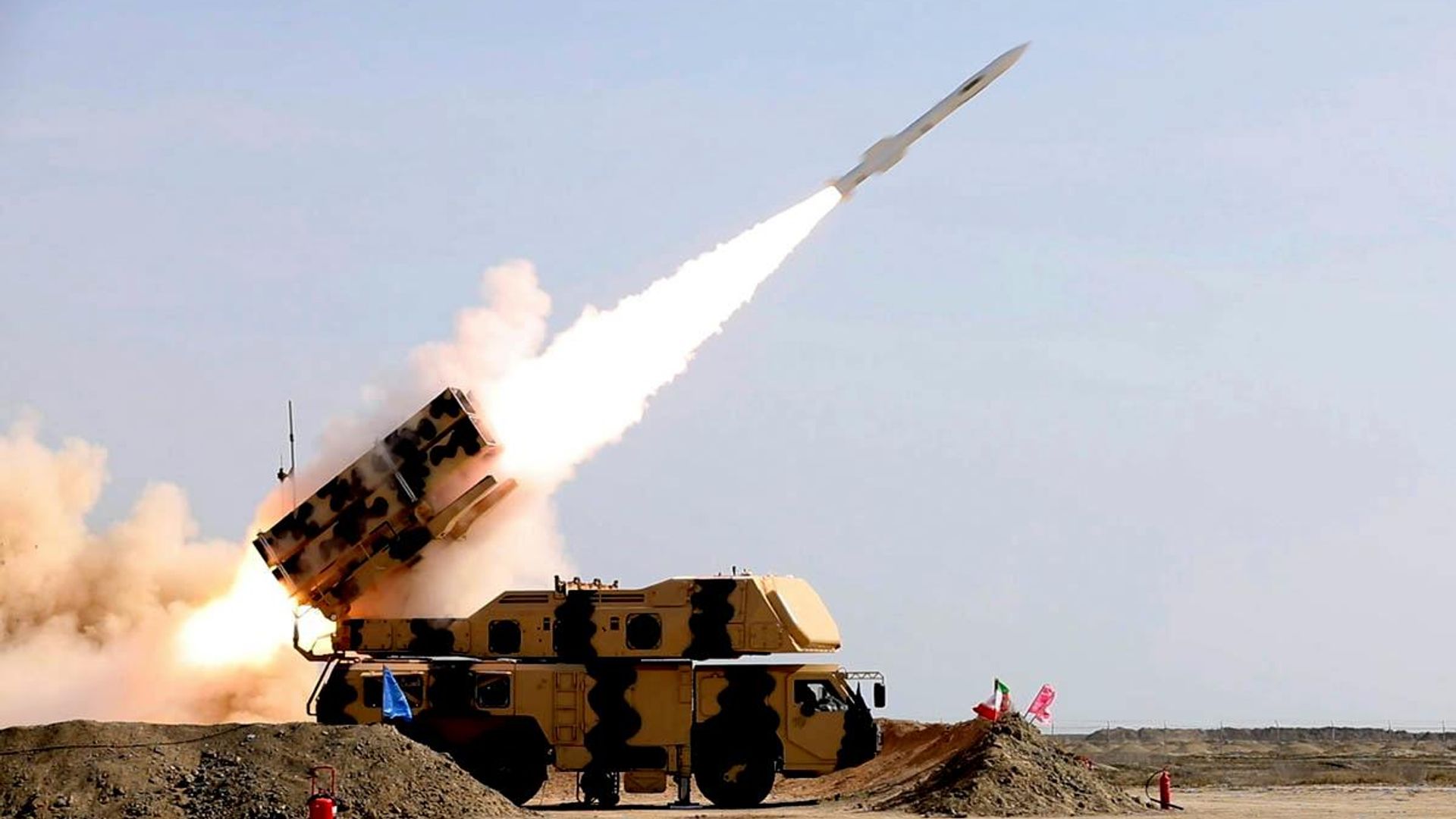
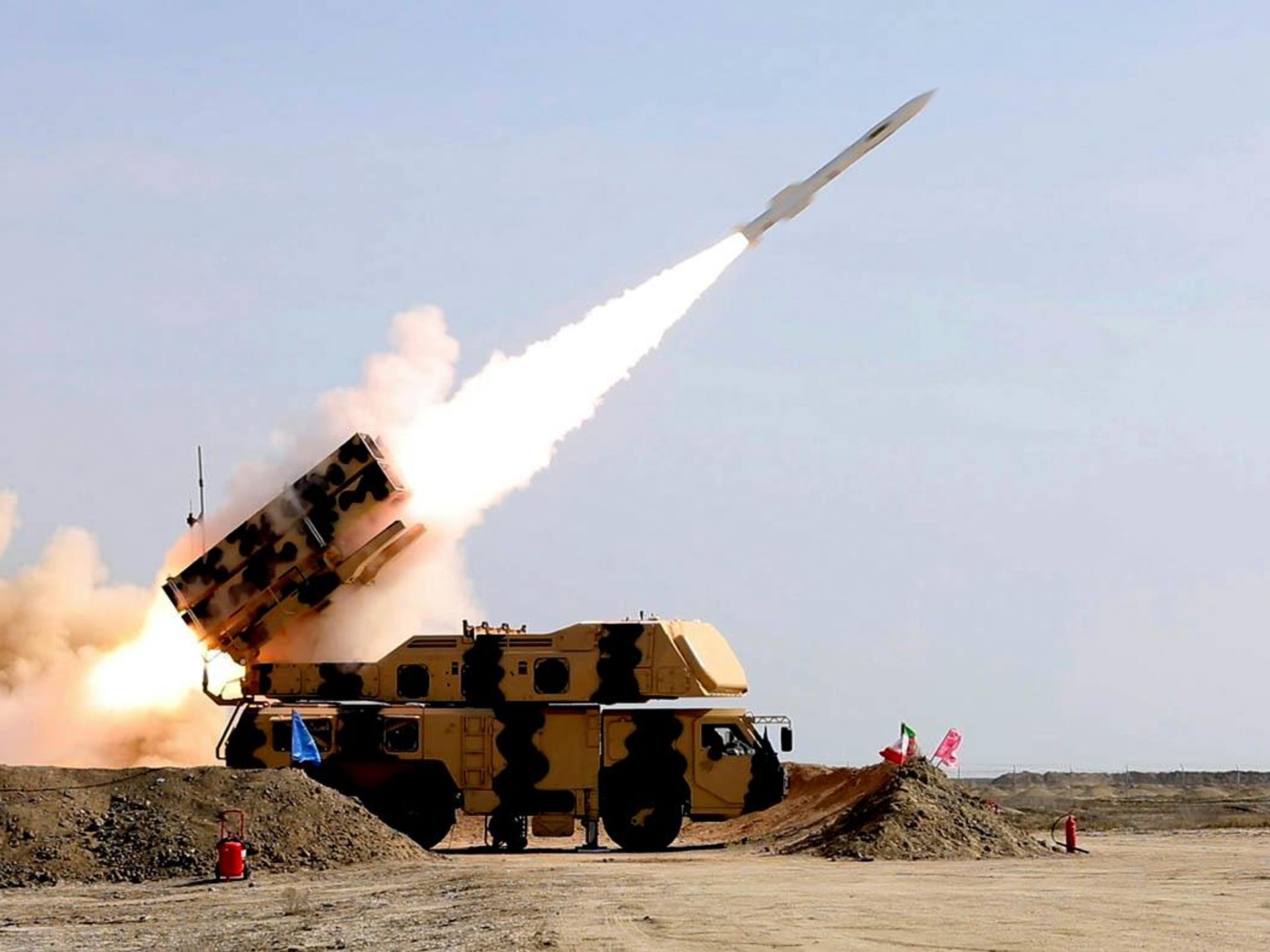
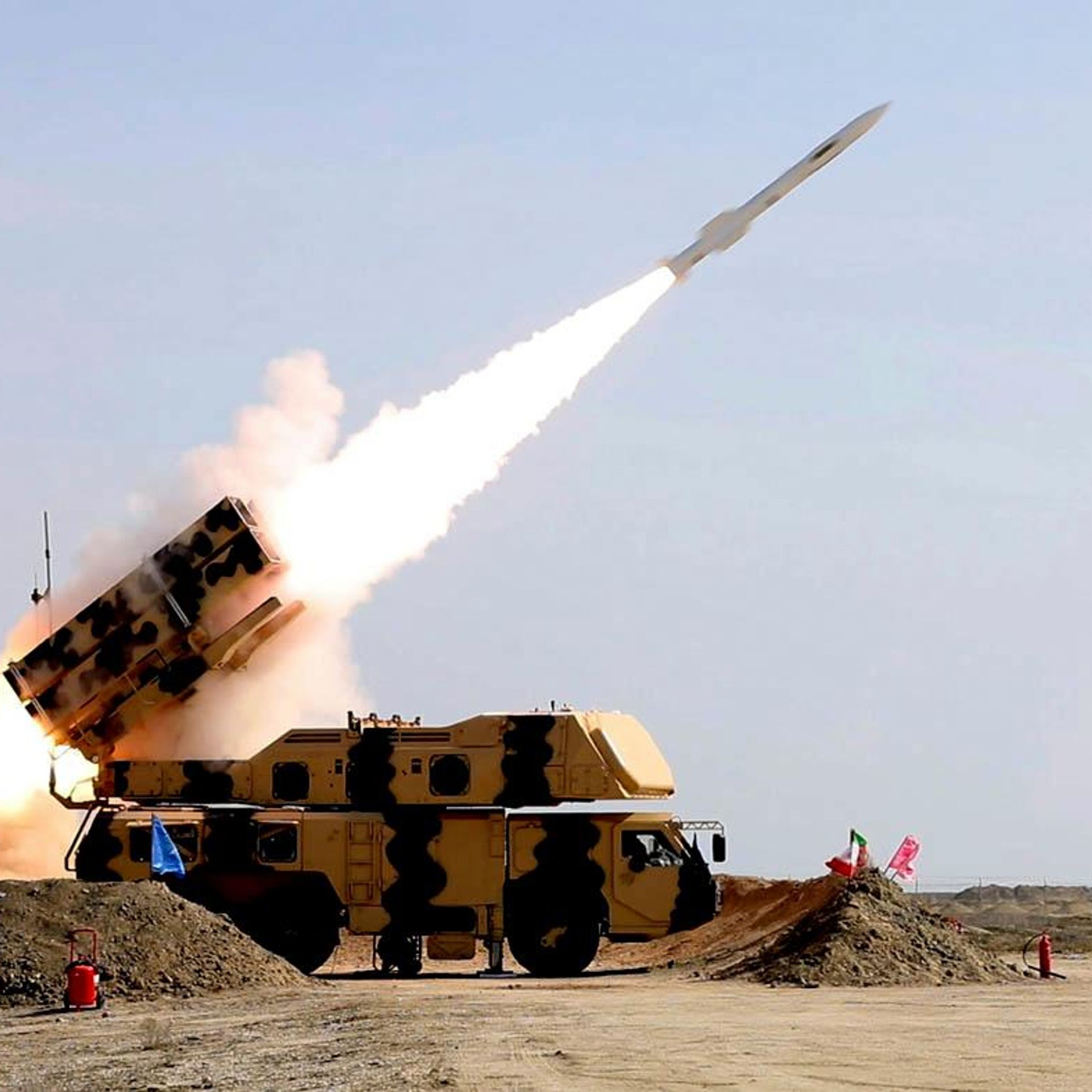
Despite a prolonged campaign by Washington to degrade its missile and drone arsenal, Iran continues to carry out a range of missile strikes in the Middle East, targeting US military facilities in the region with an alarming regularity.
Analysts estimate that Iran's missile arsenal has to be seen in two contexts - numbers and technology.
After all, Iran has been preparing for this war for over two decades, with the Iranians understanding that they have to develop their own strengths rather than countering the strengths of the US and its allies. As a result, they have developed a very
potent and vast arsenal of ballistic missiles instead of a modern Air Force, Navy or Army, believes
Colonel (Retd) Rajeev Agarwal, who presently serves as a senior research consultant at
Chintan Research Foundation (CRF), a geopolitical and national security think tank in New Delhi.
As far as the numbers are concerned, when the war started, American intelligence inputs had suggested that Iran possessed about 3,000 to 5,000 missiles. Interestingly, when the ceasefire took place after the 40 days of war, the American assessment still put that number at about 3,000 to 5,000 missiles, he added.
"So the number of missiles Iran has is nobody's game because the Islamic Republic may still have more than 10,000 to 20,000 missiles. Recently, Iran released a video of another missile city, which is underground, where again, hundreds and thousands of missiles have been stored. Therefore, I tend to agree with the claim of the IRGC that Iran has adequate numbers to fight a prolonged battle with the US for many years," Agarwal told Sputnik India.
The second part is the quality of the technology being used in the Iranian missiles. What we are seeing is that more and more Iranian missiles are successfully penetrating the air and missile defence of American allies in the region, whether it is in Kuwait, Bahrain, Jordan, Oman, Qatar, or elsewhere, the Indian Army veteran explained.
That signifies two things. Firstly, Iran is now
firing better technology missiles, which are able to penetrate Western air defences. The prime examples of this are the
Sejal as well as the
Khorramshahr missiles, he underscored.
"Plus, Iranians have hypersonic glide missiles, which not only fly at the speed of 8 to10 Mach, but also change their trajectory midway, which makes it very difficult for the air defence interceptors to neutralise them," Agarwal stressed.
Meanwhile,
Dr Vishwajeet Singh Akhawat, an Iran expert at the
Vivekananda International Foundation (VIF), one of India's top think tanks specialising in foreign affairs, said that assessing the exact size of the Iranian missile and drone arsenal is very difficult.
It has become increasingly evident that the Iranian stockpiles of both drones and missiles are significantly higher than what was expected by a lot of analysts, particularly those from the United States. While the Iranian capabilities have been
degraded by the combined attack of the US and Israel, certain estimates suggest that Iran possesses around 70% of its pre-war inventory of missiles and drones, which gives it a considerable strike capability, he noted.
"Another related and important factor that needs to be kept in mind is that Iran has utilised the periods of relative peace, for example, during the ceasefire to replenish and reconstitute some of the capabilities that were lost because of the attack by the United States and Israel," Akhawat said in an interview with Sputnik India.
Also, one needs to understand the context that the Iranian missile infrastructure was created under the sanctions regime, so it is designed to withstand very intense and severe external military and economic pressure. This means that the long-term challenge for the United States is not simply the number of missiles Iran possesses, but it's also the ability of the Iranian regime to sustain production of those missiles and drones even
under serious stress, the think tanker emphasised.
Equally important is the Iranian strategic posture. It has shown the will to absorb a lot of costs. Military capability is only one side of the equation, political resolve is another. Even if Iran is severely degraded, but retains the capability and will to fight, it will in due time reconstitute the capabilities, even if the costs are way higher. The Iranian leadership, it appears, is convinced that they have a higher pain threshold and are prepared to absorb military and economic costs if survival is at stake, he remarked.
"The pattern of Iran's employment of missiles and drones in recent escalations also suggests that there is a calibrated strategy rather than an indiscriminate escalation. Iran has relied on more advanced, and more maneuverable and high-speed missiles showcasing controlled and calibrated move up the escalation ladder," Akhawat pointed out.
This conflict is therefore likely to depend not only on whose military capabilities can be endured for a long period of time, but who shows and
demonstrates greater political and strategic endurance. It seems that the party that loses the political will is likely to be at a disadvantageous position at the end of the war, the strategic affairs pundit suggested.
On the other hand, Agarwal stated that despite America's best efforts, Washington has failed to force Iran to change its position, which is proof of their underestimation of the enemy's capabilities. While the Americans claim to be degrading Iran's major capabilities, including their missile silos, air defences, and radars, yet Iran is still standing. That means the US strikes are not commensurate to the capabilities that Iran has, the military commentator stated.
Another big factor in America not yet achieving a decisive victory over Iran is its changing goalposts. The US resumed its military campaign against Iran with the target of degrading Iran's military capability. However, the US soon realised that merely degrading military capability was not effective, he highlighted.
"So they have now started degrading critical infrastructure, whether it is a mineral water plant or a petrochemical plant or even a possible operation to take out the Pickaxe mountain where Iran's new nuclear infrastructure [may have] been built. Changing goalposts is also not helping their cause because the military commanders do not have clearly defined military objectives for a sustained campaign. A war that started on the issue of Iran's nuclear and ballistic missile program now hinges on the Strait of Hormuz," Agarwal underlined.
The conflict has become a contest of coercion and brinkmanship. The US believes that a continuous and sustained coercive bombing campaign will compel Iran to come to the negotiating table and negotiate from a position of weakness, particularly on the central issue of the Strait of Hormuz. Iran, conversely, believes in an opposite strategy, which means that by demonstrating that it continues to hold the ability to disrupt and threaten maritime trade through Hormuz, it can leverage and strengthen its negotiating position, commented Akhawat.
By imposing economic costs on the United States and the wider international community, Tehran can compel the US to
make significant concessions to Iran. So the challenge for the United States is that degrading Iranian conventional military capabilities does not necessarily achieve its primary objective of eliminating Iranian capability to threaten maritime traffic, he elucidated.
"In any case, Iran does not need to completely close the Strait of Hormuz, even limited attacks, as Iran has done recently, can drive up premiums of insurance on shipping and disrupt commercial shipping. The risk of this conflict turning into a prolonged war of attrition in which neither side can easily compel the other to concede makes strategic endurance rather than battlefield success the decisive factor," Akhawat concluded.