Months of Conflict Have Left US Reassessing Its Iran Strategy: Expert
© AP Photo / Ebrahim Noroozi
Subscribe

US President Donald Trump's tactics during a five-month-long war with Iran appear to have left him with very few options and choices.
The Trump administration has adopted a blow-hot, blow-cold approach to dealing with Iran, which to some looks more like a knee-jerk reaction rather than an outcome of the structural thinking of the Pentagon. In a way, the US has become trapped in its own strategy of putting up maximum pressure on Iran through military means, an expert has said.
"There is not even an iota of doubt that the recent war with Iran has completely transformed the strategic thinking in the US administration. Although the public posturing of President Trump looks otherwise. But after being at war with Iran for five months and not gaining anything substantial, the US is facing a major strategic quandary – whether to push Iran through military means or to engage with it diplomatically," Dr Pavan Chaurasia, a research fellow specialising in Iranian affairs at the New Delhi-based India Foundation, told Sputnik India.
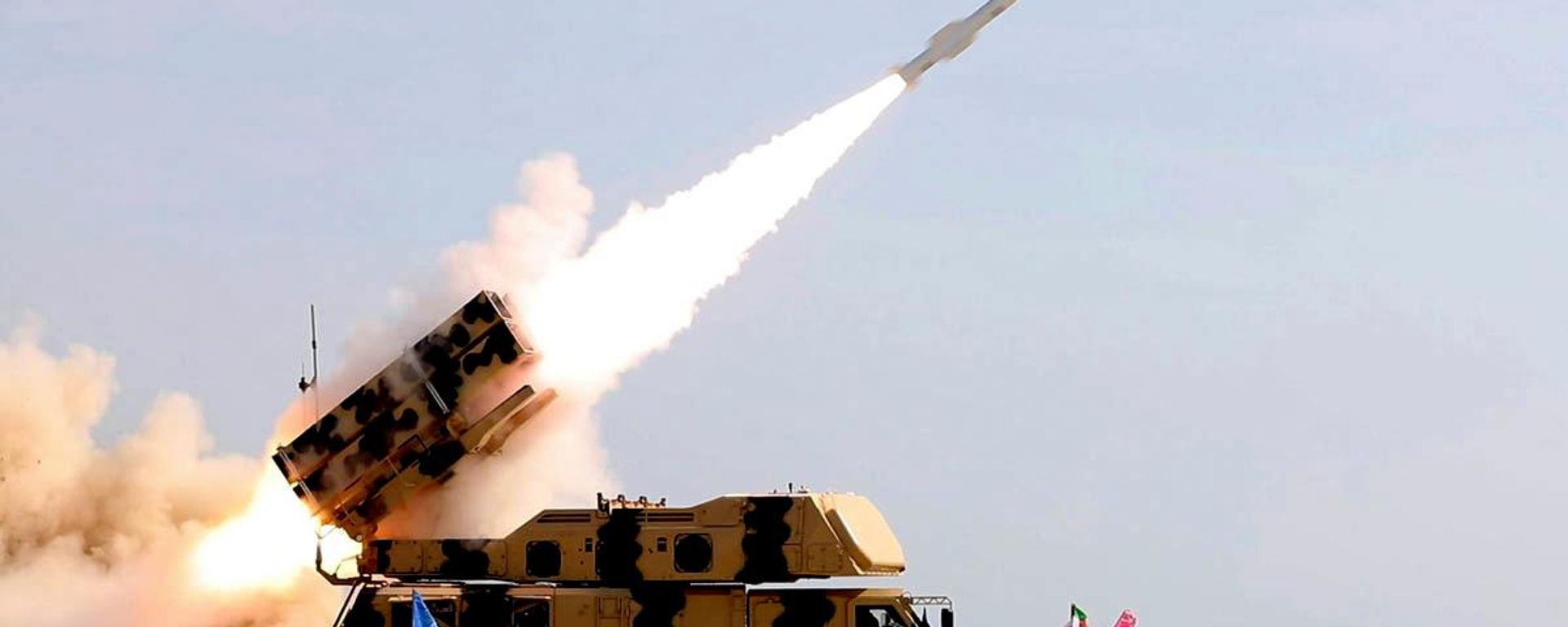
On the other hand, Iran has played all its cards very smartly, be it its geography (blockade of the Strait of Hormuz) or its kinetic/drone superiority. This has led to a rise in frustration in Washington, which had not anticipated that the domestic conditions may prevent Iranians from continuing to fight both the US and Israel for very long, he added.
Furthermore, this makes it clear that the US has got itself involved in an affair where it does not have a clear-cut way out, although it will still continue to exert pressure on Iran militarily, the think tanker reckoned.
Furthermore, this makes it clear that the US has got itself involved in an affair where it does not have a clear-cut way out, although it will still continue to exert pressure on Iran militarily, the think tanker reckoned.
"America's next move will be decided, to some extent, by the role and attitude of the Gulf monarchies in supporting the US in this war. Trump does not lack ideas but is confronting the structural limits of limited war against a resilient regional power with asymmetric advantages, geographical depth, and the ability to impose costs on global energy flows," Chaurasia stressed.
Meanwhile, Dr Vishwajeet Singh Akhawat, a research scholar at the Vivekananda India Foundation (VIP), underscored that the problem with the United States is not that it lacks a strategy but rather its strategy rests on faulty assumptions.
Trump and his administration believe that sustained military pressure, primarily through aerial bombardment and naval blockade, will compel Iran to accede to US demands; the problem with this approach is that it fundamentally misjudges Iran's strategy calculus. For Iran, the war is now not simply about military attrition but also about political and strategic endurance under sustained military pressure, he explained.
Trump and his administration believe that sustained military pressure, primarily through aerial bombardment and naval blockade, will compel Iran to accede to US demands; the problem with this approach is that it fundamentally misjudges Iran's strategy calculus. For Iran, the war is now not simply about military attrition but also about political and strategic endurance under sustained military pressure, he explained.
"Iran believes that by prolonging this conflict, it will sufficiently raise the cost for the United States and its partners in the region, compelling them to yield. By demonstrating its ability to threaten commercial navigation through the Strait of Hormuz, it will eventually force Washington to accept Iranian demands. In other words, while Trump seeks to coerce Iran into giving concessions by military pressure, Iran is attempting to outlast President Trump by continuing to show endurance," Akhawat said in an interview with Sputnik India.
Another reason why this approach is not yielding the kind of result the United States wants is that aerial bombardment can degrade military capabilities significantly, but it is far less effective at regime capitulation, particularly a regime that has become more cohesive and strengthened and resolved under external pressure. Iran has demonstrated a very high tolerance for losses so long as it can advance its strategic objective, which is controlling the Strait of Hormuz, the strategic affairs pundit underlined.
Another option, which is likely to generate some sort of decisive military outcome, would be a large-scale ground invasion, but that would involve enormous risks, casualties, financial losses and most of all political risk for the Trump presidency, precisely the kind of situation that he has sought to avoid and campaigned against, he noted.
Another option, which is likely to generate some sort of decisive military outcome, would be a large-scale ground invasion, but that would involve enormous risks, casualties, financial losses and most of all political risk for the Trump presidency, precisely the kind of situation that he has sought to avoid and campaigned against, he noted.
"Thus, the US is trapped between an escalation it is not willing to undertake and a coercive military strategy that is not going to alter Iran's strategic behaviour. The result is not strategic confusion but a strategy whose instruments are incapable of achieving the objectives it is designed to achieve," Akhawat emphasised.
The United States has suffered some setbacks in this war, leading to a depletion of its weapons stockpile. However, it can still conduct lower-tempo or more selective strikes using more plentiful shorter-range munitions once air defences are suppressed, and it retains the capacity for episodic high-intensity pulses, Chaurasia pointed out.
Moreover, sustained high-rate defensive intercepts against massed Iranian salvos, or a rapid return to the early-war tempo of long-range precision fires, become riskier and more expensive. This creates a 'window of vulnerability' for other theatres (notably the Indo-Pacific) and forces prioritisation: defending troops and key bases first, accepting infrastructure hits second, and relying more on partners or cheaper effectors, he remarked.
Moreover, sustained high-rate defensive intercepts against massed Iranian salvos, or a rapid return to the early-war tempo of long-range precision fires, become riskier and more expensive. This creates a 'window of vulnerability' for other theatres (notably the Indo-Pacific) and forces prioritisation: defending troops and key bases first, accepting infrastructure hits second, and relying more on partners or cheaper effectors, he remarked.
"A production surge is underway, but it cannot instantly close multi-year gaps for complex systems. The pause, therefore, serves dual purposes: reconstitution and negotiation leverage, while both sides test whether the other will blink on Hormuz and residual capabilities," the observer suggested.
The reported decision to allow some Iranian missiles and drones to strike selected targets should at best be understood as a tactical rather than a strategic choice. If the projected impact is in a very low-value area, allowing it to go through is more economical than putting an expensive interceptor into service. It reflects the well-known economics of missile defence where interception of every projectile is neither feasible nor effective, Akhawat stated.
The central question and constraint on US operations is not stockpile depletion but the strategic effectiveness of the employment of ammunition. The US is gradually degrading Iranian missile infrastructure, yet it has not reached a point where Iran can no longer threaten US bases, commercial shipping or regional partners, he commented.
The central question and constraint on US operations is not stockpile depletion but the strategic effectiveness of the employment of ammunition. The US is gradually degrading Iranian missile infrastructure, yet it has not reached a point where Iran can no longer threaten US bases, commercial shipping or regional partners, he commented.
"Washington is also running out of high-value targets whose destruction could meaningfully alter Iranian behaviour. Without an effective strategy capable of changing Tehran's political calculus, the conflict risks becoming a prolonged war of attrition. Stockpile shortages matter, but they are not operational challenges that both militaries are likely to adapt to rather than having decisive strategic limitations," Akhawat concluded.