BrahMos Becoming the Global South's Weapon of Choice
© Sputnik / Alexei Danichev
/ Subscribe

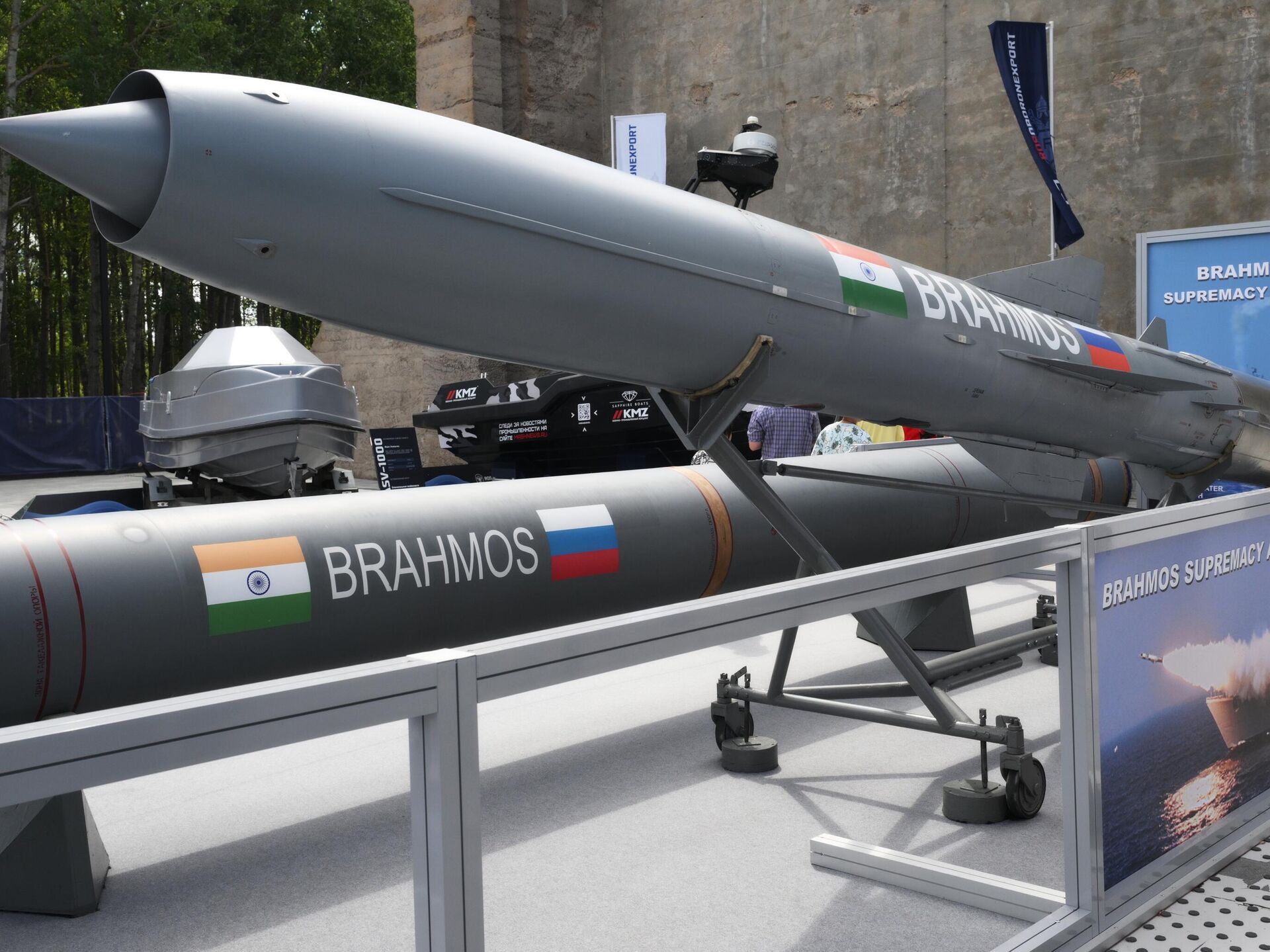
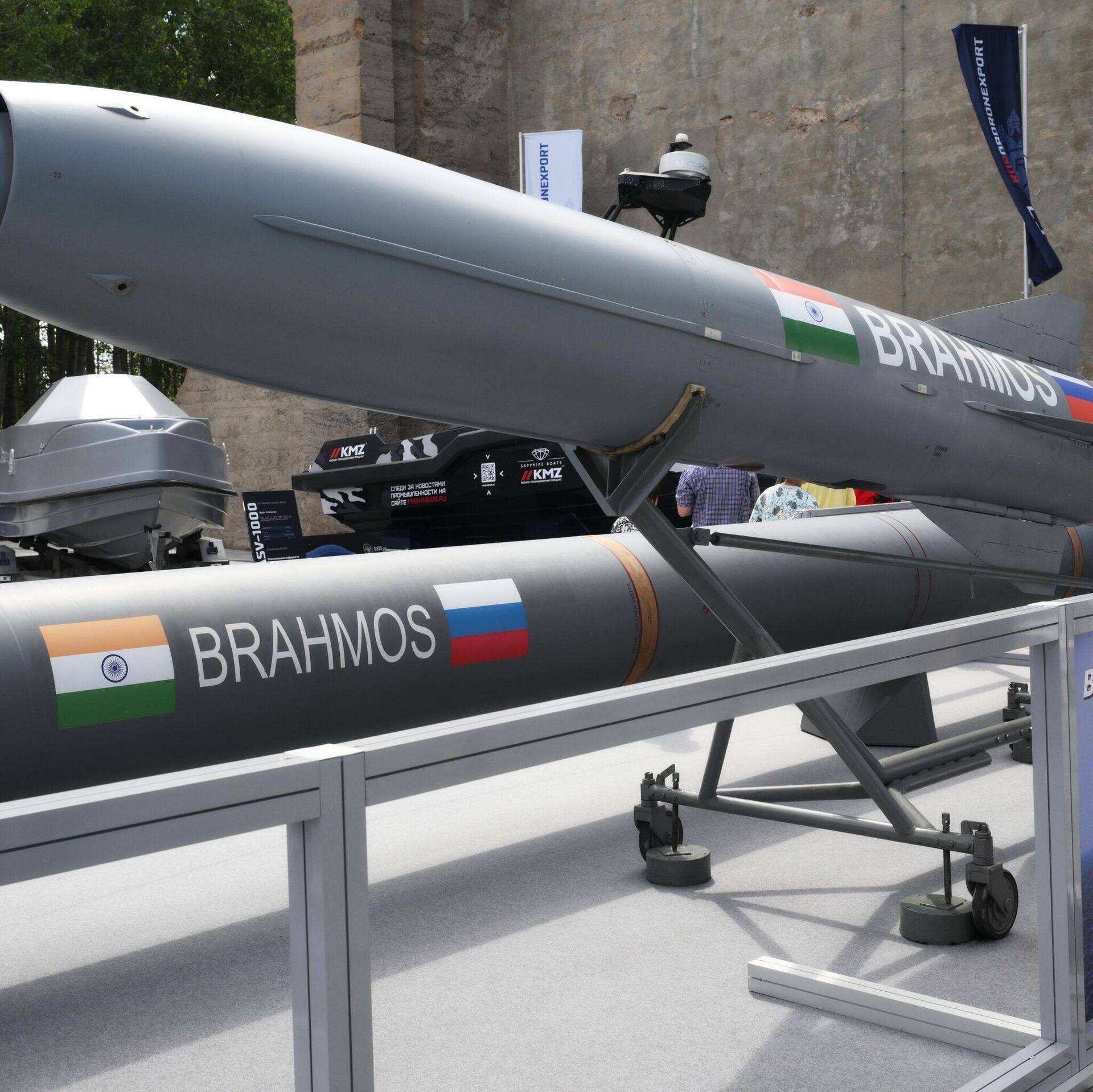
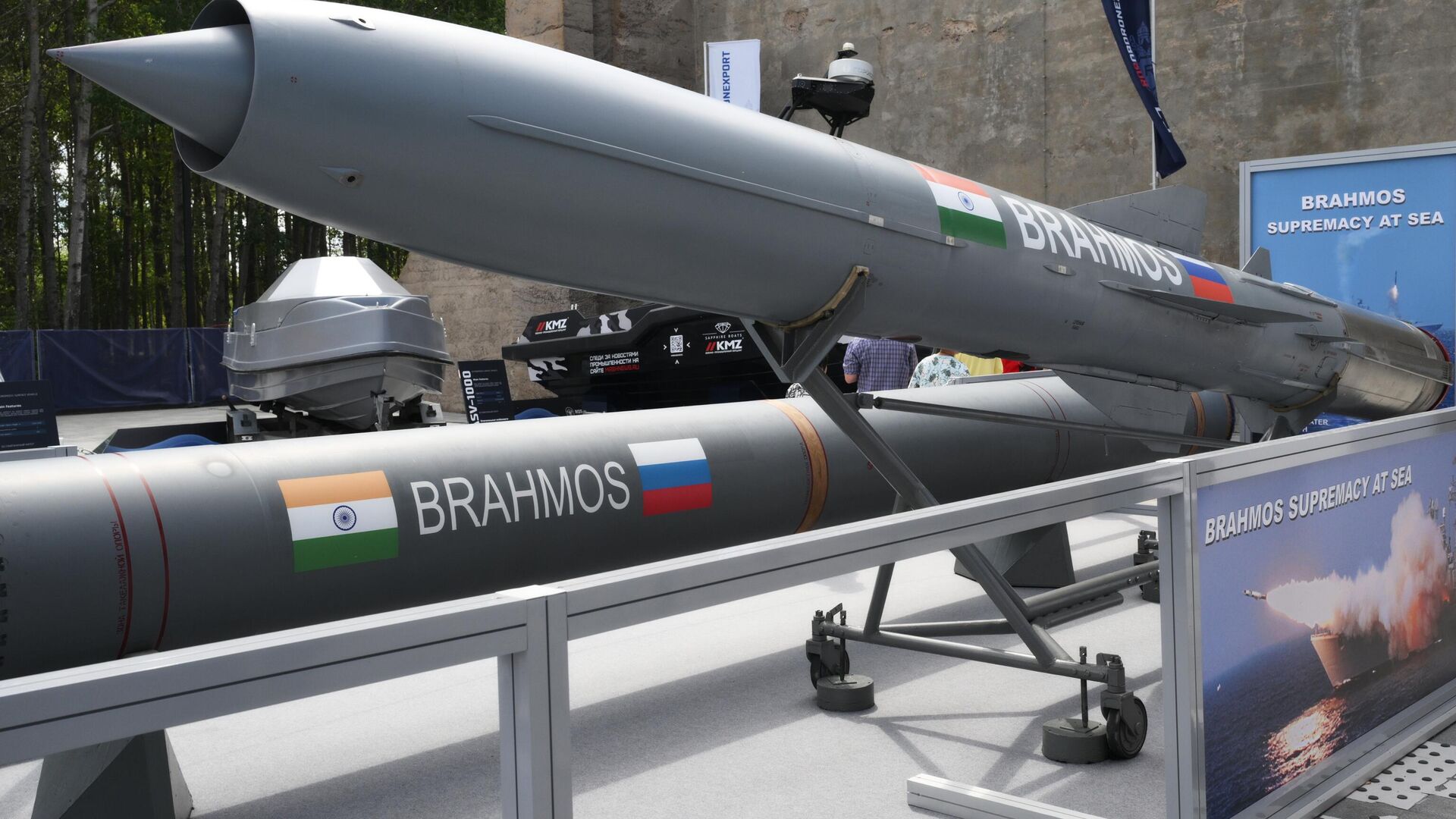
Following the announcement of an in-principle agreement between India and Indonesia, interest in the Indo-Russian BrahMos missile has grown exponentially, with the United Arab Emirates (UAE) becoming the latest country looking to acquire the widely acclaimed weapon system.
The renewed interest in BrahMos reflects a broader shift in the global security environment. Recent conflicts, including the Ukraine conflict, the US-Israel war against Iran, and India's Operation Sindoor, have underscored the importance of strategic autonomy, assured supply chains and combat-proven military capabilities, an expert has said.
"Many countries in the Global South are increasingly reluctant to rely exclusively on the Western security architecture, which is often accompanied by political conditions, alliance commitments and the risk of sanctions," retired captain Anurag Bisen of the Indian Navy told Sputnik India.
BrahMos offers an attractive alternative because it is not tied to any military alliance and allows countries to strengthen their deterrence without joining a US-led security framework, he added.
This is particularly relevant in the Indo-Pacific. BrahMos enables Indonesia, Vietnam, and the Philippines to enhance their security without compromising their strategic autonomy, the veteran submariner explained.
This is particularly relevant in the Indo-Pacific. BrahMos enables Indonesia, Vietnam, and the Philippines to enhance their security without compromising their strategic autonomy, the veteran submariner explained.
"Its growing appeal has also been reinforced by its proven combat performance in Operation Sindoor, which demonstrated its precision, speed and reliability in operational conditions. Combined with the India-Russia model of co-development and long-term technological partnership, BrahMos has emerged not merely as a missile system but as an instrument of strategic autonomy, enabling countries to diversify their defence partnerships and reduce dependence on any single security provider," Bisen emphasised.
BrahMos has several competitive advantages that set it apart from virtually every cruise missile currently available on the international market. Its foremost advantage is its supersonic speed of nearly Mach 3, making it the world's fastest operational cruise missile, he underscored.
Most Western cruise missiles, including the US Tomahawk, Storm Shadow/ Scalp EG and Harpoon, are subsonic, giving defenders considerably more time to detect and intercept them. BrahMos' combination of high speed, sea-skimming flight profile, manoeuvrability and precision makes it exceptionally difficult to intercept and provides a decisive operational advantage, the military commentator highlighted.
Most Western cruise missiles, including the US Tomahawk, Storm Shadow/ Scalp EG and Harpoon, are subsonic, giving defenders considerably more time to detect and intercept them. BrahMos' combination of high speed, sea-skimming flight profile, manoeuvrability and precision makes it exceptionally difficult to intercept and provides a decisive operational advantage, the military commentator highlighted.
"Another major strength is its versatility across all three domains. BrahMos has been successfully deployed in land, sea and air-launched variants, making it one of the few cruise missiles in the world with proven tri-service operational capability. This allows users to employ a common weapon system across multiple platforms, simplifying logistics, training and maintenance while providing significant operational flexibility. With submarine-launched, extended-range and lighter BrahMos-NG variants under development, its utility will expand further," Bisen stressed.
Its combat performance during Operation Sindoor has further enhanced its credibility, making it one of the few modern cruise missiles whose effectiveness has been demonstrated in actual conflict. BrahMos is also emerging as India's flagship defence export, he asserted.
India's defence exports have exceeded ₹38,400 crore (around $4 billion) annually, while the BrahMos programme has secured exports worth hundreds of millions of dollars and generated strong interest from countries across Southeast Asia, West Asia, Africa and Latin America. If ongoing negotiations mature into contracts, BrahMos alone could account for a substantial share of India's defence exports, making it the country's premier defence export platform, the defence analyst noted.
India's defence exports have exceeded ₹38,400 crore (around $4 billion) annually, while the BrahMos programme has secured exports worth hundreds of millions of dollars and generated strong interest from countries across Southeast Asia, West Asia, Africa and Latin America. If ongoing negotiations mature into contracts, BrahMos alone could account for a substantial share of India's defence exports, making it the country's premier defence export platform, the defence analyst noted.
"More importantly, BrahMos is far more than a commercial product. It strengthens India's defence diplomacy, builds long-term strategic partnerships through training, maintenance and upgrades, and showcases India's ability to design, develop and export world-class high-end military technology," Bisen underlined.
With BrahMos-NG, extended-range variants and future hypersonic systems under development, it is well positioned to remain the flagship of India's defence exports for decades to come, he stated.
Meanwhile, Harpreet Sidhu, an aviation specialist with GlobalData, a London-based military data intelligence company, believes that the growing interest in BrahMos reflects a broader trend towards strategic diversification rather than a complete rejection of Western military systems.
BrahMos is backed by a robust Indo-Russian industrial partnership while increasingly incorporating indigenous Indian components. This aligns with India's broader goal of becoming a major defence exporter and gives buyers access to a diversified supply chain, he pointed out.
The missile provides countries with a highly capable long-range precision strike system without requiring integration into the broader US-led security architecture. Nations can strengthen their conventional deterrence while retaining greater strategic autonomy over procurement, maintenance, and operational use, the observer reckoned.
Meanwhile, Harpreet Sidhu, an aviation specialist with GlobalData, a London-based military data intelligence company, believes that the growing interest in BrahMos reflects a broader trend towards strategic diversification rather than a complete rejection of Western military systems.
BrahMos is backed by a robust Indo-Russian industrial partnership while increasingly incorporating indigenous Indian components. This aligns with India's broader goal of becoming a major defence exporter and gives buyers access to a diversified supply chain, he pointed out.
The missile provides countries with a highly capable long-range precision strike system without requiring integration into the broader US-led security architecture. Nations can strengthen their conventional deterrence while retaining greater strategic autonomy over procurement, maintenance, and operational use, the observer reckoned.
"Looking ahead, the development of BrahMos-NG (Next Generation) is particularly significant. The lighter and more compact missile is expected to be compatible with a wider range of fighter aircraft, increasing both domestic operational flexibility and export potential," Sidhu said in an interview with Sputnik India.