Can Maldives Mediate Between India and Pakistan in Bid to Revive SAARC?
© Photo : Shutterstock
Subscribe

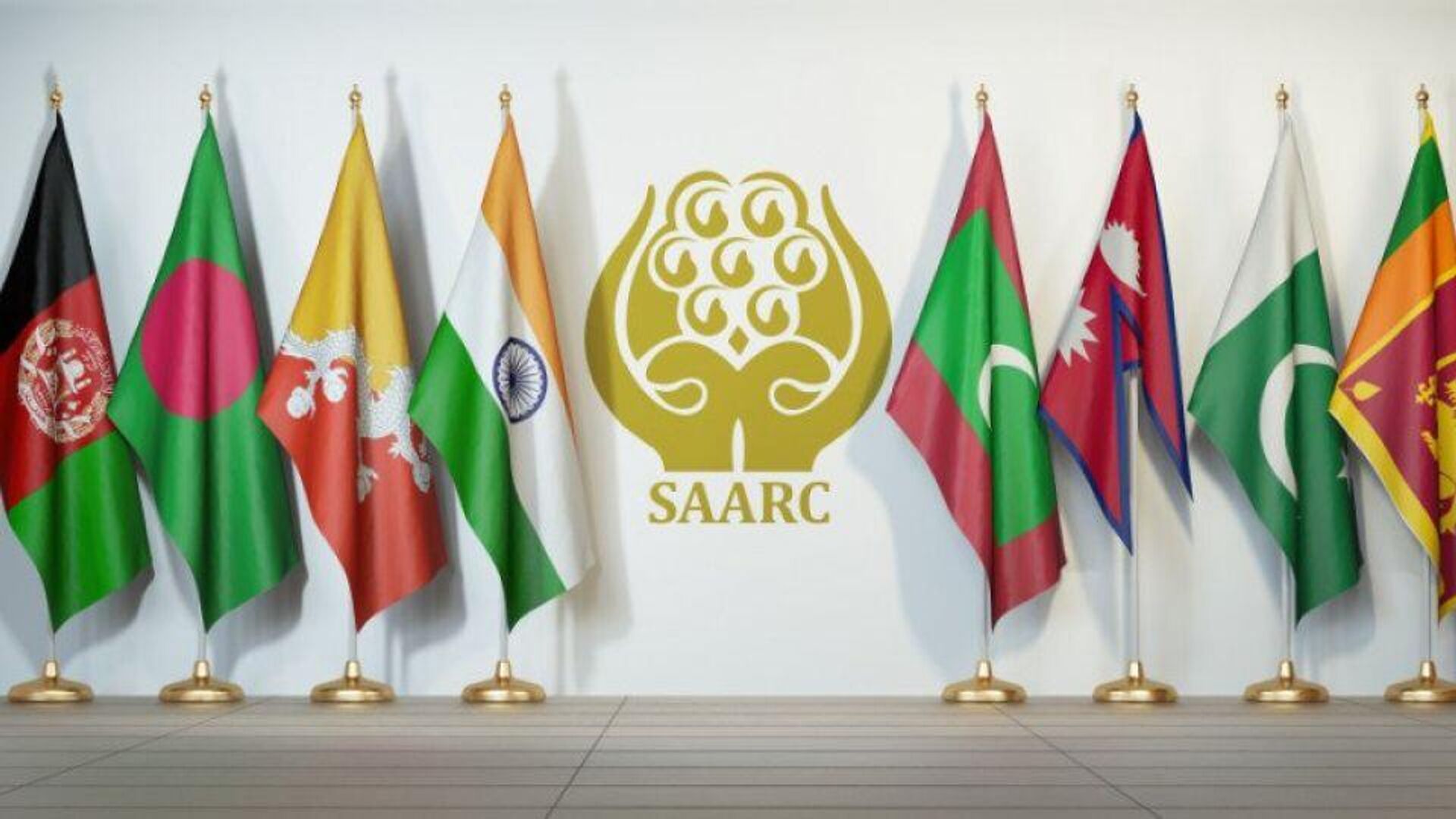
Maldivian President Mohamed Muizzu has called for the revival of the South Asian Association for Regional Cooperation (SAARC), which is currently dormant due to issues between neighbours and arch-foes India and Pakistan.
That said, the Maldives cannot realistically bring India and Pakistan back to the negotiating table on its own. The problem holding SAARC back is not a lack of mediation. It is the deep political distrust between India and Pakistan. Unless those bilateral tensions ease, it will be very difficult for SAARC to function as intended, an expert has said.
"India has repeatedly argued that concerns over cross-border terrorism remain a major obstacle to deeper regional cooperation. Pakistan, meanwhile, has its own set of political and security concerns. Those differences cannot be resolved simply because another country offers to mediate," Dr. Shushant VC Parashar, an academic at the Department of Geopolitics & International Relations at the Manipal Institute of Social Sciences (MAHE), told Sputnik India.
The Maldives can certainly encourage dialogue, but the real obstacle to reviving SAARC is the state of India-Pakistan relations. As long as those tensions persist, it will be difficult for any country, however well-intentioned, to bring both sides back to the table. At best, these efforts may help maintain diplomatic engagement. They are unlikely to revive SAARC in the near future, he added.
While India isn't indifferent to regional cooperation, it has changed the platform through which it wants to pursue it. Over the last decade, India has increasingly shifted its focus towards groupings like the Bay of Bengal Initiative for Multi-Sectoral Technical and Economic Cooperation (BIMSTEC) because they are seen as more practical. Unlike SAARC, BIMSTEC does not include Pakistan, so India believes political disputes are less likely to hold up cooperation on trade, connectivity, energy or security, the international relations commentator underlined.
While India isn't indifferent to regional cooperation, it has changed the platform through which it wants to pursue it. Over the last decade, India has increasingly shifted its focus towards groupings like the Bay of Bengal Initiative for Multi-Sectoral Technical and Economic Cooperation (BIMSTEC) because they are seen as more practical. Unlike SAARC, BIMSTEC does not include Pakistan, so India believes political disputes are less likely to hold up cooperation on trade, connectivity, energy or security, the international relations commentator underlined.
"BIMSTEC also fits well with India's broader foreign policy priorities. It connects South Asia with Southeast Asia and complements India's 'Neighbourhood First' and 'Act East' policies. From New Delhi's perspective, it creates opportunities to deepen engagement with countries such as Bangladesh, Sri Lanka, Thailand and Myanmar without the recurring political deadlock that has affected SAARC," Parashar stressed.
In other words, India hasn't turned away from regional cooperation. It has simply shifted its focus to forums like BIMSTEC, where it believes practical cooperation can move ahead without getting stalled by longstanding political disputes, he noted.
Nonetheless, the Maldives deserves credit for keeping the conversation alive around SAARC. Smaller South Asian countries have often argued that the region cannot afford to let SAARC remain dormant. So, President Muizzu's offer reflects that wider frustration, the observer stated.
Meanwhile, Dr. Rishi Gupta, who serves as the Assistant Director of the Asia Society Policy Institute (ASPI) in Delhi, highlighted that this is not the first time that SAARC members have shown interest in reviving the regional grouping and offered their mediation.
But it's not about SAARC's revival; it's about two big powers in the grouping being at odds, where Pakistan does not wish to demolish its 'terror industry' whereas India has been a victim of it throughout, he underscored.
Moreover, the question remains: why did all SAARC members not condemn terrorism emanating from Pakistan in one voice, even when the SAARC Summits were taking place? SAARC is merely left as a soft punching bag to target just one country, nothing else, the analyst asserted.
Nonetheless, the Maldives deserves credit for keeping the conversation alive around SAARC. Smaller South Asian countries have often argued that the region cannot afford to let SAARC remain dormant. So, President Muizzu's offer reflects that wider frustration, the observer stated.
Meanwhile, Dr. Rishi Gupta, who serves as the Assistant Director of the Asia Society Policy Institute (ASPI) in Delhi, highlighted that this is not the first time that SAARC members have shown interest in reviving the regional grouping and offered their mediation.
But it's not about SAARC's revival; it's about two big powers in the grouping being at odds, where Pakistan does not wish to demolish its 'terror industry' whereas India has been a victim of it throughout, he underscored.
Moreover, the question remains: why did all SAARC members not condemn terrorism emanating from Pakistan in one voice, even when the SAARC Summits were taking place? SAARC is merely left as a soft punching bag to target just one country, nothing else, the analyst asserted.
"India tried and tried hard to keep it alive, but there are red lines like 'no talks' until terrorism remains a tool for Pakistan targeting India. If Pakistan had any sense of responsibility towards building peace in the region and keeping SAARC afloat, it would not have used 'terrorism' against India. It is not India that must answer, but Pakistan must be asked, 'Why did it cross the red line?' On the other hand, other forums have the potential, but SAARC is all about the spirit of South Asia, and that is missing," Gupta summed up.