Why Kaveri Engine Could be Game-Changer for India's Aerospace Sector?

© Photo : PIB India
Subscribe

Sanctioned to power the indigenous Tejas fighter jet in 1989, the Kaveri engine programme has undergone several twists and turns in its nearly four-decade tenure.
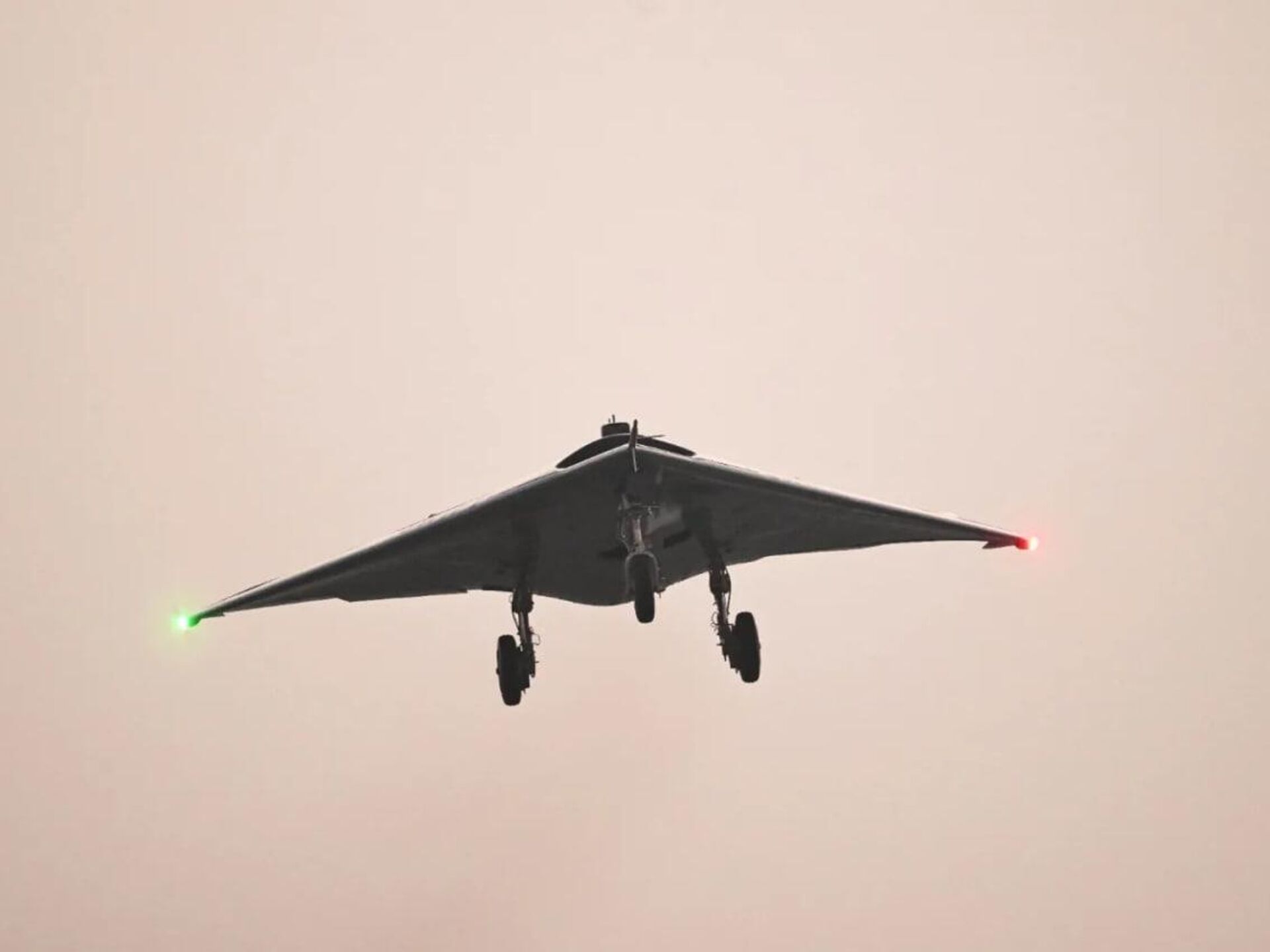
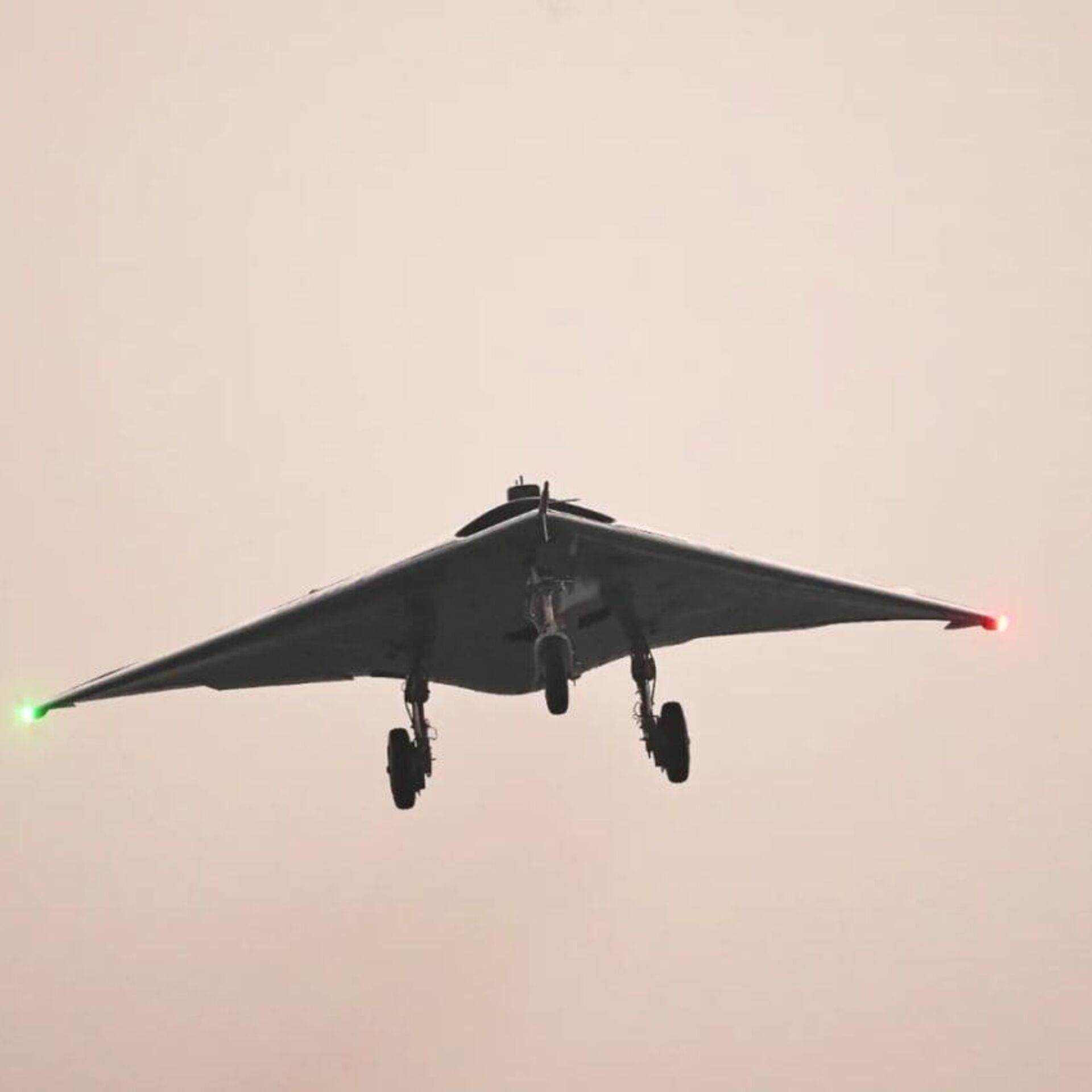
The Kaveri Derivative Engine, popularly referred to as the dry Kaveri, is now intended to power India's indigenous unmanned combat aerial vehicle (UCAV) programme.
The government has sanctioned separate projects worth around ₹472 crore ($49 million) for developing a flightworthy dry Kaveri engine and another ₹251 crore ($26 million) for technology demonstration of the derivative engine.
The government has sanctioned separate projects worth around ₹472 crore ($49 million) for developing a flightworthy dry Kaveri engine and another ₹251 crore ($26 million) for technology demonstration of the derivative engine.
If the engine is successfully developed and integrated into the aircraft, it would mark a major achievement for India’s military aerospace sector. Ghatak is not simply another drone. It is being developed as a stealth unmanned combat aerial vehicle, meaning its propulsion system must work alongside stealth features, sensors, flight controls, weapons and autonomous systems.
If India can bring all these elements together around an indigenous engine, it could significantly reduce foreign dependence in a critical area of future air warfare, Namita Barthwal, Research Analyst at the Military Affairs Centre of the Manohar Parrikar Institute for Defence Studies and Analyses (MP-IDSA), told Sputnik India.
There is also a larger industrial story here. Aviation enthusiasts sometimes look at an aero-engine simply in terms of how much thrust it produces. But an engine actually represents an entire technological ecosystem.
It requires expertise in compressors, combustors, turbines, bearings, digital engine controls, high-temperature materials, special coatings, precision manufacturing and extensive testing, the think tanker underscored.
There is also a larger industrial story here. Aviation enthusiasts sometimes look at an aero-engine simply in terms of how much thrust it produces. But an engine actually represents an entire technological ecosystem.
It requires expertise in compressors, combustors, turbines, bearings, digital engine controls, high-temperature materials, special coatings, precision manufacturing and extensive testing, the think tanker underscored.
"Kaveri has already allowed India to accumulate considerable experience across many of these areas. So even where the original programme did not achieve its intended objective, the technological knowledge created through it remains extremely valuable," Barthwal stressed.
This is particularly important when we look at the growing People's Liberation Army Air Force (PLAAF)–Pakistan Air Force (PAF) relationship. Pakistan's access to Chinese fighters, UAVs, missiles and other aerospace systems is backed by China's much deeper defence-industrial ecosystem. India, therefore, cannot respond to China–Pakistan military cooperation simply by acquiring a comparable number of platforms. India also need the industrial capacity to design, manufacture, maintain, upgrade and replace the critical technologies behind those platforms. Propulsion is one of the most important of these, she explained.
Furthermore, Kaveri can provide the technological foundation for India's future fighter engine, but one should not assume that the existing Kaveri can simply be upgraded into the engine required for a next-generation fighter aircraft, the analyst reckoned.
The requirements are quite different. The dry Kaveri being developed for India's unmanned combat aircraft is in roughly the 48 kN thrust category. A future fighter engine would have to deliver much higher thrust and meet far more demanding requirements in terms of afterburning performance, thrust-to-weight ratio, thermal management, reliability and engine life.
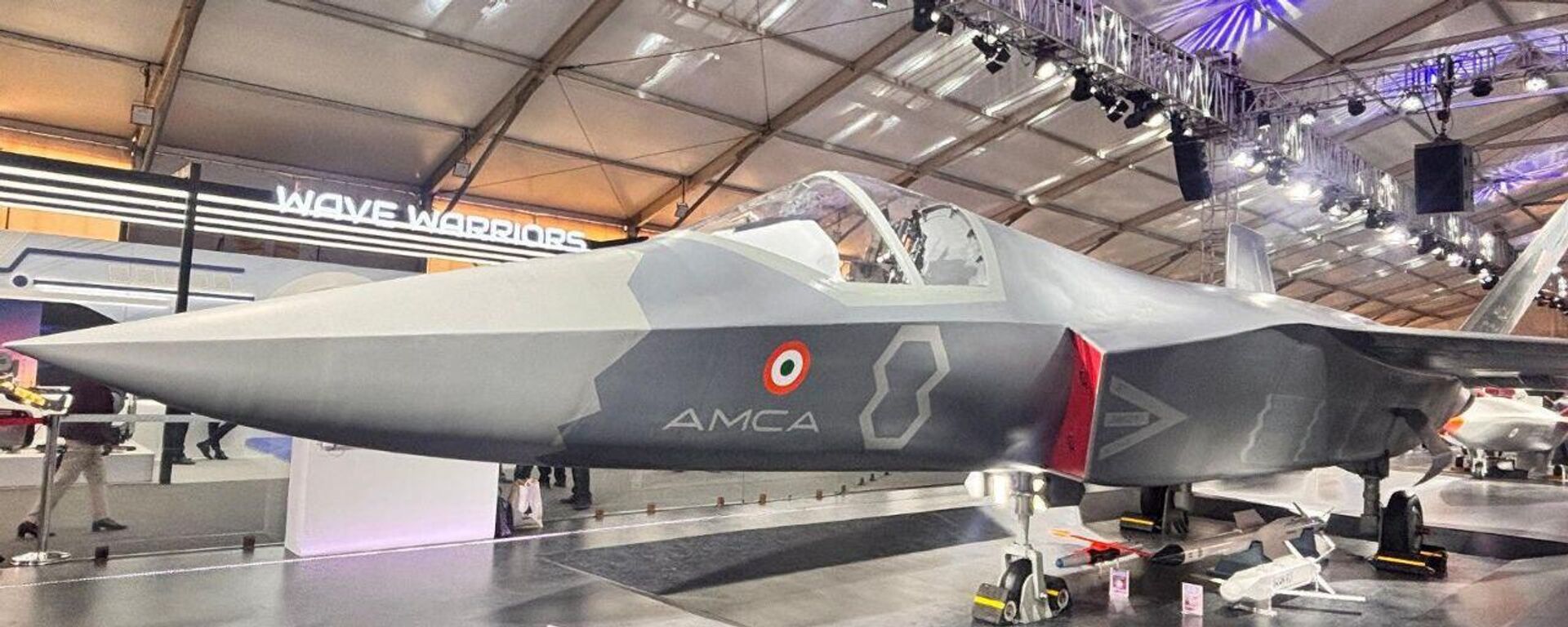
For the later variants of the AMCA, for instance, India is looking at developing a new engine in the 120 kN class, while the initial variants are expected to fly with the GE F414. So, technologically, there is still a considerable distance to cover.
Furthermore, Kaveri can provide the technological foundation for India's future fighter engine, but one should not assume that the existing Kaveri can simply be upgraded into the engine required for a next-generation fighter aircraft, the analyst reckoned.
The requirements are quite different. The dry Kaveri being developed for India's unmanned combat aircraft is in roughly the 48 kN thrust category. A future fighter engine would have to deliver much higher thrust and meet far more demanding requirements in terms of afterburning performance, thrust-to-weight ratio, thermal management, reliability and engine life.
For the later variants of the AMCA, for instance, India is looking at developing a new engine in the 120 kN class, while the initial variants are expected to fly with the GE F414. So, technologically, there is still a considerable distance to cover.
"But the important point is that India is no longer starting from zero. Kaveri has already given the country valuable experience in areas such as compressors, turbines, combustion systems, Full Authority Digital Engine Control or FADEC, high-temperature materials and system integration. All of this becomes the technological base from which the next engine programme can begin," Barthwal underlined.
The human knowledge created through Kaveri is equally important. Aero-engine technology is not something that can simply be acquired by purchasing drawings or signing a technology-transfer agreement. A great deal of knowledge comes from actually designing an engine, building it, testing it, seeing where it fails and then redesigning it. Kaveri has allowed Indian scientists and engineers to go through this process. That experience cannot easily be quantified, but it is extremely valuable, she emphasised.
Hence, the solution should not be to close the Kaveri chapter and start another engine programme from scratch.
Instead, Gas Turbine Research Establishment's accumulated knowledge should become the nucleus of a much larger national propulsion ecosystem involving Defence Research and Development Organisation (DRDO), Hindustan Aeronautics Limited (HAL), private industry, MSMEs and academia. The country also needs specialised Centres of Excellence for areas where gaps remain, particularly high-temperature materials, single-crystal turbine blades, advanced coatings, precision manufacturing, testing and sophisticated engine-control technologies, the observer stated.
"Foreign collaboration can certainly help, especially in developing the proposed 120 kN-class engine. But India should be very clear about what it wants from such a partnership. India should move beyond the traditional model where a foreign engine is produced in India under licence while the critical design knowledge remains with the original manufacturer. The objective should be genuine co-development, where Indian engineers participate in the design process and India acquires manufacturing know-how, testing capability, intellectual property and, importantly, the freedom to modify and further develop the engine," Barthwal highlighted.
This is also where we need to look differently at the Kaveri experience. It is easy to describe the programme as unsuccessful because it could not eventually power the Tejas. But aero-engine development is cumulative. The original Kaveri may not have achieved its intended objective, but the knowledge generated through the programme is now contributing to the dry Kaveri for an unmanned combat aircraft and can potentially feed into India's next generation of propulsion programmes, she concluded.