https://sputniknews.in/20251202/india-russia-to-sign-mobility-economic-pacts-during-putins-visit-10147605.html
India, Russia to Sign Mobility, Economic Pacts During Putin's Visit
India, Russia to Sign Mobility, Economic Pacts During Putin's Visit
Sputnik India
A number of agreements, mainly in economic matters, are expected to be signed between India and Russia during President Vladimir Putin's state visit for the 23rd India-Russia Annual Summit in New Delhi
2025-12-02T23:28+0530
2025-12-02T23:28+0530
2025-12-02T23:28+0530
indo-russian relations
vladimir putin
narendra modi
india
russia
new delhi
reserve bank of india (rbi)
rosneft
european union (eu)
s-400 air defense systems
https://cdn1.img.sputniknews.in/img/07e9/09/05/9723907_0:0:2081:1171_1920x0_80_0_0_69c65b659c52e8e6c332069047cf9ab4.jpg
Russian President Vladimir Putin's visit to India this week is expected to further bolster "mutually beneficial" economic cooperation between India and Russia and pave the way for bolstering Indian exports across a range of sectors, officials said.The 23rd India-Russia Annual Summit, to be co-chaired by Prime Minister Narendra Modi and President Putin, is scheduled to be held in New Delhi on Friday.They said that India and Russia were looking to achieve the $100 billion trade target set by the two leaders by mainly focussing on boosting Indian pharmaceutical, processed food, consumer goods and other exports to Russia. Bilateral trade hit a record high of $68.7 billion in 2024-25, with Indian exports amounting to $4.9 billion while imports from Russia accounted for $63.8 billion of overall figures. The current trade figures are mostly driven by Russian oil exports to India, with the US imposing a 25% additional tariff (on top of 25% tariff) on New Delhi for purchasing Russian oil as well as imposing sanctions on Russian oil companies Rosneft and Lukoil, which kicked in on 21 November.Indian officials reiterated that New Delhi's energy sourcing decisions were driven by securing supplies at best prices as well as market factors, which include sanctions.Officials also underscored that the commissioning that connectivity projects such as International North South Transport Corridor (INSTC) and the Chennai-Vladivostok Corridor have resulted in increase in trade volumes. As far as the INSTC is concerned, the route has witnessed a surge in Russian coal and fertiliser exports to India in recent times, they said.Meanwhile, technical-level discussions among experts from both countries are ongoing to harness the full potential of INSTC, they said.They identified cooperation on the Northern Sea Route (NSR), including the production of ice-breakers and training of Indian seafarers, as another important area of cooperation which is likely to figure in talks between Prime Minister Modi and President Putin on Friday.In terms of Russia's importance for India'e fertiliser security, officials noted that Moscow has been supplying 300,000-400,000 million metric tonnes (MMT) of urea and potash to India for the last 3-4 years, a trend likely to persist for now.Officials pointed out that the India-Russia Forum on 4-5 December was aimed at fostering discussions between business from both countries to make trade long-term, resilient and discuss opportunities for Indian exporters in healthcare, digital technologies and food processing, seen as areas of strength for India.Officials said that India-Russia ties weren't 'static' and were impacted by external forces. "It is difficult to predict how the trade ties will look in terms of constitution three to four years from now," they said.They said that the Reserve Bank of India (RBI) and the Russian Central Bank have been in longstanding discussions to cement the Rupee-Rouble trading arrangement.In terms of civil nuclear cooperation, Russia;s proposal of Small Modular Reactors (SMRs) to India is likely to be touched upon during the Modi-Putin meeting, as is the ongoing cooperation in Unit 5 and 6 of Kudankulam Nuclear Power Plant (KKNPP). Space as well as science and technology cooperation is another major area of interest likely to figure in leadership talks, with both the countries having a long history of cooperation in the sector.As far as the Ukraine conflict is concerned, Indian officials said that New Delhi's stance advocating for dialogue and diplomacy has remained consistent throughout. "We are for immediate cessation of hostilities, and support measures that back that goal," officials said.
https://sputniknews.in/20251202/russian-presidential-aide-peskov-briefs-indian-journalists-ahead-of-putin-visit-10122219.html
india
russia
new delhi
the arctic
ukraine
us
Sputnik India
feedback.hindi@sputniknews.com
+74956456601
MIA „Rossiya Segodnya“
2025
Dhairya Maheshwari
https://cdn1.img.sputniknews.in/img/07e6/0c/13/138962_0:0:641:640_100x100_80_0_0_2cb44360dbcdf6d84bf4b299cd045917.jpg
Dhairya Maheshwari
https://cdn1.img.sputniknews.in/img/07e6/0c/13/138962_0:0:641:640_100x100_80_0_0_2cb44360dbcdf6d84bf4b299cd045917.jpg
News
en_IN
Sputnik India
feedback.hindi@sputniknews.com
+74956456601
MIA „Rossiya Segodnya“
Sputnik India
feedback.hindi@sputniknews.com
+74956456601
MIA „Rossiya Segodnya“
Dhairya Maheshwari
https://cdn1.img.sputniknews.in/img/07e6/0c/13/138962_0:0:641:640_100x100_80_0_0_2cb44360dbcdf6d84bf4b299cd045917.jpg
putin india visit, putin visit date, putin news, putin india, india russia annual summit, modi putin meeting, modi news, su-57 india, s-400, trump modi, trump sanctions, trump tariffs india, india russia fta, india eaeu fta, india russia trade, indian exports to russia, russian oil exports
putin india visit, putin visit date, putin news, putin india, india russia annual summit, modi putin meeting, modi news, su-57 india, s-400, trump modi, trump sanctions, trump tariffs india, india russia fta, india eaeu fta, india russia trade, indian exports to russia, russian oil exports
India, Russia to Sign Mobility, Economic Pacts During Putin's Visit
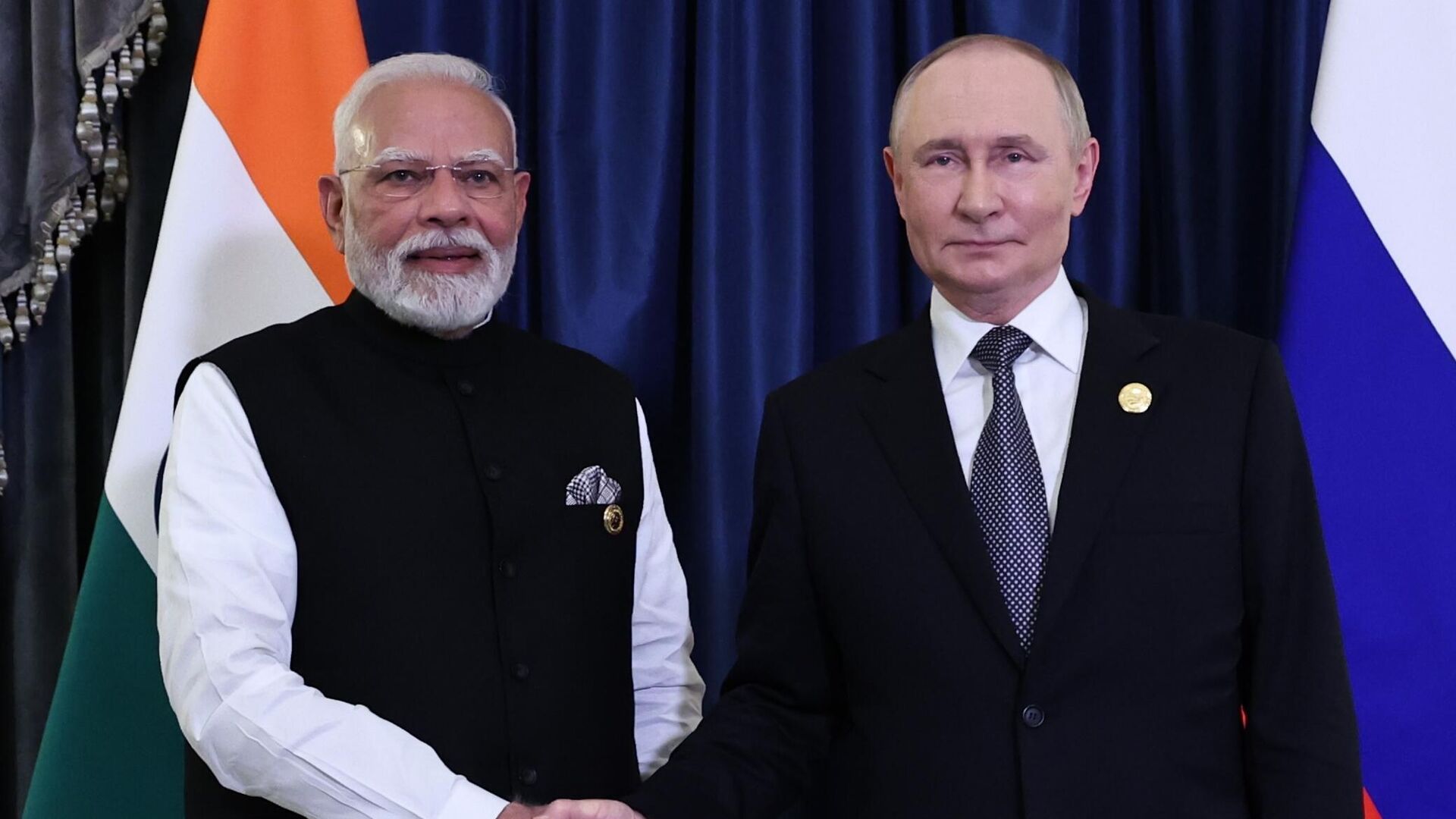
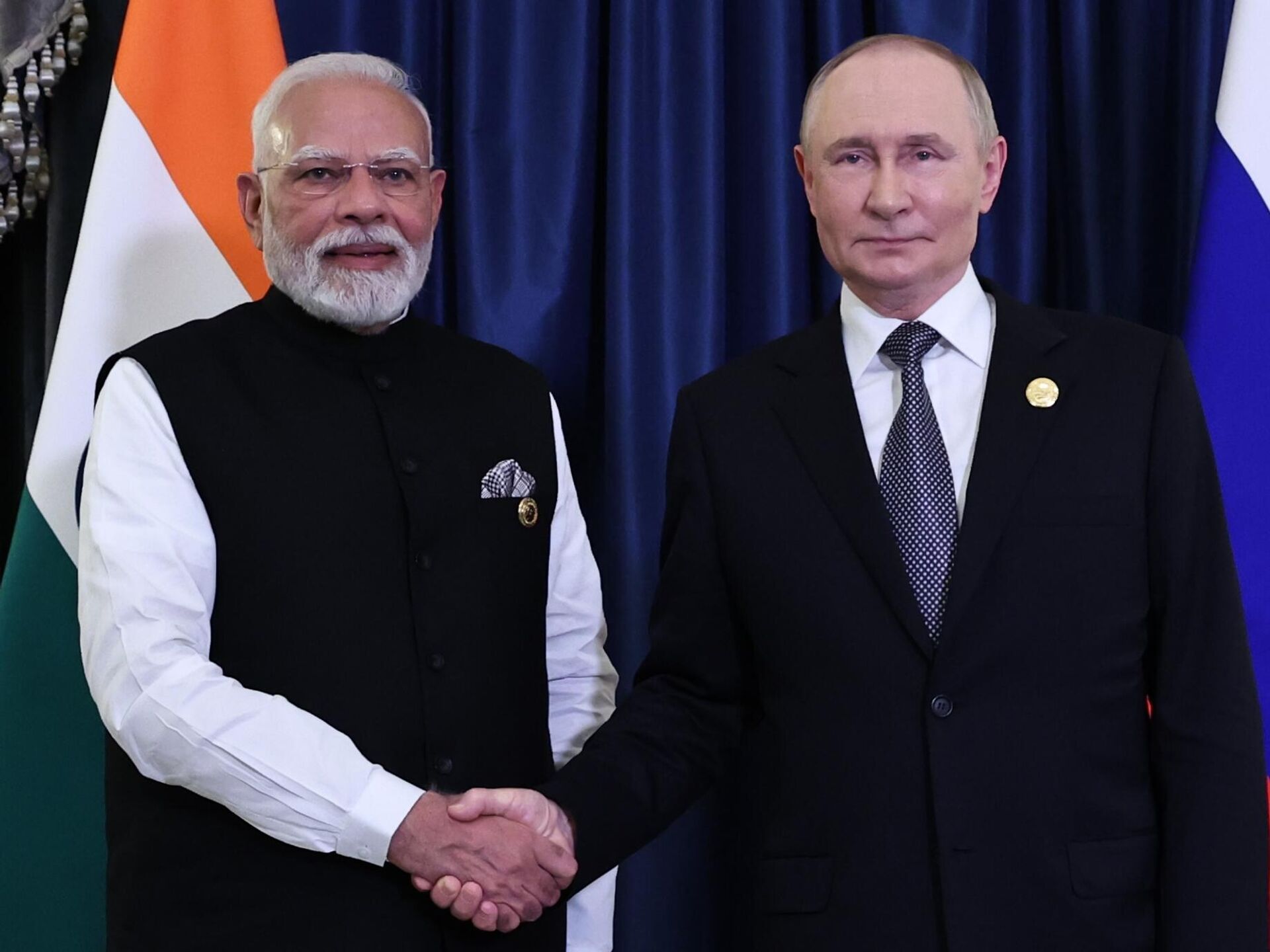
A number of agreements, mainly in economic matters, are expected to be signed between India and Russia during President Vladimir Putin's state visit for the 23rd India-Russia Annual Summit in New Delhi on 4-5 December, Indian officials said on Tuesday.
Russian President Vladimir Putin's visit to India this week is expected to further bolster "mutually beneficial" economic cooperation between India and Russia and pave the way for bolstering Indian exports across a range of sectors, officials said.
The 23rd India-Russia Annual Summit, to be co-chaired by Prime Minister Narendra Modi and President Putin, is scheduled to be held in New Delhi on Friday.
Officials said on Tuesday that the two nations have "finalised" an agreement on mobility of skilled and semi-skilled people. They added that the final document was going through some processes before the formal signing by the two sides.
"One of the primary expectations out of this visit is to bolster economic ties. The visit was mainly focussed on bilateral cooperation, even though there would be an exchange of views of global and regional issues of importance, which include the Ukraine conflict", officials said.
They said that India and Russia were looking to achieve the $100 billion trade target set by the two leaders by mainly focussing on boosting Indian pharmaceutical, processed food, consumer goods and other exports to Russia. Bilateral trade hit a record high of $68.7 billion in 2024-25, with Indian exports amounting to $4.9 billion while imports from Russia accounted for $63.8 billion of overall figures.
The current trade figures are mostly driven by Russian oil exports to India, with the US
imposing a 25% additional tariff (on top of 25% tariff) on New Delhi for purchasing Russian oil as well as imposing sanctions on Russian oil companies Rosneft and Lukoil, which kicked in on 21 November.
Indian officials reiterated that New Delhi's energy sourcing decisions were driven by securing supplies at best prices as well as market factors, which include sanctions.
Importantly, New Delhi remains hopeful that the India-Eurasian Economic Union (EAEU) Free Trade Agreement (FTA) will unlock enhanced opportunities for Indian exporters in the Russian market. Officials said that a number of Indian products aren't able to be exported to the Russian market at present, mainly due to tariff regime and various non-trade barriers (NTBs).
"The Indian-EAEU FTA is meant to address that," they said, while also emphasising that a detailed study of the five Eurasian nations- Armenia, Belarus, Kazakhstan, Kyrgyzstan, and Russia- has been done to identifying opportunities.
Officials also underscored that the commissioning that connectivity projects such as
International North South Transport Corridor (INSTC) and the
Chennai-Vladivostok Corridor have resulted in
increase in trade volumes. As far as the INSTC is concerned, the route has witnessed a surge in Russian coal and fertiliser exports to India in recent times, they said.
Meanwhile, technical-level discussions among experts from both countries are ongoing to harness the full potential of INSTC, they said.
They
identified cooperation on the
Northern Sea Route (NSR), including the production of ice-breakers and training of Indian seafarers, as another important area of cooperation which is likely to figure in talks between Prime Minister Modi and President Putin on Friday.
Further, officials said that discussions on labour and mobility pact were taking place, but they were mostly driven by demands of the private sectors from both countries. "The governments are meant to play just a facilitating role," they said.
In terms of Russia's importance for India'e fertiliser security, officials noted that Moscow has been supplying 300,000-400,000 million metric tonnes (MMT) of urea and potash to India for the last 3-4 years, a trend likely to persist for now.
Officials pointed out that the
India-Russia Forum on 4-5 December was aimed at fostering discussions between business from both countries to make trade long-term, resilient and discuss opportunities for Indian exporters in healthcare, digital technologies and food processing, seen as areas of strength for India.
Officials downplayed the impact of US/EU tariff and sanction threats on India-Russia economic ties, while noting that the bilateral trading settlements had gradually moved to national currencies due to "push and pulls" by external factors.
"There are some problems, of course, as far as the Rupee-Rouble trade is concerned. But, most of our trade is now taking place in national currencies, which is due to the threat of sanctions as one of the reasons," officials said.
Officials said that India-Russia ties weren't 'static' and were impacted by external forces. "It is difficult to predict how the trade ties will look in terms of constitution three to four years from now," they said.
They said that the Reserve Bank of India (RBI) and the Russian Central Bank have been in longstanding discussions to cement the Rupee-Rouble trading arrangement.
Besides trade, defence cooperation is another major pillar of ties, though Indian officials refused to pre-judge any prospective defence agreements on additional S-400 batteries or joint production of Su-57 jets ahead of the leadership talks. Russia has remained supportive of the Make in India programme across various sectors, from defence to railways among others.
In terms of civil nuclear cooperation, Russia;s proposal of Small Modular Reactors (SMRs) to India is likely to be touched upon during the Modi-Putin meeting, as is the ongoing cooperation in Unit 5 and 6 of Kudankulam Nuclear Power Plant (KKNPP). Space as well as science and technology cooperation is another major area of interest likely to figure in leadership talks, with both the countries having a long history of cooperation in the sector.
"India-Russia ties contribute to global strategic stability. This is a strategic and a very important relationship for us," Indian officials said. They noted that Moscow has remained supportive of the global fight against terrorism, in line with New Delhi's security needs.
As far as the Ukraine conflict is concerned, Indian officials said that New Delhi's stance
advocating for dialogue and diplomacy has remained consistent throughout. "We are for immediate cessation of hostilities, and support measures that back that goal," officials said.