How BrahMos Strengthens Indonesia's Coastal Defence?
© AP Photo / AJIT KUMAR
Subscribe

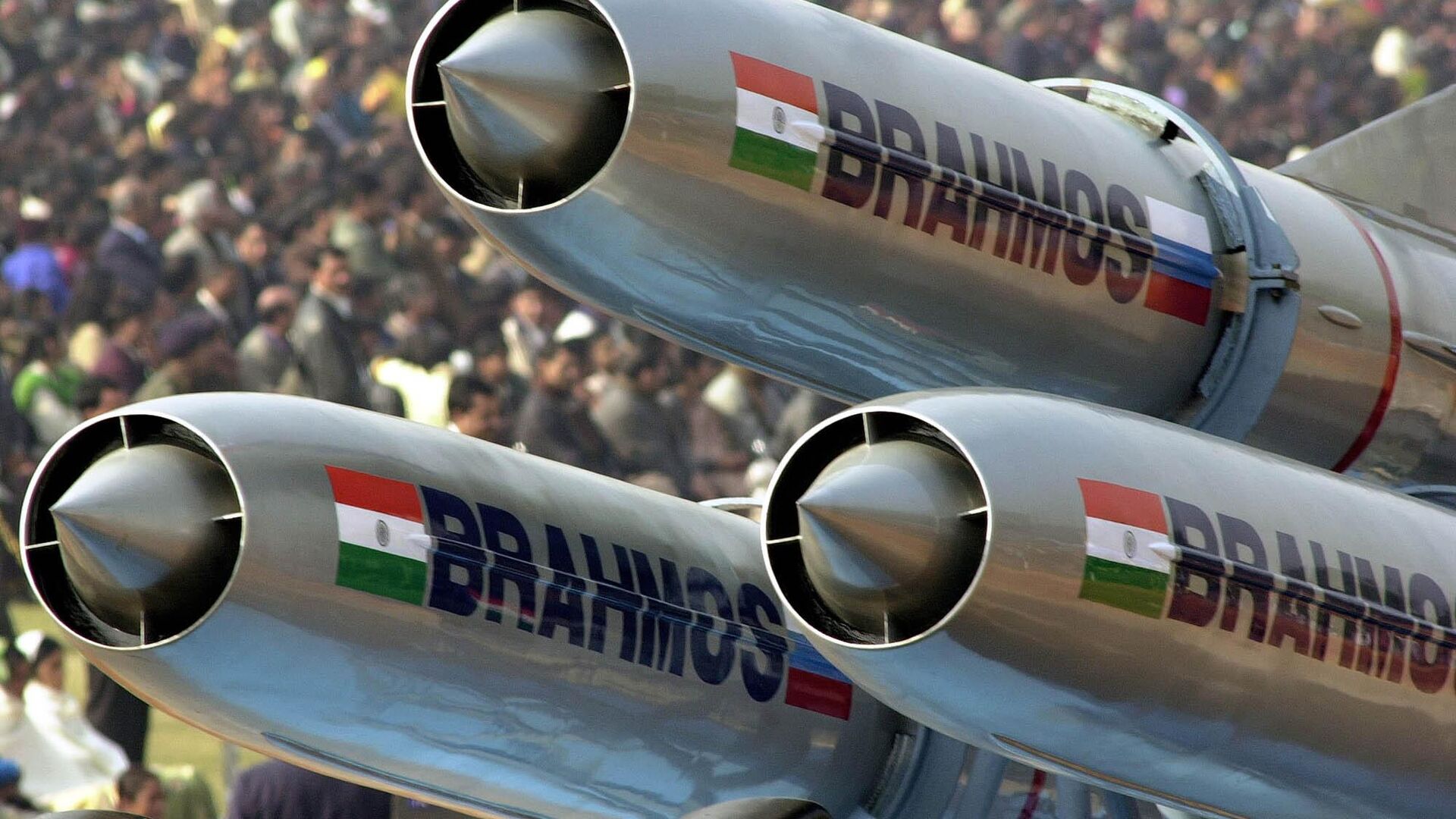
BrahMos, the Indo-Russian joint venture, is the fastest supersonic missile in the world and is gaining a lot of attention, especially in Southeast Asia.
Indonesia's armed forces have formidable anti-ship and other naval warfare systems. However, BrahMos is India's juiciest military product for export and helped cement ties with another Southeast Asian country – the Philippines, which is Indonesia's neighbour, experts have said.
"The Philippine Navy now has the region's finest supersonic cruise missiles operated by a select group of marines. Offering the same to Indonesia is just too big an opportunity to miss. It grows the clientele and pumps up India's national pride and global influence," Miguel Miranda, the founder and editor of the defence website, 21st Century Asian Arms Race, told Sputnik India.
"Long-term defence cooperation between India and Indonesia needs to be pursued. It has all the potential for a match made in heaven!" he added.
But New Delhi will be best served by having a physical office in Indonesia's capital staffed by career diplomatic and military figures tasked with organising current and future arms deals in every domain. It's not just a defence attache arrangement at an embassy. Something more than this, the Manila-based pundit suggested.
It is worth mentioning that Indonesia's geography makes maritime security its foremost strategic challenge. With more than 17,500 islands and one of the world's longest coastlines, it is impossible to maintain a constant naval presence across every vulnerable maritime approach.
"This is where a shore-based supersonic cruise missile system like BrahMos becomes a significant force multiplier. BrahMos enables Indonesia to establish an effective anti-access/area denial (A2/AD) capability by holding hostile surface combatants and amphibious forces at risk from long stand-off distances," reckoned Harpreet Sidhu, a weapons analyst at GlobalData, a defence data analytics company headquartered in London.
Its supersonic speed significantly reduces an adversary's reaction time, making interception far more difficult than conventional subsonic cruise missiles. This enhances deterrence by increasing the operational risks and costs for any force contemplating coercive naval action, he explained.
For Indonesia, the system would not merely serve as a weapon but as a strategic deterrent. Deployed across key islands and maritime chokepoints, BrahMos can protect vital sea lines of communication, strengthen maritime domain awareness when integrated with coastal surveillance and radar networks, and complement the Indonesian Navy's limited fleet by extending its defensive reach from land, the observer highlighted.
"In the broader Indo-Pacific context, the acquisition would reinforce Indonesia's ability to safeguard its sovereign waters, including areas around the North Natuna Sea, while contributing to regional stability through credible deterrence. It reflects Jakarta's emphasis on building a modern, layered coastal defence architecture rather than pursuing offensive military posturing," Sidhu stressed.
From India's perspective, a BrahMos deal would also underscore the growing maturity of bilateral defence cooperation and New Delhi's role as a reliable defence technology partner in Southeast Asia. It aligns with India's Act East Policy and its vision of a free, open, and rules-based Indo-Pacific, while supporting Indonesia's efforts to enhance its indigenous maritime security capabilities through advanced defence cooperation, he underscored.
Indonesia has traditionally pursued a foreign policy of 'bebas dan aktif' (free and active), which emphasises strategic autonomy and avoiding dependence on any single major power. Defence cooperation with India fits well within this framework because it expands Indonesia's portfolio of security partners without requiring alliance commitments or compromising its independent foreign policy, the defence commentator noted.
"India is increasingly viewed as a credible and reliable defence partner, particularly in the Indo-Pacific. Cooperation in areas such as missile systems, maritime security, naval exercises, defence training, and technology transfer allows Indonesia to modernise its armed forces while reducing overreliance on traditional suppliers. This diversification also strengthens supply chain resilience and provides greater flexibility in procurement decisions," Sidhu emphasised.
Beyond defence hardware, India and Indonesia share converging interests in ensuring freedom of navigation, maritime security, counter-piracy, and adherence to international law. Their cooperation is therefore driven more by shared strategic interests than by bloc politics or alliance structures, he pointed out.
From a broader geopolitical perspective, stronger India-Indonesia defence ties contribute to a more balanced regional security architecture.
For Indonesia, engaging multiple partners—including India, the United States, Japan, Australia, Europe, and others—enhances its bargaining power and strategic flexibility.
For India, it strengthens defence diplomacy under the Act East Policy and reinforces partnerships with key maritime nations in Southeast Asia, the military specialist underlined.
"Ultimately, defence cooperation with India is best understood as a means of enhancing Indonesia's self-reliance. It provides access to advanced capabilities, strengthens maritime deterrence, and broadens strategic options, all while allowing Jakarta to maintain its long-standing policy of strategic autonomy and independent decision-making," Sidhu concluded.